TRW & Co · Financial regulation and fintech
Tokenisation of Capital Markets Products in Singapore
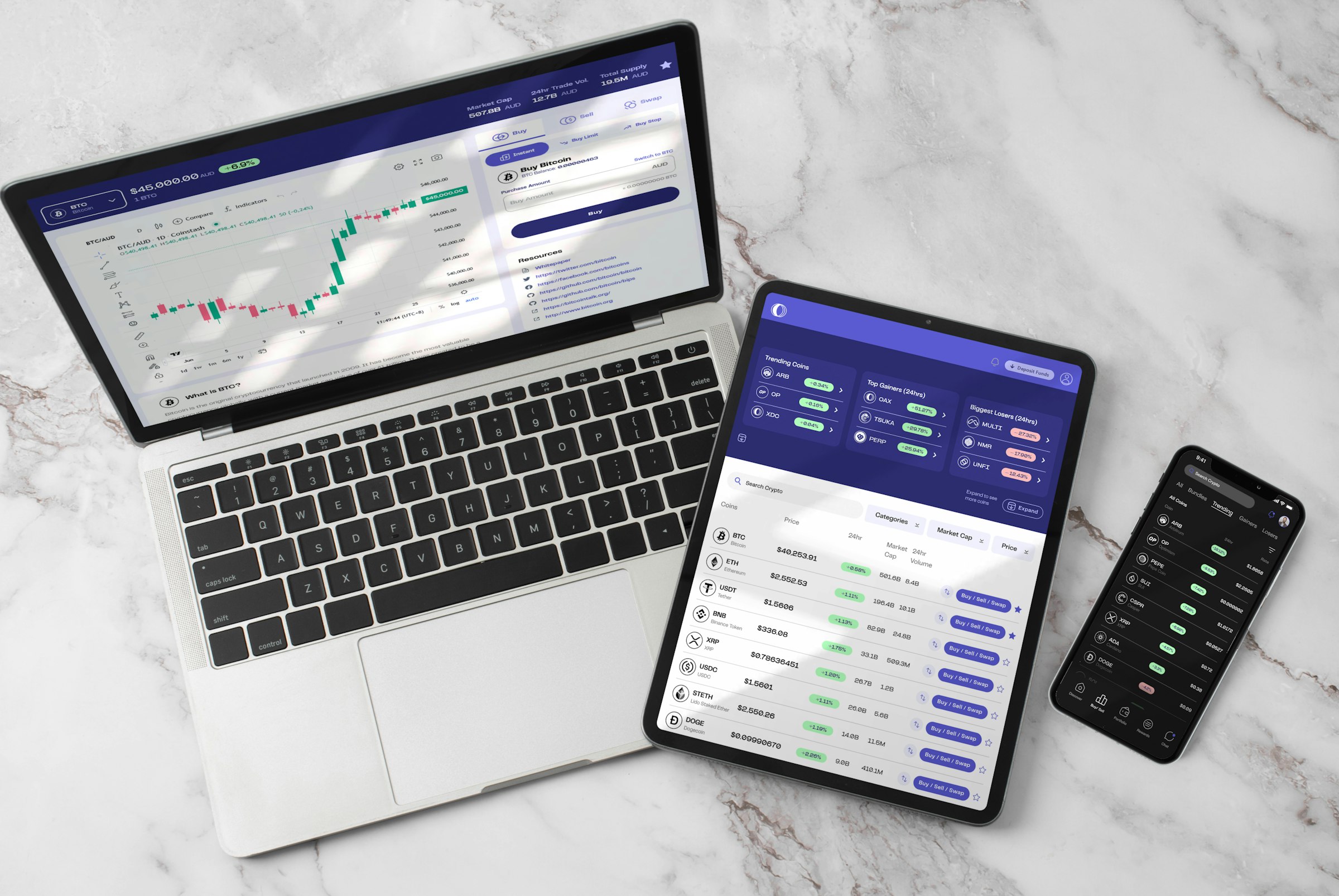
Tokenisation in Singapore is regulated by substance, not technology. If a token confers rights that make it a share, debenture, fund unit or derivative, the Securities and Futures Act applies in full, including prospectus, scheme and licensing rules. MAS's revised Guide on the Tokenisation of Capital Markets Products, published in November 2025, sets out how it analyses tokens and the disclosures it expects.
Key pointMAS has dropped labels such as "utility" and "security" token and looks through to the bundle of rights a token confers; a tokenised fund unit is simply a CIS unit, so the full scheme regime applies regardless of the blockchain wrapper.
At a glance
Revised guide, Nov 2025
MAS published the Guide on the Tokenisation of Capital Markets Products on 14 November 2025, replacing its earlier Guide on Digital Token Offerings with broader guidance.
Substance over form
MAS examines the token's characteristics, intent, structure and bundle of rights to decide whether it is a share, debenture, CIS unit or other product.
Prospectus exemptions remain
Small offers up to S$5 million in 12 months, private placements to 50 persons, and institutional or accredited investor offers remain available, with conditions.
Licences follow activity
Issuance platforms, custodians and fund managers generally need CMS licences; trading venues need approved exchange or recognised market operator status unless exempt.
Tokenisation disclosure expected
Prospectuses should explain the ledger, smart contract governance, minting and burning controls, custody arrangements and technology and legal risks specific to tokenisation.
Swipe or scroll →
The short answer: how MAS regulates tokenisation in Singapore
Tokenisation in Singapore does not create a new asset class in law. If a token represents or confers rights that make it a share, a debenture, a unit in a collective investment scheme, a derivative or another capital markets product, it is regulated as that product under the Securities and Futures Act 2001 (SFA), whatever technology sits underneath.
As of October 2026, the reference point is the Monetary Authority of Singapore's revised Guide on the Tokenisation of Capital Markets Products, published on 14 November 2025 and formerly titled the Guide on Digital Token Offerings (Baker McKenzie summary). It applies a technology-neutral, substance-over-form approach captured in MAS's phrase "same activity, same risk, same regulatory outcome".
In practice, three questions decide the regulatory path for any tokenised offering: is the token a capital markets product, which prospectus or scheme rules apply to the offer, and which licences do the platforms, custodians and advisers in the chain need.
What the revised MAS guide changed
For anyone working on tokenisation in Singapore, the revised guide is now the first document to read. It replaces the earlier digital token offerings guidance with a broader document aimed at tokenised capital markets products generally. MAS deliberately avoids labels such as "utility token" or "security token". Instead, it asks what the token is in substance.
According to Rajah & Tann Asia’s analysis, the guide covers two areas: whether a digital token is a capital markets product under the SFA, and how the SFA and the Financial Advisers Act 2001 (FAA) apply to token issuances, offers and the intermediaries involved. An appendix of case studies illustrates when a token is likely or unlikely to be a capital markets product, and when related services amount to financial advice.
The guide also sets out tokenisation-specific disclosure expectations for prospectuses, which is new territory for many issuers. Those disclosures cover the distributed ledger used, smart contract governance, controls over minting, transfer, redemption and burning, how ownership is recorded, custody arrangements and technology, operational and legal risks.
Who is affected by the guide and what to do now
The guide matters to four groups. Issuers considering tokenised shares, bonds or notes need to confirm characterisation and offer route. Fund managers exploring tokenised share classes or feeder funds need to check that their scheme documents, distribution channels and custody arrangements still work when units are held on a ledger. Platform operators need to confirm whether they are dealing, operating a market or providing custody. Banks, brokers and advisers distributing tokenised products need to apply the same product classification, suitability and AML processes they apply to conventional products.
The guide is guidance rather than new legislation, so it does not carry a commencement date. It reflects MAS's existing reading of the SFA and FAA, which means firms already in the market should review live products against it now rather than wait for a transition period.
A sensible first step is a short gap review: list each tokenised product or service, record the characterisation reached at launch, compare it with the guide's case studies, and identify any disclosure or licensing gaps. Where a gap is found, firms should consider whether remediation, a change in product design or engagement with MAS is appropriate.
Tokenised deposits and money-like tokens
Not every token used in tokenisation in Singapore is a capital markets product. Tokens used for payment or settlement raise questions under the Payment Services Act and, for banks, prudential rules on deposits. Projects that combine a tokenised asset with a tokenised settlement asset should analyse each leg separately, because the regimes, licences and risk disclosures differ.
When is a token a capital markets product?
Characterisation is the gateway question for tokenisation in Singapore. MAS takes a holistic view of the token's characteristics, the intent behind it and its structure, and it examines the bundle of rights attached to or derived from the token. The analysis then identifies the specific product type, because each type carries different offer and licensing consequences.
| Token design | Rights conferred | Likely characterisation |
|---|---|---|
| Tokenised shares in a company | Ownership interest, dividends, voting | Share |
| Tokenised bond or note | Repayment of principal, coupon payments | Debenture |
| Token representing interests in a pooled investment | Pooled returns from assets managed by another person | Unit in a collective investment scheme |
| Token whose value derives from an underlying asset or index | Payment linked to the underlying | Possibly a derivatives contract |
| Access or consumptive token | Use of a platform or service only, no financial return | Unlikely to be a capital markets product, though other regimes may apply |
| Payment-oriented token | Medium of exchange | Considered under the Payment Services Act regime, not the SFA |
Two practical points follow. First, the label on a white paper does not decide the outcome; MAS looks through to rights and economics. Second, a token can move between categories if its rights change, for example when a governance token later starts distributing platform revenue. MAS expects issuers and offerors to obtain legal advice on characterisation before launching.
Prospectus and collective investment scheme rules
If the token is a share, debenture, unit in a collective investment scheme or certain derivatives, an offer to persons in Singapore must be made in or accompanied by a prospectus registered with MAS, unless an exemption applies. The usual SFA exemptions remain available for tokenised offers, subject to their conditions (including advertising restrictions):
- small personal offers not exceeding S$5 million (or its foreign currency equivalent) in any 12-month period;
- private placements to no more than 50 persons in any 12-month period;
- offers made only to institutional investors; and
- offers made to accredited investors.
Where a prospectus is required, the general disclosure standard in the SFA applies, and the guide expects tokenisation-specific information on top of the usual content. For tokenised funds, the collective investment scheme regime applies in full: retail offers need authorisation or recognition, with investment restrictions and business conduct requirements. Our article on collective investment scheme offers explains that regime in more depth, and our page on investment funds in Singapore covers fund structuring.
Tokenised products are also classified as complex or non-complex on the same basis as their non-tokenised equivalents. Complex tokenised products attract enhanced safeguards when sold to retail investors, including assessing the customer's knowledge and experience under MAS's notices on the sale of investment products.
Licensing for platforms, custodians and advisers
A typical project involving tokenisation in Singapore usually involves several regulated roles, and the licence follows the activity. The Securities and Futures Act and the Financial Advisers Act remain the core statutes.
| Role | Typical regulated activity | Licence or status needed (unless exempt) |
|---|---|---|
| Primary issuance platform | Dealing in capital markets products, arranging offers | Capital markets services (CMS) licence |
| Secondary trading venue | Operating an organised market | Approved exchange or recognised market operator |
| Token custodian | Safeguarding tokenised products for clients | CMS licence for providing custodial services |
| Fund manager of a tokenised fund | Fund management | CMS licence for fund management |
| Adviser or distributor | Advising on or recommending tokenised products | Financial adviser's licence or exempt financial adviser status |
For the licensing pathway itself, see our page on capital markets services licensing. Firms that also deal in payment tokens or offer digital token services outside Singapore should consider the separate regime for digital token service providers under the Financial Services and Markets Act 2022, which MAS confirmed took effect on 30 June 2025; our article on DTSP licensing covers it.
AML/CFT obligations apply throughout. Intermediaries must assess money laundering and terrorism financing risk, apply enhanced measures for higher-risk cases, comply with value transfer requirements when sending or receiving tokenised products, and report suspicious transactions.
The SFA can apply to activities carried on partly in Singapore, or outside Singapore where they have a substantial and reasonably foreseeable effect in Singapore. A tokenisation platform based abroad that markets to Singapore investors should not assume it is outside MAS's reach simply because its servers and entity are offshore.
A practical roadmap for a tokenised offering
- Define the rights. Write down exactly what the holder gets: ownership, income, redemption, voting, access. This drives characterisation.
- Characterise the token. Map the rights to SFA product categories with legal advice, using the guide's case studies as a cross-check.
- Choose the offer route. Decide between a registered prospectus, an authorised or recognised scheme, or an exempt offer to accredited or institutional investors.
- Map every intermediary. Identify who issues, distributes, trades, holds and advises, and confirm each one's licence or exemption.
- Build tokenisation disclosure. Cover the ledger, smart contract governance, minting and burning controls, custody and technology risks in the offer document.
- Settle legal ownership. Confirm how the on-chain record relates to the legal register and what happens if the ledger and register diverge.
- Consider the sandbox. Where the model is genuinely novel, MAS's FinTech regulatory sandbox can offer time-bound relief from specified requirements.
Illustrative scenario: tokenising a private credit fund
This scenario is illustrative only; the parties are generic.
A Singapore fund manager wants to issue tokenised units in a private credit fund to accredited investors in Asia, with transfers recorded on a permissioned blockchain. The manager first confirms the units remain units in a collective investment scheme; the token is simply the form in which they are held.
The offer proceeds under the accredited investor exemption, with restrictions on advertising and on onward transfer to non-qualifying investors coded into the smart contract. A licensed custodian holds the tokens for investors who do not want to self-custody, and the fund documents state that the fund's register prevails if it differs from the ledger.
When the manager later considers a secondary trading facility, it recognises that operating an organised market requires approval or recognition and instead partners with an existing licensed venue. For managers weighing the vehicle itself, our article on setting up a VCC explains the most common Singapore fund structure.
Risks and common mistakes
Relying on a token label
Calling a token a "utility" or "membership" token does not remove it from the SFA if its rights look like a share, debenture or fund interest. MAS has expressly moved away from such labels. Issuers that market expected returns, profit sharing or buy-back promises alongside a so-called utility token are particularly exposed.
Mismatch between ledger and legal title
If the legal register of members, unitholders or noteholders is maintained separately from the blockchain, the two can diverge after an error, hack or court order. Offer documents should say which record prevails, how corrections are made and how investors enforce their rights. The guide expects disclosure of whether issuers can amend ledger records.
Unlicensed secondary trading
Many projects launch with a primary offer and later add a peer-to-peer or bulletin-board trading feature. If that feature amounts to operating an organised market for capital markets products, it needs approval or recognition. Retrofitting compliance after launch is far harder than designing for it.
Ignoring investor protection after launch
Compliance does not end at issuance. Corporate actions, distributions, redemptions, forks, chain migrations and smart contract upgrades all affect investors' rights. Issuers and managers should have a governance process for each, communicate changes clearly and consider whether a change alters the token's characterisation or requires updated disclosure.
For tokenisation in Singapore that targets retail investors, ongoing obligations under the scheme or prospectus regime also continue for the life of the product.
Smart contract and custody risk
Code errors, oracle failures and lost private keys can destroy value or freeze assets. Investors and regulators will expect audits, upgrade governance and clear custody arrangements. Our page on technology transactions covers contracting with development and audit providers.
Project Guardian and the wider ecosystem
MAS has been testing tokenisation with industry through Project Guardian, a collaboration exploring asset tokenisation and decentralised finance with appropriate risk safeguards. Its focus areas include open and interoperable networks, trust anchors, tokenisation of securities and deposits, and regulatory safeguards for DeFi.
For market participants, the significance is that tokenisation in Singapore is being developed within the existing regulatory perimeter rather than around it. Pilots inform policy, but commercial launches still need to fit the SFA, the FAA and AML/CFT rules. Our page on digital assets in Singapore tracks the broader landscape, including stablecoins and payment tokens.
Cross-border issues often arise. A Singapore-managed tokenised product may be offered to investors in the UAE, the UK or elsewhere in Asia, each with its own securities and crypto-asset rules. TRW & Co coordinates multi-jurisdiction analysis through its network; where Singapore court or tribunal representation is required, we work alongside Singapore-qualified counsel.
Checklist before launching a tokenised product
- Document the rights the token confers and obtain a written characterisation analysis.
- Select the offer route and confirm the conditions of any exemption, including advertising and transfer restrictions.
- Confirm licences or exemptions for issuance, trading, custody, fund management and advice.
- Prepare tokenisation-specific disclosure on ledger, smart contracts, custody and risks.
- Align the legal register with the on-chain record and state which prevails.
- Put AML/CFT controls, travel-rule compliance and sanctions screening in place before launch.
- Assess whether any foreign marketing triggers other jurisdictions' rules.
Tokenisation in Singapore rewards issuers who start with the legal analysis rather than the technology. If you are planning a tokenised issuance, fund or platform, contact TRW & Co to discuss characterisation, offer structure and licensing.
Frequently asked questions
01Is a security token regulated in Singapore?
MAS does not use the label "security token". It asks whether the token is a capital markets product under the Securities and Futures Act by examining its characteristics, intent, structure and the rights it confers. If the token is in substance a share, debenture, unit in a collective investment scheme or derivative, the SFA applies in the same way as for the non-tokenised product, including prospectus requirements, licensing and business conduct rules.
02What is MAS's Guide on the Tokenisation of Capital Markets Products?
It is MAS guidance, published on 14 November 2025, that replaced the earlier Guide on Digital Token Offerings. It explains how MAS decides whether a token is a capital markets product, how the SFA and the Financial Advisers Act apply to token offers and intermediaries, and what tokenisation-specific disclosure is expected in a prospectus. It includes case studies showing when tokens are likely or unlikely to be capital markets products.
03Do tokenised funds need MAS authorisation?
A tokenised fund unit is a unit in a collective investment scheme, so the CIS regime applies. Offers to retail investors require the scheme to be authorised or recognised, with investment restrictions and business conduct requirements. Offers limited to accredited or institutional investors can rely on exemptions, subject to conditions including advertising restrictions. The fund manager will usually also need a capital markets services licence for fund management unless exempt.
04Can a tokenised offering avoid a prospectus?
Yes, if it fits an SFA exemption. The usual routes are small personal offers not exceeding S$5 million in any 12-month period, private placements to no more than 50 persons in any 12-month period, and offers only to institutional or accredited investors. Each exemption has conditions, including restrictions on advertising and, in some cases, on onward sales. The exemption analysis should be documented before launch.
05Does a platform that lists tokenised securities need a licence?
Usually. A platform operating an organised market for tokenised capital markets products must be approved as an approved exchange or recognised as a recognised market operator, unless exempt. A platform facilitating primary issuances may need a capital markets services licence for dealing, and a platform holding tokens for clients may need a licence for custodial services. Each activity should be mapped separately.
06Does Singapore law apply to a tokenisation platform based overseas?
It can. The SFA applies to activities carried on partly in Singapore and, in some cases, to activities outside Singapore that have a substantial and reasonably foreseeable effect in Singapore. The FAA can apply where a person outside Singapore is likely to induce people in Singapore to use its advisory services. Offshore platforms marketing to Singapore investors should take advice on whether they are within scope.
Sources and official materials
- Securities and Futures Act 2001 (Singapore Statutes Online) — Capital markets products, prospectus, CIS and licensing regime
- Financial Advisers Act 2001 (Singapore Statutes Online) — Licensing for advice on tokenised investment products
- MAS: Project Guardian — MAS-industry collaboration on asset tokenisation and DeFi
- MAS clarifies regulatory regime for digital token service providers — DTSP regime under the FSMA from 30 June 2025
- Baker McKenzie: MAS publishes Guide on Tokenisation — Publication date and summary of the November 2025 guide
- Rajah & Tann Asia: MAS issues revised Guide on Tokenisation of Capital Markets Products — Detailed analysis of characterisation, offers, licensing and disclosure
General information only, current as at 20 October 2026. It is not legal advice and does not create a lawyer–client relationship. Singapore law and regulatory practice change; check current official sources and take advice on the facts of your matter.