
TRW & Co · Trade, Regulation & ESG
Climate-Risk Contracting in Singapore
Climate-risk contracting in Singapore decides, before anything goes wrong, who bears floods, heat, carbon tax increases and new climate rules. Singapore courts enforce clear words, and there is no statutory force majeure, so drafting decides outcomes. This guide explains the framework, the clause toolkit, sector issues and how to review a contract portfolio in 2026.
Key pointCarbon tax rates have been announced years ahead, so a change-in-law clause that covers only changes after signing may not pass through increases already published; price the known rate path or create a specific carbon cost mechanism.
At a glance
No statutory force majeure
Relief for supervening events in Singapore depends on the contract wording, with frustration as a narrow fallback where performance becomes impossible or radically different.
Carbon tax path is public
NEA has set carbon tax at S$45 per tonne for 2026 and 2027, with an indicative S$50 to S$80 by 2030, which long-term contracts must address.
Exclusions face a test
The Unfair Contract Terms Act 1977 applies a reasonableness test to certain exclusion and limitation clauses, limiting sweeping climate liability carve-outs.
Lenders are asking
MAS environmental risk guidelines lead banks and insurers to ask borrowers how climate risks are allocated in key supply, construction and offtake contracts.
Notice is often decisive
Many force majeure and change-in-law clauses make timely, detailed notice a condition of relief; late notice defeats otherwise strong claims.
Swipe or scroll →
What climate-risk contracting in Singapore covers
Climate-risk contracting in Singapore is the practice of deciding, in the contract itself, who bears the cost and consequences of climate-related events and policies. It covers three kinds of risk. Physical risk is damage or disruption from floods, storms, extreme heat and sea-level rise. Transition risk is the cost of carbon pricing, new regulation, changing technology and shifting customer demand. Performance risk arises when a contract contains its own sustainability commitments, such as emissions targets, green building ratings or reporting duties.
Most commercial contracts still treat these risks as background. Standard force majeure clauses were written for sudden, rare events, not for chronic heat or predictable seasonal flooding. Price clauses often say nothing about carbon tax. Sustainability promises appear in tender responses and side letters without remedies. The result is uncertainty when the risk materialises, and uncertainty in contracts usually ends in dispute.
The question becomes legal when a long-term contract is being negotiated, when carbon costs rise, when an extreme weather event interrupts performance, or when a customer, lender or regulator asks how climate risk has been allocated.
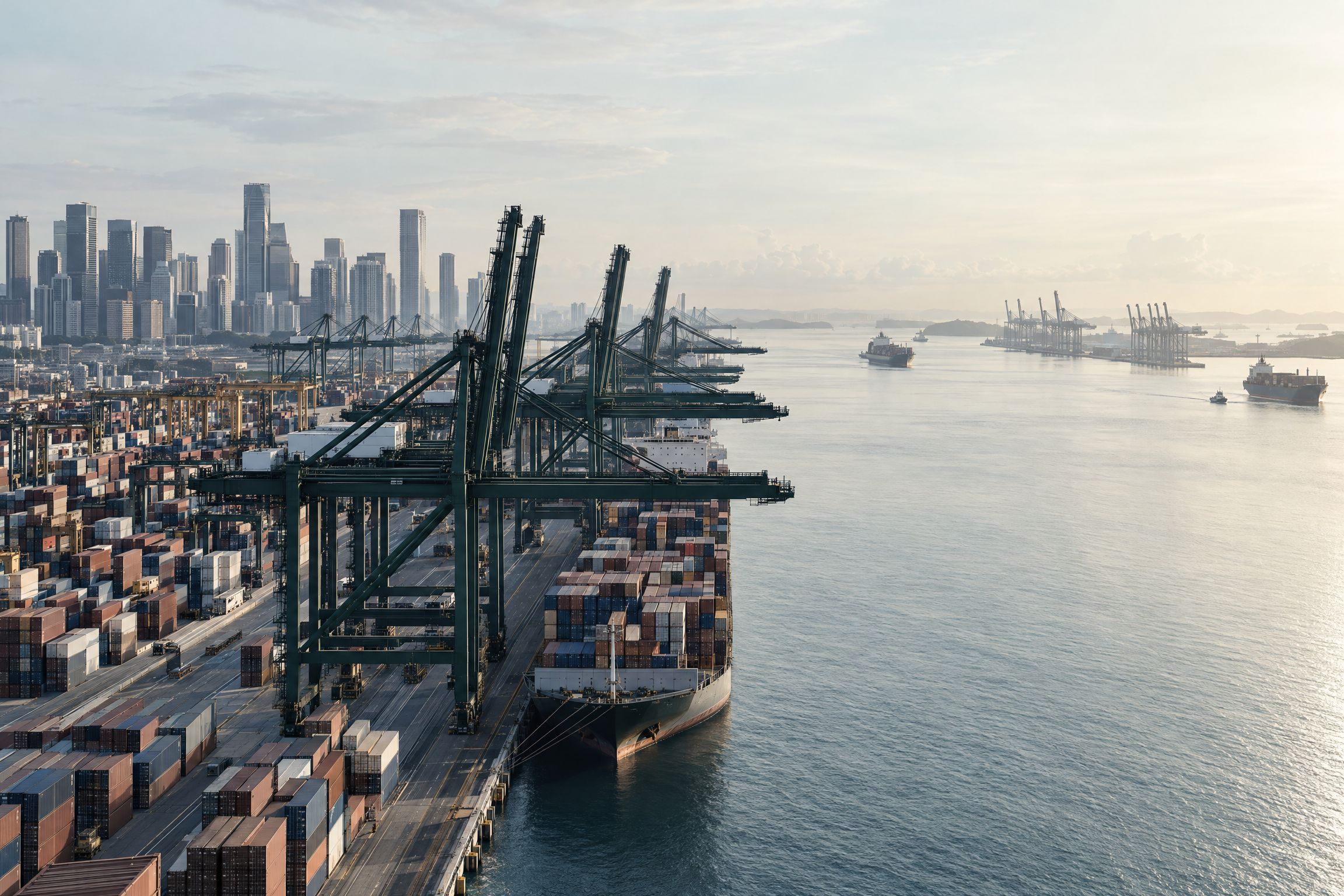
The legal framework for climate-risk contracting in Singapore
Singapore contract law follows the common law and gives parties wide freedom to allocate risk as they choose. Courts generally enforce clear words, so the quality of drafting largely decides outcomes. There is no statutory force majeure doctrine; relief for supervening events depends on the contract, with the common law doctrine of frustration as a narrow fallback where performance becomes impossible or radically different. The Frustrated Contracts Act deals with the financial consequences once a contract is frustrated.
Several statutes shape what parties can agree. The Unfair Contract Terms Act 1977 subjects certain exclusion and limitation clauses to a reasonableness test, which matters when a supplier tries to exclude all liability for climate-related failures. The Sale of Goods Act 1979 implies terms about quality and fitness for purpose, which may be engaged where goods are sold as low-carbon or climate-resilient. The Building and Construction Industry Security of Payment Act 2004 governs progress payments in construction and limits how far risk allocation can delay cash flow.
Transition risk has a regulatory anchor. The Carbon Pricing Act 2018 imposes carbon tax on facilities emitting 25,000 tCO2e or more a year. NEA's published rates rose to S$45 per tonne for 2026 and 2027, with an indicative range of S$50 to S$80 by 2030. Any long-term supply, tolling, energy or processing contract involving a taxable facility should address who bears that cost.
Two further features of Singapore law matter for long contracts. First, courts have generally declined to imply a broad duty of good faith into commercial contracts, so a party hoping its counterparty will renegotiate fairly after a climate shock should write that duty, and a process for it, into the contract. Second, clauses requiring parties to negotiate are more likely to be enforced when they set out a defined procedure, timetable and escalation route rather than a bare promise to agree. Both points favour detailed hardship and review mechanisms over general statements of cooperation.
Financial regulation adds pressure from the other side. MAS's Guidelines on Environmental Risk Management expect banks, insurers and asset managers to assess environmental risk in their portfolios, so lenders increasingly ask borrowers how climate risk is allocated in their key contracts.
Mapping climate risks to contract clauses
The starting point is a map of which climate risks affect the contract and which clause should deal with each. The table below shows the most common pairings.
| Risk | Example | Primary clause | Typical drafting question |
|---|---|---|---|
| Acute physical event | Flash flood closes a warehouse or port | Force majeure | Is the event listed, and must it be unforeseeable? |
| Chronic physical change | Heat restrictions reduce outdoor working hours | Time, price and specification clauses | Who bears lower productivity over the contract term? |
| Carbon pricing | Carbon tax rises at a supplier's plant | Change in law or cost pass-through | Is the rate path already known, and is it excluded? |
| New regulation | New efficiency or reporting duties | Change in law | Does the clause cover general or only specific changes? |
| Input cost shocks | Energy or materials prices spike | Price adjustment or fluctuation | Which index, what cap, how often? |
| Sustainability performance | Missed emissions or green rating target | KPI, remedy and termination clauses | Is the target an obligation, an endeavour or a disclosure? |
| Data and disclosure | Customer needs supplier emissions data | Information and cooperation clauses | What data, what method, by when, with what assurance? |
The climate clause toolkit
Effective climate-risk contracting in Singapore uses familiar clauses, adapted with care. The six below do most of the work.
Force majeure, updated
List climate events expressly, address whether foreseeable or recurring events qualify, require notice and mitigation, and set what happens if an event persists, such as suspension, then termination after a defined period.
Change in law and carbon cost
Define change in law to cover carbon pricing and new climate regulation, decide whether announced rate increases are excluded as already known, and set a mechanism for passing through or sharing the cost.
Price adjustment
Use transparent indices for energy and materials, caps and collars to limit volatility, and review dates aligned with announced carbon tax steps.
Hardship and renegotiation
A structured renegotiation duty, with escalation and expert determination if talks fail, can preserve long-term relationships where neither termination nor rigid performance makes sense.
Sustainability obligations
State whether each target is a binding obligation, a reasonable endeavours duty or a disclosure only. Attach a measurement method, verification and a proportionate remedy such as price adjustment.
Information and cooperation
Require counterparties to provide emissions and other ESG data in a defined format and timetable, with rights to verification, so the customer can meet its own reporting obligations.
These clauses interact. A carbon cost passed through under a change-in-law clause should not also trigger a price adjustment formula, and a force majeure event should not relieve a party of a sustainability reporting duty unless that is intended. Our commercial contracts team reviews the whole contract for consistency rather than adding climate clauses as a rider.
Insurance and risk transfer
Contract allocation and insurance should be designed together. A clause that places flood risk on a contractor is only valuable if the contractor can insure it at a sensible price and remains solvent if a loss occurs. Insurers are repricing some climate exposures and narrowing cover, so assumptions made when a template was drafted may no longer hold.
Practical steps include checking that indemnities match the insurance actually in place, requiring evidence of cover and notice of cancellation, aligning deductibles with liability caps and considering project-wide policies for large builds. Where insurance is unavailable, it is usually more efficient to share the risk through price or time mechanisms than to load it entirely on the weaker party.
A force majeure clause written for rare, sudden events will not comfortably carry risks that are now predictable, seasonal and getting worse.
Sector applications
Construction and infrastructure
Construction contracts are where climate-risk contracting in Singapore is most visible. Heavy rain causes delays, extreme heat limits outdoor work under the Ministry of Manpower's heat stress requirements, and energy and material costs fluctuate. Standard forms allocate weather risk in different ways, and bespoke amendments often shift it entirely to the contractor. Contractors should price that risk explicitly; employers should consider whether transferring uninsurable risk is efficient. Our construction contracts team advises on both sides.
Supply chains and logistics
Regional supply chains are exposed to floods, cyclones and heatwaves in manufacturing and transit countries. Contracts should address alternative sourcing, allocation of limited supply, notice requirements and how long suspension may last. Buyers who need Scope 3 data also need data clauses in supplier contracts. See our supply-chain contracting practice.
Energy, leasing and carbon
Power purchase agreements allocate weather-driven generation variability, curtailment and certificate ownership, as covered by our renewable energy contracts team. Green leases set energy, water and data obligations for landlord and tenant, which our commercial leasing team negotiates. Carbon credit purchases need eligibility and delivery protections, discussed on our carbon markets page.
Finance and sustainability-linked lending
Sustainability-linked loans and bonds tie pricing to key performance indicators such as emissions intensity or renewable energy use. The borrower's ability to hit those targets often depends on its own commercial contracts: a supplier's data, a landlord's energy upgrades or a power purchase agreement's delivery. Climate-risk contracting in Singapore should therefore look across the financing and operating documents together, so that a margin step-up in the loan is not triggered by a counterparty failure the borrower has no remedy for. Our green finance team aligns the two.
Reviewing contracts for climate risk: step by step
A portfolio review is the most efficient way to start. The sequence below suits a company with many long-term contracts.
- Prioritise the portfolio. Identify contracts that are long-term, high-value, carbon-intensive or exposed to physical risk, and review those first.
- Map the climate exposures. For each priority contract, list the physical, transition and performance risks that could affect it over its remaining term.
- Test the existing clauses. Check how force majeure, change in law, price adjustment, limitation and termination clauses would respond to each risk, and where the gaps are.
- Decide the target position. Agree a negotiating position for each risk, taking account of insurance, bargaining power and the value of the relationship.
- Update templates and playbooks. Revise standard terms and give negotiators fallback positions, so new contracts reflect the policy without bespoke advice each time.
- Amend or renegotiate. Use renewals, variations and price reviews to update existing contracts, and record agreed changes formally.
- Monitor and report. Track carbon tax announcements, regulatory changes and events, and report material contract exposures to management and the board.
Documents and evidence
When a climate event or cost increase leads to a claim, the outcome depends heavily on contemporaneous evidence. Prepare and keep:
- A contract register flagging climate exposures, key clauses, notice periods and renewal dates.
- Weather, site and operational records showing the effect of an event on performance.
- Notices given and received under force majeure, change in law and price adjustment clauses, with dates.
- Records of mitigation steps taken, alternatives considered and their costs.
- Carbon tax assessments and cost calculations supporting any pass-through claim.
- Data and methodology behind any sustainability KPI or reported figure.
- Insurance policies and correspondence with insurers on climate-related losses.
Serve notices on time. Many force majeure and change-in-law clauses make notice within a short period a condition of relief. Parties with strong underlying claims still lose because the notice was late, sent to the wrong address or lacked the required detail. Build notice requirements into the contract register and the incident response plan.
Risks and common mistakes
Relying on a generic force majeure clause
Clauses often list events such as acts of God, flood and storm, but courts interpret them according to their words. A clause requiring events to be unforeseeable may not protect a party against seasonal flooding that occurs every year. A clause requiring performance to be prevented may not cover events that only make performance more expensive. The party relying on the clause usually bears the burden of proving the event, its effect and that mitigation was attempted. Review the wording against realistic climate scenarios and decide whether chronic risks belong in force majeure at all, or in price and time mechanisms instead.
Ignoring known carbon tax increases
Carbon tax rates have been published in advance. A change-in-law clause that covers only changes after the contract date may not cover increases already announced. Suppliers who assumed they could pass through future rises may find they cannot. Address the rate path expressly: either price it in or create a specific pass-through mechanism, with evidence requirements and an audit right.
Unclear sustainability promises
Tender responses and marketing often contain sustainability statements that are incorporated into contracts, sometimes unintentionally. If they are not framed as obligations, endeavours or disclosures, a dispute about their effect is likely. Decide which statements are contractual, attach measurement methods and remedies, and exclude marketing material through an entire agreement clause where appropriate.
Exclusion clauses that fail the reasonableness test
Suppliers sometimes try to exclude all liability for climate-related failures. Where the Unfair Contract Terms Act applies, an exclusion that is unreasonable in the circumstances may not be enforced. A narrower clause, linked to insurance and proportionate to the risk, is often more effective than a sweeping one.
Inconsistent dispute resolution across a contract chain
A climate event often affects several contracts in a chain: supply, logistics, construction and offtake. If each has a different governing law and forum, a business may be bound by one decision and unable to rely on it in another. Align dispute clauses where possible; international arbitration under the SIAC rules is a common choice for cross-border chains.
The cross-border angle
Climate risk rarely respects borders, and many Singapore contracts involve suppliers, sites or customers abroad. Bangladesh faces significant flood and cyclone exposure, which affects garment and manufacturing supply chains that are often managed from Singapore. China and Vietnam host major manufacturing bases with their own regulatory transitions. Gulf states, including the UAE, face extreme heat that affects construction and logistics.
Where performance happens abroad, local law may affect what clauses can achieve, for example mandatory rules on employment conditions in extreme heat or on price controls. Governing law matters too: Singapore and English law take similar approaches to force majeure and frustration, but other systems may imply hardship or force majeure rules. We coordinate with counsel across TRW & Co's network in Bangladesh, the UK, the UAE and China so the contract works in each place it must be performed.
Enforcement is a practical consideration. Singapore, Bangladesh, the UAE, China and the UK are all parties to the New York Convention, so arbitral awards are generally enforceable across that network, which is one reason arbitration suits cross-border climate-risk contracting in Singapore.
How TRW & Co helps
We advise buyers, suppliers, contractors, developers and financiers on climate-risk contracting in Singapore. Where Singapore court or tribunal representation is required, we work alongside Singapore-qualified counsel.
Portfolio review
We review priority contracts against climate scenarios, identify gaps in force majeure, change-in-law and price clauses, and recommend targeted amendments.
Templates and playbooks
We draft climate clauses, update standard terms and prepare negotiation playbooks with fallback positions for commercial teams.
Transaction drafting
We negotiate supply, construction, energy, leasing and carbon contracts, aligning climate risk allocation with insurance and financing terms.
Claims and disputes
When an event or cost rise occurs, we advise on notices, mitigation and claims, coordinating with our contract disputes team if negotiation fails.
Explore our practices or contact us to discuss a contract or portfolio review.
Checklist for decision-makers
- Have we identified our long-term contracts most exposed to physical and transition climate risk?
- Do our force majeure clauses address foreseeable and recurring climate events deliberately?
- Do our change-in-law clauses deal with announced carbon tax increases?
- Are price adjustment mechanisms linked to clear indices with caps and review dates?
- Is every sustainability commitment framed as an obligation, endeavour or disclosure, with a method and remedy?
- Do supplier contracts give us the emissions data we need for reporting?
- Are notice requirements tracked in a register and built into incident response?
- Are dispute clauses aligned across contract chains?
- Do our indemnities and liability caps match the insurance our counterparties actually hold?
- Have we checked whether loan KPIs depend on counterparties we cannot hold to account?
Businesses that can answer yes to each question will find climate-risk contracting in Singapore protects margins and relationships rather than producing disputes when the next event arrives.
Frequently asked questions
01Does a flood or heatwave automatically excuse performance?
No. Singapore has no statutory force majeure rule, so relief depends on the contract. The event must fall within the clause, have the required effect, such as preventing rather than merely hindering performance, and satisfy any notice and mitigation requirements. Where there is no clause, frustration applies only if performance becomes impossible or radically different, which is a high bar. Recurring or foreseeable events may not qualify where the clause requires unforeseeability.
02Can a supplier pass carbon tax increases on to us?
Only if the contract allows it. Common routes are a change-in-law clause, a specific carbon cost pass-through clause or a price adjustment formula. Because carbon tax rates were announced in advance, a change-in-law clause covering only changes after the contract date may not apply to published increases. Buyers should ask for evidence of the tax actually borne and an audit right, and both sides should avoid double recovery through overlapping mechanisms.
03Should climate events sit in force majeure or elsewhere?
It depends on the risk. Sudden, severe events such as major floods fit force majeure well. Chronic changes, such as more frequent heat restrictions or seasonal rainfall, are better handled through time extensions, price adjustment or specification changes, because they are predictable and their cost can be shared. Using force majeure for chronic risk tends to produce disputes about foreseeability and causation.
04How should sustainability commitments be written into contracts?
Decide whether each commitment is a binding obligation, a reasonable endeavours duty or a disclosure only. Define the metric, measurement method, data source and verification, set the reporting timetable and attach a proportionate remedy, such as a price adjustment, service credit or remediation plan, with termination reserved for serious or persistent failure. Exclude marketing statements through an entire agreement clause unless you intend them to be contractual.
05Can we require suppliers to provide emissions data?
Yes, by contract. Specify the data required, the methodology or standard to be used, the format and timetable, and rights to verify or audit. Address confidentiality and permitted use, especially if the data will be published. Smaller suppliers may need support or a phased approach. Without a clause, a customer usually has no right to the data it needs for its own Scope 3 reporting.
06Which dispute resolution clause suits climate-related contracts?
For cross-border contracts, arbitration seated in Singapore is common because awards are enforceable in many countries under the New York Convention, and parties can choose arbitrators with technical expertise. For domestic construction, statutory adjudication under the Security of Payment Act affects cash flow regardless of the main dispute clause. Wherever possible, align dispute clauses across connected contracts so that one decision binds all relevant parties.
Sources and official materials
- Unfair Contract Terms Act 1977 — Reasonableness test for exclusion and limitation clauses
- Sale of Goods Act 1979 — Implied terms on quality and fitness for purpose
- Carbon Pricing Act 2018 — Carbon tax framework for large emitters
- NEA: Carbon tax — Published carbon tax rates and thresholds
- Building and Construction Industry Security of Payment Act 2004 — Progress payments and adjudication in construction
- MAS Guidelines on Environmental Risk Management — Lender and insurer expectations on environmental risk
- Singapore International Arbitration Centre — Arbitration rules and administration
General information only, current as at 20 October 2026. It is not legal advice and does not create a lawyer–client relationship. Singapore law and regulatory practice change; check current official sources and take advice on the facts of your matter.
Talk it through
before you decide.
Share the decision, the jurisdictions and the timetable. A partner will tell you what matters, what can wait and what it will take.