
TRW & Co · Disputes & Investigations
Contract Disputes in Singapore
Contract disputes in Singapore are decided mainly by the written bargain and the documents created while it was performed. Courts read contracts in context but will not rewrite them, enforce notice clauses strictly and penalise wrongful termination. This guide covers the law, the remedies, the right forum and the decisions that matter most once a breach occurs.
Key pointThe riskiest moment in most contract disputes is the termination notice: terminating without a valid ground, or after conduct that affirmed the contract, turns the innocent party into the party in breach.
At a glance
Six-year limitation
Section 6 of the Limitation Act 1959 generally gives six years from breach to sue in contract; negotiations do not stop time running.
Contextual interpretation
Since Zurich Insurance v B-Gold [2008] SGCA 27, courts read contract text in light of background known to both parties, without rewriting the bargain.
Traditional penalty rule
In Denka Advantech [2020] SGCA 119 the Court of Appeal kept the genuine pre-estimate test for sums payable on breach.
Small claims up to S$30,000
Small Claims Tribunals hear goods and services claims up to S$20,000, or S$30,000 by consent, filed within two years.
Offer before suing
Order 5 of the Rules of Court 2021 requires a written offer of amicable resolution, open at least 14 days, before most court claims.
Swipe or scroll →
What contract disputes in Singapore look like
Contract disputes in Singapore arise whenever one party says the other has not done what it promised: unpaid invoices, late or defective deliveries, software that does not perform, services below the agreed standard, disputed price adjustments, wrongful termination, and claims that a deal was induced by misrepresentation. They are the most common category of commercial dispute, and they range from a few thousand dollars to multi-million-dollar supply and technology claims.
Most of these disputes are decided by three things: the words of the contract, the documents created while it was performed, and the steps each party took once problems appeared. Singapore law gives considerable weight to the parties' written bargain, so a well-drafted contract and a disciplined response to a breach are usually worth more than a clever argument later.
This page explains how Singapore courts read contracts, the claims and remedies available, where to bring a claim, and the mistakes that most often turn a strong position into a weak one. For drafting before a dispute arises, see our commercial contracts page.
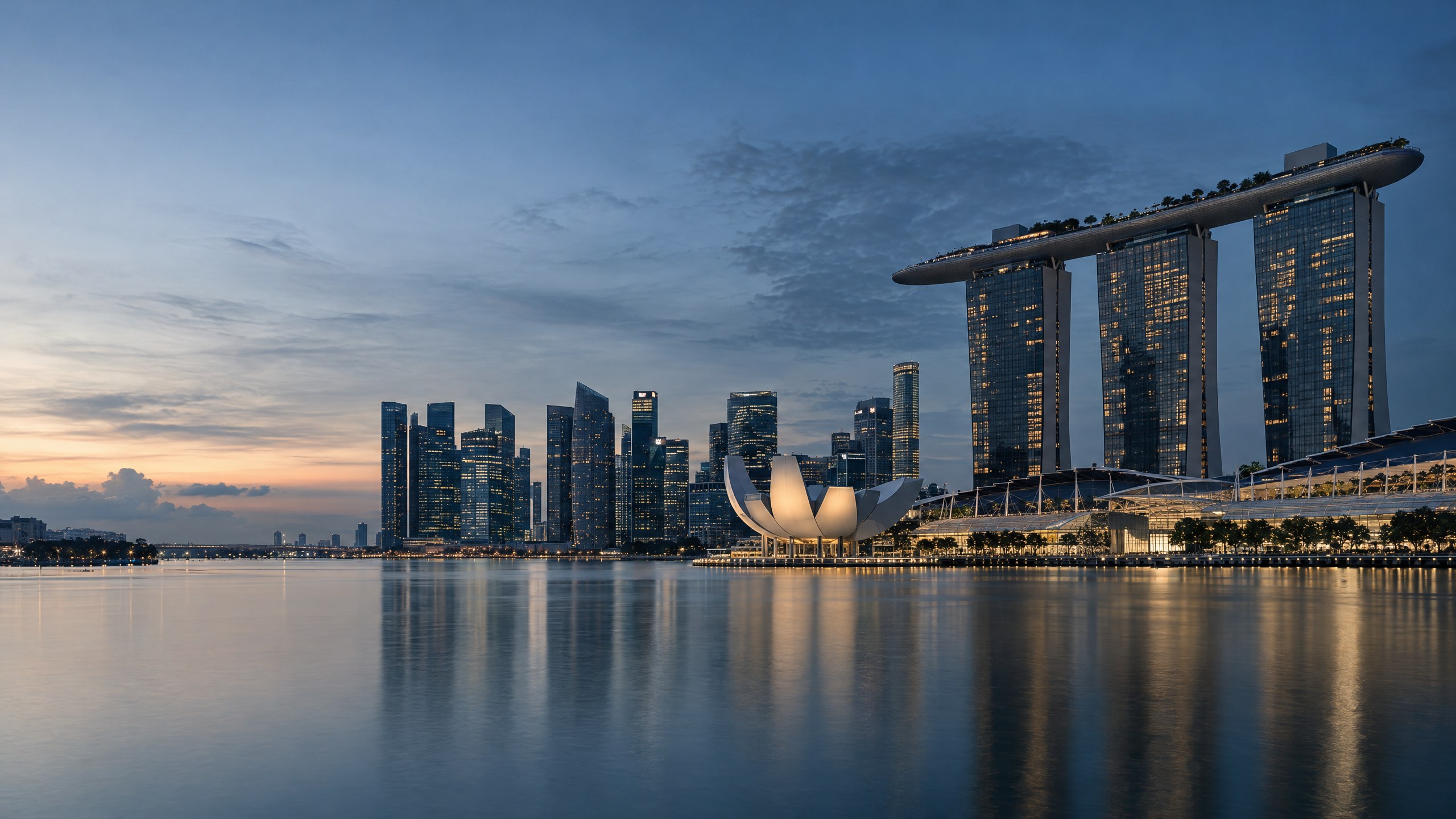
The legal framework for contract disputes in Singapore
Singapore contract law is largely judge-made, developed from English common law and now shaped by a substantial body of Court of Appeal decisions. Statutes fill specific gaps. The ones that come up most often in commercial disputes are listed below.
- Sale of Goods Act 1979. Implied terms on title, description, satisfactory quality and fitness for purpose in contracts for the sale of goods.
- Misrepresentation Act 1967. Damages for misrepresentation that induced a contract, and controls on clauses excluding liability for misrepresentation.
- Unfair Contract Terms Act 1977. A reasonableness test for certain exclusion and limitation clauses, particularly in standard terms.
- Contracts (Rights of Third Parties) Act 2001. When a non-party can enforce a term intended to benefit it, unless the contract excludes the Act.
- Frustrated Contracts Act 1959. Adjustments between the parties when a contract is discharged by frustration.
- Limitation Act 1959. Under section 6, contract claims must generally be brought within six years from the date the cause of action accrued, usually the breach.
How Singapore courts interpret contracts
Since Zurich Insurance (Singapore) Pte Ltd v B-Gold Interior Design & Construction Pte Ltd [2008] SGCA 27, Singapore courts have taken a contextual approach: the text is the starting point, read in light of relevant background known to both parties. The court does not rewrite a bad bargain, and evidence of prior negotiations is admissible only within limits. Clear words usually prevail.
Terms will be implied in fact only to fill a true gap, following the three-step test in Sembcorp Marine Ltd v PPL Holdings Pte Ltd [2013] SGCA 43. The court asks why the gap arose, whether a term is necessary for business efficacy, and what specific term the parties would have agreed. This is a high bar; parties should not count on an implied term to rescue an incomplete contract.
Liquidated damages and penalties
In Denka Advantech Pte Ltd v Seraya Energy Pte Ltd [2020] SGCA 119, the Court of Appeal declined to follow the UK Supreme Court's newer approach and retained the traditional test: a sum payable on breach is unenforceable as a penalty if it is not a genuine pre-estimate of loss. The rule applies only to sums triggered by a breach. Liquidated damages clauses should be supported by a record of how the figure was calculated.
Common claims and the remedies available
| Claim | What the claimant must show | Usual remedy |
|---|---|---|
| Debt (unpaid price) | Contract, performance of the obligations that trigger payment, sum due and unpaid | The debt plus contractual or court interest; often suited to summary judgment |
| Breach of contract | A term, its breach, and loss caused by the breach that is not too remote | Damages to put the claimant where it would have been had the contract been performed |
| Misrepresentation | A false statement of fact that induced the contract | Rescission and/or damages, including under the Misrepresentation Act 1967 |
| Wrongful termination | The other party terminated without a valid contractual or common law right | Damages for repudiation; occasionally an injunction |
| Specific performance or injunction | Damages would be inadequate, for example for unique assets or confidentiality breaches | An order to perform or to stop a breach; discretionary |
| Liquidated damages | The clause applies and is not a penalty | The agreed sum, without proof of actual loss |
Damages are compensatory, not punitive. A claimant must take reasonable steps to mitigate its loss, and losses that were not within the parties' reasonable contemplation at the time of contracting are generally irrecoverable. Many contracts also cap or exclude categories of loss; check those clauses before valuing any claim. Our article on limitation of liability explains how caps are read.
Force majeure and frustration
Singapore law has no general doctrine of force majeure; relief depends on the wording of the contract. A force majeure clause typically requires the event to fall within its list, to have prevented or hindered performance as the clause specifies, and to have been notified within a set time. Where there is no clause, frustration may discharge the contract, but only where a supervening event makes performance radically different from what was agreed. Increased cost alone is rarely enough. The Frustrated Contracts Act 1959 then governs adjustments for money paid and benefits conferred. See our article on force majeure.
Defending a contract claim
Defendants often have more options than they first assume: disputing the interpretation relied on, showing that the claimant failed to perform its own obligations first, relying on liability caps and exclusions, raising set-off or a counterclaim, and testing whether the claimant mitigated its loss. Each needs evidence, and a defence that is only a bare denial may invite summary judgment.
Termination: the highest-risk decision
Many contract disputes in Singapore turn on whether a party was entitled to end the contract. Get it right and you are released from further performance and can claim damages. Get it wrong and your own termination becomes a repudiatory breach, reversing the roles.
Under the framework in RDC Concrete Pte Ltd v Sato Kogyo (S) Pte Ltd [2007] SGCA 39, an innocent party may generally terminate where the contract expressly allows it on the event in question, where the other party clearly renounces the contract, where the term breached is a condition, or where the breach deprives the innocent party of substantially the whole benefit of the contract. Express termination clauses must be followed precisely, including notice and cure periods.
Before sending a termination notice, check three things: the clause or common law ground relied on, every procedural step the contract requires, and whether your own conduct since the breach could be read as affirming the contract. A one-page legal review at this stage can prevent a multi-year dispute.
Termination and suspension also have operational consequences: who owns work in progress, what happens to data and licences, and how transition services are provided. Our article on termination rights covers drafting.
Choosing the forum for contract disputes in Singapore
The contract's dispute resolution clause usually decides the forum. If it provides for arbitration, a court claim will generally be stayed in favour of arbitration. If it is silent, or chooses the Singapore courts, the value of the claim decides which court hears it.
Small Claims Tribunals
For claims of up to S$20,000, or S$30,000 if both parties consent, covering goods and services contracts among others. Lawyers do not appear, and claims must be filed within two years, according to the Judiciary's eligibility guidance.
Magistrates' and District Courts
Magistrates' Courts generally hear claims up to S$60,000 and District Courts up to S$250,000, with a simplified process for many lower-value claims.
General Division of the High Court
Claims above S$250,000, complex commercial matters and cases needing freezing injunctions or other substantial interim relief.
Arbitration or the SICC
Where the contract provides for arbitration, or for the Singapore International Commercial Court in an international dispute. Suits cross-border counterparties and confidentiality needs.
Court claims are governed by the Rules of Court 2021, which require parties to consider amicable resolution and generally make a written offer of settlement before suing. See our pages on commercial litigation and international arbitration.
In most contract disputes in Singapore, the documents written while the contract was running decide the case long before any witness is heard.
From breach to resolution: a typical sequence
- Stabilise. Preserve documents and messages, stop routine deletion and identify the people who know the facts. Decide whether to keep performing under protest.
- Read the contract. Identify the terms breached, notice and cure provisions, time bars, liability caps, governing law and the dispute resolution clause.
- Serve contractual notices. Give any notice of breach, default or claim in the required form and within the required time, keeping proof of delivery.
- Make a settlement offer. Under Order 5 of the Rules of Court 2021, make a written offer of amicable resolution, open for at least 14 days, before starting a court claim.
- Issue the claim. File in the right forum. In court, the defendant generally has 14 days after service of the statement of claim to file a notice of intention to contest and 21 days to file a defence.
- Seek early judgment where possible. Apply for default or summary judgment if the defendant does not respond or has no real defence.
- Prepare for trial or hearing. Exchange documents and witness statements, and seek approval for any expert evidence.
- Enforce or settle. Enforce the judgment or award, or record any settlement in an enforceable form.
Documents and evidence that win contract cases
The quality of the evidence often determines whether contract disputes in Singapore settle early or go to trial. Assemble the following as soon as a dispute appears:
- The signed contract, all schedules, amendments, change orders, side letters and the standard terms incorporated by reference, with evidence of how they were incorporated.
- Pre-contract materials where relevant: proposals, representations, due diligence answers and drafts, particularly if misrepresentation or interpretation is in issue.
- Performance records: purchase orders, delivery notes, acceptance certificates, service reports, logs and test results.
- Communications: emails, WhatsApp and WeChat messages, meeting notes and call records. Messaging apps are frequently the best evidence of what was agreed.
- Financial records: invoices, statements of account, payment history and calculations of loss, with source data.
- All notices served, and proof of the method and date of delivery.
Our guides to document preservation and dispute readiness explain how to set up a defensible process.
Risks and common mistakes
Affirming the contract by carrying on
An innocent party faced with a serious breach must choose between terminating and affirming the contract. Continuing to accept performance, issuing new purchase orders or making payments without reservation for a long period can be treated as affirmation, after which termination for that breach may no longer be available. If you need time to decide, say so in writing and expressly reserve your rights. Equally, do not let a reservation of rights letter become a substitute for a decision, because prolonged delay can still amount to affirmation.
Missing a contractual notice or time bar
Many commercial contracts require claims to be notified within a short period, sometimes 30 or 60 days, and in a particular form, failing which the claim is barred. Notice clauses also often specify addresses and methods of delivery; an email to the usual contact may not be valid if the clause requires courier delivery to the registered office. Track every notice requirement in a schedule as soon as a dispute appears, and comply strictly. Courts generally enforce clear notice provisions according to their terms.
Relying on what was said, not what was signed
Entire agreement and non-reliance clauses can limit claims based on pre-contract statements, although clauses excluding liability for misrepresentation are subject to a reasonableness test under the Misrepresentation Act 1967. Sales promises that never made it into the contract are often hard to enforce. If a representation was important, it should be in the contract as a warranty. In a dispute, gather evidence of exactly what was said, by whom and when, and how it influenced the decision to contract.
Overvaluing the claim
Liability caps, exclusions of indirect or consequential loss, mitigation and remoteness can each cut a claim substantially. Boards that approve proceedings on a headline figure are often disappointed. Before issuing, model the claim after applying every relevant clause and legal limit, add realistic cost and time estimates, and test the result against the counterparty's ability to pay. The costs risk under the Rules of Court 2021 makes this discipline essential.
Leaving limitation too late
The six-year limitation period under the Limitation Act 1959 runs from the breach, not from when negotiations fail. Claims in long-running relationships, with repeated small breaches, can partly expire while the parties talk. Where limitation is approaching, agree a written standstill or issue protective proceedings. Check whether a different period applies, for example for deeds, or under a foreign governing law.
Cross-border contract disputes
Many contract disputes in Singapore involve a foreign party, a foreign governing law or assets outside Singapore. Three questions come first.
Which law governs? Singapore courts generally respect an express choice of law. Where the contract is governed by Bangladeshi, English, UAE or Chinese law, that law must usually be proved as a fact, often with expert evidence, unless the case is in the SICC, where foreign law can in some cases be determined on submissions. Our article on governing law clauses explains the drafting choices.
Which forum? An exclusive jurisdiction or arbitration clause will normally be enforced. Without one, a defendant may argue that another country is the more appropriate forum.
Where will you enforce? A Singapore judgment registers easily in some countries but must be sued on afresh in others, including Bangladesh and the UAE. An arbitral award is enforceable in more than 170 New York Convention states. Our page on enforcement of foreign judgments explains the routes. TRW & Co's offices in Dhaka, Dubai, London and China help coordinate local advice.
How TRW & Co helps with contract disputes in Singapore
TRW & Co advises businesses on both sides of commercial contract disputes. Where Singapore court or tribunal representation is required, we work alongside Singapore-qualified counsel.
- Rapid contract review. We identify rights, deadlines, caps and the dispute clause within days of instruction and set out the immediate steps.
- Termination advice. We test termination grounds and draft notices that comply with the contract and preserve rights.
- Claim valuation. We model recoverable loss after caps, exclusions and mitigation, and give a realistic costs and timing view.
- Resolution strategy. We run negotiations and mediation, and coordinate litigation or arbitration where needed, including across borders. See our mediation and settlement page.
Contract issues also arise in construction disputes and technology disputes. View all our practices.
Checklist for decision-makers
- Have we preserved all documents and messages relevant to the contract?
- Do we know the governing law, the forum clause, notice requirements and contractual time bars?
- If terminating, is the ground clear, the procedure followed and our conduct consistent?
- Have we valued the claim after caps, exclusions, mitigation and remoteness?
- Has a written offer of amicable resolution been made, open for at least 14 days?
- When does the six-year limitation period expire for each breach?
- Where are the counterparty's assets, and how will a judgment or award be enforced?
To discuss contract disputes in Singapore, contact TRW & Co at info@trw.co or +880 1779 127165, or visit us at 21A Duxton Hill, Singapore 089604. Our note on contract remediation covers fixing a contract before it fails.
Frequently asked questions
01How long do we have to sue for breach of contract in Singapore?
Under section 6 of the Limitation Act 1959, a claim in contract must generally be brought within six years from the date the cause of action accrued, which is normally the date of breach rather than the date you discovered the loss. Contracts may impose shorter contractual time bars for notifying claims, and different rules can apply to deeds or where foreign law governs. Negotiations do not stop time running, so agree a standstill if talks may be lengthy.
02Can we terminate if the other side breaches?
Only if you have a valid ground. Singapore courts generally recognise termination where the contract expressly allows it, where the other party renounces the contract, where the term breached is a condition, or where the breach deprives you of substantially the whole benefit of the contract. Express termination clauses must be followed precisely. Terminating without a valid ground is itself a repudiatory breach, so take advice before sending the notice.
03Are liquidated damages clauses enforceable?
Generally yes, if the sum is a genuine pre-estimate of the loss likely to flow from the breach. In Denka Advantech v Seraya Energy [2020] SGCA 119 the Court of Appeal retained this traditional test and declined to adopt the UK's broader legitimate interest approach. The penalty rule applies only to sums payable on breach. Keep a record of how the figure was calculated when the contract was negotiated.
04Which court should we sue in?
If the contract has an arbitration clause, the dispute will normally go to arbitration. Otherwise, the claim value guides the forum: Small Claims Tribunals for many goods and services claims up to S$20,000, or S$30,000 by consent; Magistrates' Courts up to S$60,000; District Courts up to S$250,000; and the General Division of the High Court above that. International commercial disputes may go to the SICC where the parties agree.
05Can we claim for a promise made in negotiations that is not in the contract?
Possibly, as a misrepresentation claim if a false statement of fact induced you to contract, or by arguing that the promise formed a collateral contract. Entire agreement and non-reliance clauses can make this difficult, although exclusions of liability for misrepresentation are subject to a reasonableness test under the Misrepresentation Act 1967. Evidence of exactly what was said, and why it mattered, is critical.
06Do we have to try mediation before suing?
Under Order 5 of the Rules of Court 2021, a party must consider amicable resolution and generally make a written offer of amicable resolution before starting a court claim, unless it has reasonable grounds not to. The offer must stay open for at least 14 days unless otherwise agreed. Mediation is not compulsory in every case, but the court can order it, and unreasonable refusal can affect costs.
07Can a director be personally liable for the company's breach of contract?
Generally no. A company is a separate legal person, and its directors are not parties to its contracts. Personal liability can arise where a director gave a personal guarantee, signed in a personal capacity, made a fraudulent or negligent misrepresentation, or in limited cases of fraud or abuse of the corporate form. Check guarantees and the signature blocks before assuming the company is the only target.
Sources and official materials
- Limitation Act 1959 — Six-year limitation for contract claims
- Misrepresentation Act 1967 — Damages and exclusion clauses for misrepresentation
- Denka Advantech v Seraya Energy [2020] SGCA 119 — Court of Appeal on penalty clauses
- Rules of Court 2021 (Judiciary) — Civil procedure and amicable resolution duties
- Small Claims Tribunals: eligible claims — Limits, claim types and filing period
- Enforce an order or judgment (Judiciary) — Enforcing a contract judgment
General information only, current as at 20 October 2026. It is not legal advice and does not create a lawyer–client relationship. Singapore law and regulatory practice change; check current official sources and take advice on the facts of your matter.
Talk it through
before you decide.
Share the decision, the jurisdictions and the timetable. A partner will tell you what matters, what can wait and what it will take.