
TRW & Co · Shipping, Aviation & Industries
Charterparty and Cargo Claims in Singapore
Cargo claims in Singapore turn on a few hard rules: the Hague-Visby Rules applied by the Carriage of Goods by Sea Act 1972, title to sue under the Bills of Lading Act 1992, and a one-year time bar that forgives nothing. This guide covers cargo and charterparty disputes, security, forum and the decisions that protect recovery.
Key pointUnder Article III, rule 6 of the Hague-Visby Rules, the carrier is discharged unless suit is brought within one year of delivery; only an express written extension stops the clock, so diarise the date on discharge day.
At a glance
Hague-Visby has force
Section 3(1) of the Carriage of Goods by Sea Act 1972 gives the amended 1924 Brussels Convention force of law, and section 3(2) extends it to Singapore shipments.
One-year time bar
Article III, rule 6 discharges the carrier unless suit is brought within one year of delivery, or of when goods should have been delivered, absent agreed extension.
Title to sue
Section 2 of the Bills of Lading Act 1992 vests rights of suit in the lawful holder, so buyers and banks must check who actually holds them.
Due diligence, not warranty
Section 4 of COGSA confirms no absolute seaworthiness undertaking is implied where the Rules apply; the carrier must exercise due diligence before and at the voyage start.
Maritime arbitration option
SCMA is a named option in BIMCO’s Law and Arbitration Clause 2020 and NYPE 2015, with its 4th Edition Rules in force since 1 January 2022.
Swipe or scroll →
What charterparty and cargo claims in Singapore cover
Cargo claims in Singapore arise when goods carried by sea arrive short, damaged, contaminated, late or not at all, and someone with title to sue wants the loss paid. Charterparty claims are their commercial cousins: disputes between owners and charterers over hire, freight, demurrage, off-hire, unsafe ports, speed and consumption, and who ultimately bears a cargo loss.
The two categories travel together. A receiver sues the carrier named in the bill of lading; that carrier is often a disponent owner who then looks up the chain to the head owner, or down to the charterer who loaded the cargo. One incident can produce three or four claims under different contracts, laws and forums, each with its own deadline.
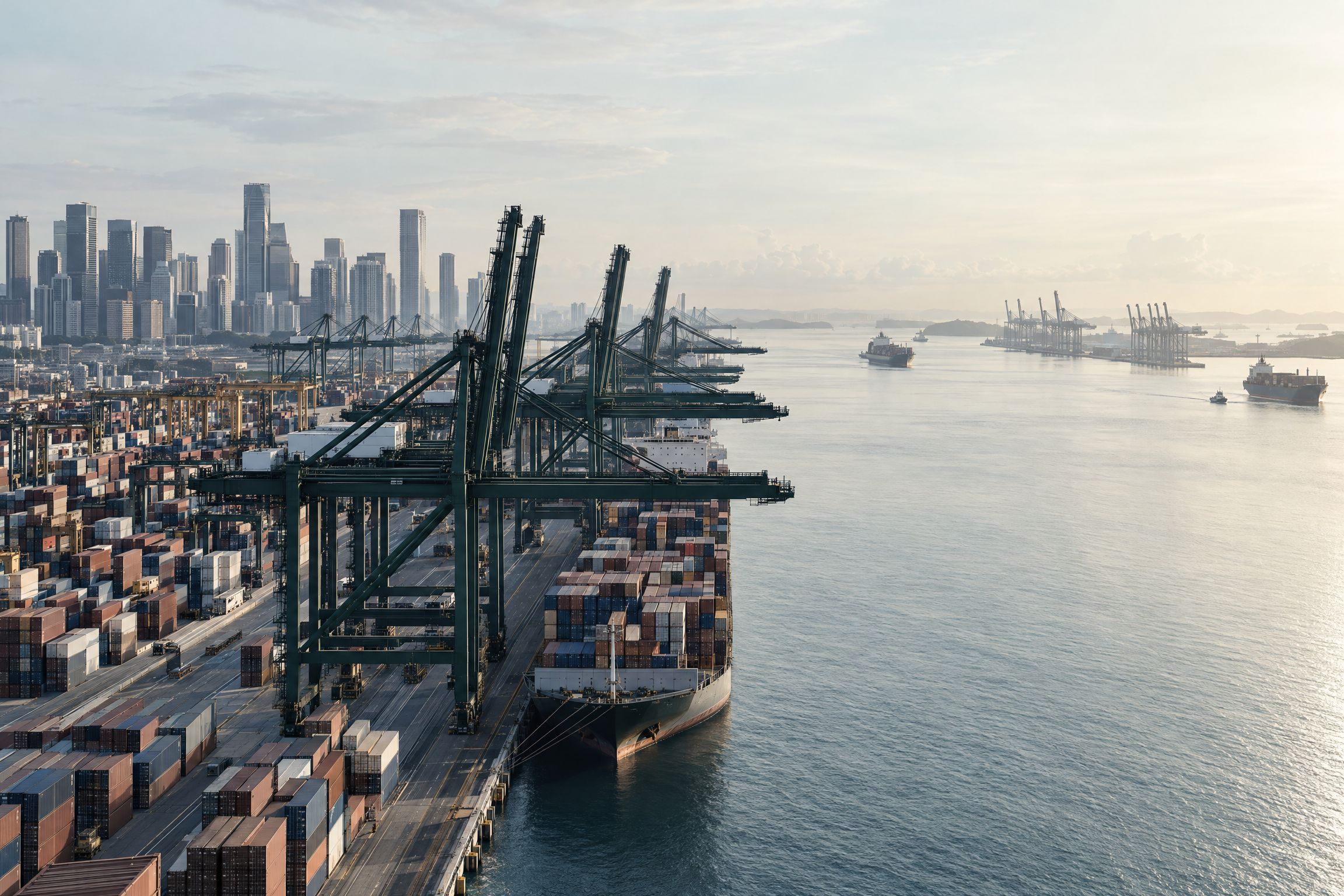
Singapore sits at the centre of this traffic. It is one of the world's busiest transhipment ports, a major bunkering hub and home to many regional owners, operators and commodity traders. That density means Singapore law, Singapore courts and Singapore-seated arbitration are frequently in play even when neither the cargo nor the ship ever belonged here.
The legal framework: COGSA, the Hague-Visby Rules and the Bills of Lading Act
Carriage of Goods by Sea Act 1972
The Carriage of Goods by Sea Act 1972 (COGSA) gives the force of law to the Brussels bills of lading convention of 1924 as amended by the 1968 Protocol, known as the Hague-Visby Rules. Section 3(1) is the operative provision, and the Rules are set out in the Schedule to the Act.
Singapore applies the Rules more widely than the convention requires. Section 3(2) extends them to carriage from a Singapore port even where the voyage would not otherwise fall within Article X. Section 3(3) applies them only where the contract provides, expressly or impliedly, for a bill of lading or similar document of title, and section 3(4) lets parties contractually apply them to a bill of lading or a non-negotiable receipt that says the Rules govern.
Two further modifications matter in practice. Section 3(6) brings deck cargo and live animals within the Rules where the document provides for it, and section 4 confirms that no absolute undertaking of seaworthiness is implied where the Rules apply: the carrier's duty is due diligence. Section 5 deals with bulk cargo weights ascertained or accepted by a third party, a frequent issue in grain, coal and ore shipments.
The Hague-Visby essentials
Under the Rules, the carrier must exercise due diligence before and at the beginning of the voyage to make the ship seaworthy and the holds fit for the cargo, and must properly and carefully load, handle, stow, carry, keep, care for and discharge the goods. In return, Article IV gives the carrier a catalogue of defences, including errors in navigation or management of the ship and fire without the carrier's actual fault or privity.
Article IV also caps liability at a package-or-weight limit, unless the nature and value of the goods were declared and inserted in the bill of lading. Section 3(8) of COGSA lets the Minister specify the local equivalent of the limitation amounts by order, so the exact figure for a given claim should be checked against the current order rather than assumed.
The most important rule of all is the time bar in Article III, rule 6. The carrier and ship are discharged from all liability unless suit is brought within one year of delivery, or of the date when the goods should have been delivered. The parties can agree to extend it, but only by clear agreement. Silence, negotiation or a survey invitation does not stop the clock.
Bills of Lading Act 1992
Title to sue is governed by the Bills of Lading Act 1992, which follows the model of the UK's 1992 legislation. Section 2 transfers rights of suit under shipping documents to the lawful holder, section 3 attaches liabilities to a person who takes or demands delivery or makes a claim, and section 4 makes a bill of lading signed by the master or carrier's agent conclusive evidence of shipment in the hands of a lawful holder.
This structure means the right claimant is often not the party that suffered the loss. A buyer who never became lawful holder, or a bank that holds the bill as security, may need assignments, joinders or a tort claim to recover. Getting this wrong is one of the most common reasons good cargo claims in Singapore fail.
| Claim | Typical parties | Main source of law | Time limit to watch |
|---|---|---|---|
| Cargo loss or damage under a bill of lading | Receiver or lawful holder v contractual carrier | COGSA 1972 and Hague-Visby Rules; Bills of Lading Act 1992 | One year from delivery (Article III, rule 6), unless extended by agreement |
| Cargo claim between owner and charterer | Head owner v time charterer, or disponent owner up the chain | Charterparty terms, often with a clause paramount and the Inter-Club Agreement | Contractual time bars and any incorporated Hague-Visby period |
| Demurrage and laytime | Owner v voyage charterer; seller v buyer under the sale contract | Voyage charterparty; sale contract laytime clauses | Short contractual documentation time bars are common; check the clause |
| Hire, off-hire and performance | Owner v time charterer | Time charterparty (for example, NYPE forms) | Limitation Act default of six years for contract unless the charter says otherwise |
| Misdelivery without production of the bill | Lawful holder or bank v carrier; carrier v party giving a letter of indemnity | Bill of lading contract, bailment and the letter of indemnity | Depends on characterisation; preserve rights immediately |
Courts, admiralty jurisdiction and arbitration
The General Division of the High Court exercises admiralty jurisdiction, including actions in rem against the ship, which is the foundation of ship arrest. Our page on ship arrest in Singapore explains when an arrest is available and how security is negotiated. Most charterparties, however, send disputes to arbitration. The Singapore Chamber of Maritime Arbitration (SCMA) is a named option in BIMCO's Law and Arbitration Clause 2020 and in the NYPE 2015 time charter, and its 4th Edition Rules took effect on 1 January 2022.
Charterparty claims: hire, demurrage and the cargo chain
Charterparties allocate risk between owners and charterers, and almost every cargo loss eventually becomes a charterparty question. The form of charter decides who answers for what.
Voyage charters
Under a voyage charter, the owner earns freight for carrying a cargo between named ports and the charterer pays demurrage if laytime is exceeded. Demurrage disputes turn on the notice of readiness, the laytime exceptions, weather and congestion clauses, and whether the charterer provided the documents the clause demands within a short contractual window. In commodity trades, the same demurrage often has to be passed down to a seller or up to a buyer under the sale contract, so the clauses should match.
Time charters
Under a time charter, the charterer hires the ship for a period and directs its employment. Typical disputes concern off-hire, speed and consumption warranties, bunker quality, unsafe ports and berths, and indemnities for complying with the charterer's orders. Where the charter is on an NYPE form, the Inter-Club New York Produce Exchange Agreement commonly apportions cargo claims between owner and charterer according to cause, which often settles the internal fight more quickly than a full analysis of fault.
Where the bill of lading and the charterparty meet
Bills of lading issued under charterparties often incorporate the charter's terms, including its law and arbitration clause. Whether incorporation succeeds depends on the precise words used. A receiver that ignores an incorporated arbitration clause may find its court claim stayed, and the one-year period running out in the meantime. Our guide to charterparty alignment shows how to keep the two documents consistent.
In cargo claims in Singapore, the first question is not what went wrong with the cargo. It is who holds the right to sue, against whom, where, and by what date.
Key decisions when a cargo claim arises
Before any letter is sent, the claimant needs a view on four decisions. Each one interacts with the time bar, so they should be taken in the first fortnight, not the eleventh month.
Who is the carrier?
The carrier is the party that contracted to carry, which is not always the shipowner. Look at the bill's signature block, the identity-of-carrier and demise clauses, and the charter chain before choosing a defendant.
Who can sue?
Under the Bills of Lading Act 1992, rights generally sit with the lawful holder. Check endorsements, bank involvement and the sale contract, and obtain assignments early if title is in doubt.
Which forum?
The bill or charter may point to Singapore courts, SCMA, London or another forum. A claim filed in the wrong place does not protect you against the one-year bar.
How will you get paid?
Security drives recovery. Options include a P&I club letter of undertaking, a bank guarantee, payment into court, or arresting the carrying ship or a sister ship where the law allows.
Commercial context matters too. A receiver that also buys from the shipper may prefer to recover under the sale contract or a cargo insurance policy and leave the insurer to pursue the carrier by subrogation. Our guide to shipping insurance risk covers how cargo and P&I cover interact.
Process and timeline for cargo claims in Singapore
Every case is different, but a disciplined sequence protects the claim and keeps costs proportionate.
- Give notice at discharge. Note loss or damage in writing to the carrier or its agent at the time of removal of the goods, or within three days where the damage is not apparent. Late notice does not bar the claim but shifts the evidential burden.
- Appoint surveyors and preserve evidence. Arrange a joint survey where possible, take samples, photograph stowage and packaging, and secure temperature or ventilation records before containers are stripped and returned.
- Identify claimant, carrier and forum. Map the bill of lading, charter chain and sale contracts, confirm who holds title to sue and which law and forum govern.
- Calendar the time bar and seek an extension. Diarise one year from delivery and ask the carrier or its P&I club in writing for an express extension. Only rely on an extension that is confirmed in clear terms.
- Obtain security. Request a club letter of undertaking in an agreed wording. If refused, consider arrest of the ship or a sister ship, which our shipping and maritime team can coordinate with Singapore counsel.
- Present the claim with quantum. Submit a documented claim showing sound value at destination, loss, salvage proceeds and mitigation. Expect the carrier to test package limitation and the Article IV defences.
- Commence before the deadline. If settlement is not concluded, issue proceedings or a notice of arbitration in the correct forum before the bar expires, then negotiate with the claim protected.
Documents and evidence to assemble
Cargo cases are won on contemporaneous records. Most of them sit with third parties and disappear quickly, so a preservation letter should go out on day one.
- Contract documents: all original bills of lading, sea waybills or electronic records, the charterparty and any recap, booking notes and the relevant sale contracts.
- Shipment records: mate's receipts, tally sheets, draft surveys, loading and discharge reports, stowage plans and statements of facts.
- Condition evidence: pre-shipment and discharge survey reports, photographs, samples with chain of custody, reefer download data and container interchange receipts.
- Ship records: deck and engine logs, hold cleaning and inspection certificates, bunker and ballast records, and any class or port State reports. MPA's Maritime and Port Authority of Singapore publications explain the port and registry framework that generates many of these.
- Loss evidence: commercial invoices, insurance documents, salvage sale records, and proof of mitigation steps taken.
- Correspondence: notices of claim, survey invitations, extension requests and every reply from the carrier or club.
Electronic bills of lading raise their own evidence points. Singapore amended the Electronic Transactions Act in 2021 to adopt the UNCITRAL Model Law on Electronic Transferable Records, and platforms such as IMDA's TradeTrust framework support transferable electronic bills. Preserve the platform audit trail as carefully as you would the paper original.
Risks and common mistakes
Letting the one-year time bar expire during negotiations
The single most expensive mistake in cargo claims in Singapore is negotiating past the anniversary of delivery. Article III, rule 6 discharges the carrier entirely unless suit is brought within one year, and courts treat it as a hard deadline. Friendly correspondence with a P&I club, a pending survey report or a promise to "look into it" does not extend time. Only an express written extension does, and it must cover the right parties and the right claim. If an extension is not confirmed a few weeks before the deadline, issue protective proceedings or a notice of arbitration in the correct forum and keep talking afterwards.
Suing the wrong carrier
The name painted on the ship is not necessarily the contractual carrier. Liner bills often name a container operator; charter bills may be signed for the master, making the registered owner the carrier, or for a charterer in its own name. Identity-of-carrier and demise clauses complicate the picture further. Suing the wrong entity wastes the limitation period and may leave nothing to enforce against. Review the face and reverse of the bill, the charter chain and the signatory's authority before issuing, and where real doubt exists, protect time against more than one candidate.
Ignoring an incorporated arbitration clause
Charter bills commonly say that all terms of the charterparty, including the law and arbitration clause, are incorporated. If the words are effective, the receiver is bound to arbitrate even though it never saw the charter. Starting court proceedings instead can lead to a stay in favour of arbitration, by which time the one-year period may have expired. Ask early for a copy of the charter, analyse the incorporation wording, and if in doubt commence arbitration in time while reserving your position on jurisdiction. Our guide to shipping arbitration clauses explains the drafting points.
Releasing cargo without the original bill
Carriers are often asked to deliver against a letter of indemnity because the original bills are stuck in the banking chain. If the goods go to the wrong party, the lawful holder, frequently a financing bank, can sue the carrier for misdelivery, and the carrier then depends on the value of the indemnity. Owners should insist on indemnities from creditworthy parties, ideally countersigned by a bank, and charterers should understand they may be asked to give them. Traders and banks should read our page on trade finance documentation for the security implications.
Under-valuing the claim through package limitation
Hague-Visby limitation applies per package or unit, or by gross weight, whichever is higher, unless the cargo's nature and value were declared and inserted in the bill. For containerised cargo, how the packages are enumerated on the bill can change the limit dramatically. Claimants should check the bill's description before shipment, consider an ad valorem declaration for high-value goods, and price claims realistically. Carriers lose the right to limit only in narrow circumstances involving intentional or reckless conduct, which is difficult to prove.
Treating demurrage documentation as an afterthought
Many voyage charters and sale contracts require demurrage claims to be presented with specified documents, such as the notice of readiness, statements of facts and pumping logs, within a short contractual period after discharge. Missing a document or the deadline can extinguish an otherwise valid claim. Build a demurrage desk routine that collects the documents at each port call, checks them against each clause in the chain, and submits complete claims before the earliest deadline rather than the latest.
On the day a damaged cargo is discharged, write down three dates: delivery, one year from delivery, and a review date eight weeks earlier. If an express time extension from the carrier or club is not in writing by the review date, start protective proceedings in the correct forum. That single discipline saves more cargo claims in Singapore than any argument about seaworthiness.
Cross-border angle: Bangladesh, the UK, China, the UAE and ASEAN
Cargo flows through Singapore rarely begin or end there, so cargo claims in Singapore regularly involve foreign law. A bill issued in Chattogram, a charter governed by English law and a receiver in Shanghai can all feature in one file.
- Bangladesh. Bangladeshi importers and exporters move large volumes through Singapore transhipment. Bangladesh's carriage regime and court procedures differ from Singapore's, so where cargo is discharged or claims are brought there, local advice through our Chattogram and Dhaka teams matters, particularly on title to sue and time limits.
- United Kingdom. English law and London arbitration remain common in charterparties. Singapore's Bills of Lading Act follows the UK's 1992 model, which makes English authority persuasive, but procedural rules and arbitral institutions differ.
- China and wider Asia. Mainland China applies its own maritime code to many shipments. Choosing Singapore law and SCMA arbitration can give a neutral forum for parties on both sides of a China-ASEAN trade.
- UAE. Jebel Ali and other Gulf ports link Singapore to Middle Eastern and African trades. Security and enforcement there require local counsel, and awards will need recognition under the New York Convention.
Enforcement is the final test. Singapore-seated awards are generally enforceable in New York Convention states, and our pages on international arbitration and enforcement of foreign judgments explain the routes.
How TRW & Co helps with charterparty and cargo claims in Singapore
We act for cargo interests, traders, operators and financiers on claims and on the contracts that prevent them. Where Singapore court or tribunal representation is required, we work alongside Singapore-qualified counsel.
First-response triage
We map title to sue, carrier identity, forum and time bar within days of a loss, and send preservation and notice letters. The output is a short decision memo for management and insurers.
Security and protective steps
We negotiate letters of undertaking and time extensions with P&I clubs and, where needed, coordinate protective arbitration or arrest with Singapore counsel so the claim cannot lapse.
Charter chain disputes
We analyse hire, off-hire, demurrage and indemnity claims up and down the chain, including apportionment under the Inter-Club Agreement and matching sale-contract claims.
Contract and document review
We review bill of lading terms, charter recaps, letters of indemnity and electronic bill arrangements before shipment, so the next dispute starts from a stronger position. See our bill-of-lading disputes guide.
Our cargo claims strategy guide goes deeper on quantum and settlement, and our international trade contracts practice aligns sale terms with carriage terms.
Checklist for decision-makers
- Has written notice of loss been given at discharge, or within three days for hidden damage?
- Do you know the delivery date and the date one year later, and is there an express written extension?
- Have you identified the contractual carrier from the bill and the charter chain, not just the shipowner?
- Does your company, or a bank, hold the rights of suit as lawful holder under the Bills of Lading Act 1992?
- Is there an incorporated arbitration clause, and in which forum must you start?
- Have surveyors been appointed jointly, and are samples, logs and reefer data preserved?
- Is security in place through a club letter of undertaking, or is arrest a realistic option?
- Have you checked package limitation, the Article IV defences and any cargo insurance recovery?
- Are demurrage claims documented and presented within every contractual window in the chain?
If a cargo or charterparty problem is developing, contact TRW & Co by email at info@trw.co or on +880 1779 127165. You can also browse all our practices.
Frequently asked questions
01How long do we have to bring a cargo claim?
Where the Hague-Visby Rules apply, Article III, rule 6 discharges the carrier and ship from all liability unless suit is brought within one year of delivery, or of the date the goods should have been delivered. The period can be extended by agreement, but only by a clear written extension. Negotiations, surveys and correspondence do not stop the clock. Charterparty claims may have different contractual time bars, and the Limitation Act default for contract claims is six years where nothing shorter applies.
02Who is entitled to sue the carrier?
The Bills of Lading Act 1992 generally vests rights of suit in the lawful holder of the bill of lading, and in the person entitled to delivery under a sea waybill or ship’s delivery order. That may be the buyer, a financing bank or an intermediate trader depending on how the bill was endorsed and transferred. Parties who suffered the loss but never became lawful holder may need an assignment, a joinder of the holder or a claim in tort or bailment. Check title before the time bar approaches.
03Does Singapore apply the Hague Rules, the Hague-Visby Rules or the Hamburg Rules?
The Carriage of Goods by Sea Act 1972 gives force of law to the 1924 Brussels Convention as amended by the 1968 Protocol, which is the Hague-Visby regime. The Rules apply to contracts evidenced by a bill of lading or similar document of title, and section 3(2) extends them to carriage from a Singapore port. Contracts may also apply them by express clause, including to non-negotiable receipts that say the Rules govern. Other regimes may apply where a foreign law governs the contract.
04Can we arrest a ship in Singapore to secure a cargo claim?
Cargo claims generally fall within the admiralty jurisdiction of the General Division of the High Court, which allows an action in rem and, in appropriate cases, the arrest of the carrying ship or a sister ship when it is within Singapore waters. Most cases settle once the P&I club provides a letter of undertaking as alternative security. Arrest requires careful preparation, an undertaking for the Sheriff’s costs and Singapore counsel. Our ship arrest page explains the conditions in more detail.
05What is the Inter-Club Agreement and why does it matter?
The Inter-Club New York Produce Exchange Agreement is a mechanism, commonly incorporated into time charters on NYPE forms, that apportions liability for cargo claims between owners and charterers according to the cause of the loss, such as unseaworthiness or bad stowage. It avoids lengthy disputes over fault by applying agreed percentages. Owners and charterers who settle a cargo claim with a receiver should check whether the Agreement applies and whether its conditions, including time limits for notification, have been met.
06Our bill of lading is electronic. Does that change anything?
Singapore amended its Electronic Transactions Act in 2021 to adopt the UNCITRAL Model Law on Electronic Transferable Records, so a properly issued electronic bill of lading can function as a transferable document. Platforms such as TradeTrust support this. The substantive cargo rules still apply, but evidence of control and transfer comes from the platform’s records. Preserve the full audit trail, confirm that every party in the chain accepted the platform, and check how the rules of the platform interact with the bill’s terms.
07Can TRW & Co act for us in a Singapore cargo dispute?
We advise on title to sue, carrier identity, forum, time bars, security and settlement, and coordinate the full claim across Singapore, Bangladesh, the UK and other jurisdictions. We do not claim rights of audience in the Singapore courts. Where Singapore court or tribunal representation is required, we work alongside Singapore-qualified counsel. Contact us at info@trw.co or +880 1779 127165, or visit 21A Duxton Hill, Singapore 089604.
Sources and official materials
- Carriage of Goods by Sea Act 1972 — Gives Hague-Visby Rules force of law in Singapore
- Bills of Lading Act 1992 — Rights of suit, liabilities and representations
- Maritime and Port Authority of Singapore — Port operations, registry and maritime legislation
- Singapore Chamber of Maritime Arbitration — SCMA Rules 4th Edition and maritime arbitration
- IMDA TradeTrust — Electronic bills of lading and MLETR adoption
- CACJ: Carriage of Goods by Sea Act overview — How Singapore modifies the Hague-Visby Rules
General information only, current as at 20 October 2026. It is not legal advice and does not create a lawyer–client relationship. Singapore law and regulatory practice change; check current official sources and take advice on the facts of your matter.
Talk it through
before you decide.
Share the decision, the jurisdictions and the timetable. A partner will tell you what matters, what can wait and what it will take.