
TRW & Co · Shipping, Aviation & Industries
Ship Arrest in Singapore
Ship arrest in Singapore lets a claimant detain a vessel through an action in rem until its owners provide security, turning a hard-to-enforce debt into a guaranteed recovery. It is fast and powerful, but tightly controlled. This guide explains which claims qualify, which ships can be targeted, how release and judicial sale work, and when an arrest can backfire.
Key pointFor most statutory claims, what matters is who owns or demise-charters the ship on the day the claim form is issued, not when the debt arose; issuing promptly can preserve a right that a sale or redelivery would otherwise destroy.
At a glance
Statutory basis
The High Court (Admiralty Jurisdiction) Act 1961 lists qualifying claims in section 3(1) and sets the conditions for in rem actions in section 4.
Sister-ship limits
Another ship can be arrested only if the liable person beneficially owns all its shares when the action is brought; affiliated group vessels do not qualify.
Sheriff's deposit
Under the Supreme Court Practice Directions, solicitors give an indemnity undertaking to the Sheriff and place a S$10,000 deposit with the Sheriff upon arrest.
Usual forms of security
Ships are normally released against a P&I club letter of undertaking, a bank guarantee or payment into court, while the claim proceeds.
High bar for damages
Wrongful arrest damages require bad faith or gross negligence; non-disclosure can still see an arrest set aside under The Vasiliy Golovnin.
Swipe or scroll →
What ship arrest in Singapore involves
Ship arrest in Singapore is a court process that detains a vessel within Singapore waters so that a maritime claim is secured against the ship itself. The claimant starts an action in rem against the ship, obtains a warrant of arrest from the admiralty court, and the Sheriff takes the vessel into custody. In practice, the ship stays under arrest only until its owners or their insurers provide acceptable security, usually within days, and the dispute then continues in court or arbitration with payment effectively guaranteed.
The procedure matters because shipowning is often organised through single-ship companies with few other assets. A judgment or award against such a company may be worthless unless it is backed by security. Singapore's position on major trade routes, with heavy bunkering and anchorage traffic, means vessels against which claims exist call here frequently, and claimants watch for them.
Arrest is equally important to defendants. Owners, managers and P&I clubs need to know when an arrest is legitimate, how quickly a vessel can be released, and when an arrest is so unfounded that it can be set aside or give rise to damages. Charterers and cargo interests need to know when they can be the target of an arrest and when they cannot.
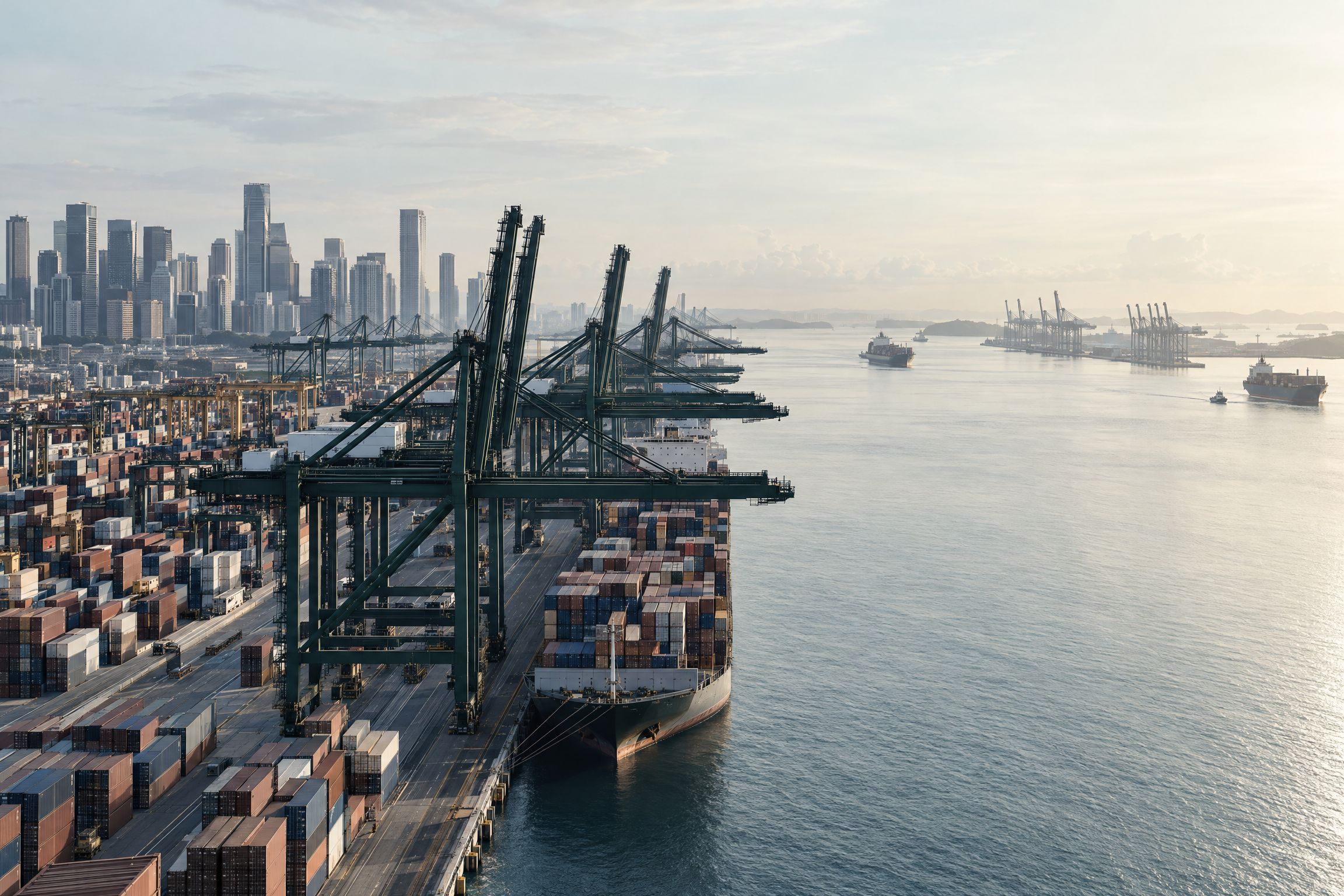
The legal framework for ship arrest in Singapore
The jurisdiction comes from the High Court (Admiralty Jurisdiction) Act 1961. Section 3(1) lists the kinds of claim the court can hear in admiralty, and section 4 sets out when those claims can be brought in rem against a ship. Procedure is governed by Order 33 of the Rules of Court 2021, supplemented by Part 17 of the Supreme Court Practice Directions 2021 on admiralty matters and the Admiralty Court Guide. Singapore is not a party to the 1952 Arrest Convention, so its own legislation and case law control.
Applications are made to the General Division of the High Court. The Sheriff executes warrants, keeps the ship in custody and, if a sale is ordered, conducts it. The Maritime and Port Authority of Singapore is not the arresting authority, but port clearance and the ship's location records, including MPA Digital Port searches, are part of the process.
| Type of claim | Head under section 3(1) | Nature of the right against the ship |
|---|---|---|
| Collision damage done by a ship | Paragraph (d) | Maritime lien, which follows the ship even after a sale |
| Crew wages | Paragraph (n) | Maritime lien |
| Salvage | Paragraph (i) | Maritime lien |
| Loss of or damage to cargo | Paragraph (g) | Statutory right in rem, conditional on ownership when the action is brought |
| Charterparty and carriage claims | Paragraph (h) | Statutory right in rem |
| Bunkers and necessaries supplied | Paragraph (l) | Statutory right in rem, only if the owner or demise charterer ordered them |
| Repairs, construction and dock dues | Paragraph (m) | Statutory right in rem |
| Mortgage claims | Paragraph (c) | Right in rem based on the registered security |
The distinction between a maritime lien and a statutory right in rem is decisive. A maritime lien attaches to the ship from the moment the claim arises and survives a change of ownership. A statutory right in rem only becomes effective when the action is brought, and it is lost if the ship is sold to a genuine third party before the claim form is issued.
Which ship can be arrested: the section 4(4) test
For statutory claims, section 4(4) of the Act imposes a two-stage test that catches many claimants out. First, the claim must arise in connection with a ship, and the person who would be liable in an ordinary action in personam (the "relevant person") must have been the owner or charterer of, or in possession or control of, that ship when the cause of action arose. Second, when the action is brought, that relevant person must be either the beneficial owner of all the shares in the ship, or its demise charterer.
If both conditions are met, the claimant can proceed against the ship concerned. Alternatively, it can proceed against any other ship of which the relevant person is, when the action is brought, the beneficial owner of all the shares. This is the sister-ship right. It does not reach vessels owned by affiliated companies in the same group, even if they share management, branding and a common parent.
Timing and ownership changes
Singapore courts read "when the action is brought" as the moment the in rem claim form is issued. A 2024 High Court decision illustrates the consequence: once a demise charter ended and the vessel was redelivered, claims against the former demise charterer could no longer support an action in rem against that ship. Owners can lawfully sell or redeliver before a claim is issued, so claimants with statutory claims should issue promptly once a claim crystallises, even if they have no immediate plan to arrest.
Time charterers and bunker suppliers
A time charterer is not the owner or demise charterer, so a supplier who sold bunkers to a time charterer generally cannot arrest the ship for the unpaid price. Physical suppliers need to look at who ordered the fuel and on whose credit. Supply terms that purport to bind "the vessel and her owners" do not override the statutory test. Our post on charterparties discusses how bunker and hire obligations sit between owners and charterers.
Before instructing counsel to arrest, verify three things in writing: the identity of the contracting party in the fixture or supply contract, the registered and beneficial owner of the target ship today, and whether any demise charter is registered or in force. Many failed arrests trace back to one of these assumptions.
The arrest process step by step
A ship arrest in Singapore can be obtained very quickly, but only if the paperwork is ready before the vessel arrives. Claimants who track vessels through AIS and port data often prepare papers days in advance.
- Check caveats and location. Search the register of caveats against arrest, which must be done before a warrant can issue, and confirm the ship's position and agent through an MPA Digital Port search.
- Issue the claim in rem. File an originating claim in rem naming the ship, framed within one of the section 3(1) heads, with the relevant person identified.
- Swear the supporting affidavit. Set out the claim, the basis for jurisdiction under section 4, the ownership position and every material fact, including those that hurt the claimant's case.
- Give the Sheriff's undertaking and deposit. The arresting party's solicitors undertake to indemnify the Sheriff for expenses and place a deposit with the Sheriff, currently S$10,000 under the practice directions, upon arrest.
- Execute the warrant. The warrant is served on the ship, and notice is given as soon as practicable to the owner, demise charterer, master, manager and, if relevant, the shipyard.
- Arrange custody. Seek an omnibus order giving the Sheriff discretion over the ship's custody, and arrange ship-watch services with daily location updates.
- Negotiate release. Agree the amount and form of security with the owners or their club, then file for release once security is in place and any caveat against release has been dealt with.
Applications for arrest and release must be supported by evidence of a caveat search carried out shortly before the hearing. The court's registry processes urgent out-of-hours applications under a separate procedure, which is important when a ship is due to sail at night.
Security, release and the link with arbitration
Owners usually obtain release by providing alternative security: a letter of undertaking from an International Group P&I club, a guarantee from an acceptable bank, or payment into court. Security is commonly assessed by reference to the claimant's reasonably arguable best case, including interest and costs, and is generally capped at the value of the ship. The amount is often the main battleground, and negotiations commonly proceed in parallel with the arrest papers.
Third parties can protect their position with caveats. A caveat against release prevents the Sheriff releasing the ship without notice to the caveator. Before a release is sought, the caveator must receive written notice and either withdraw the caveat or arrest the ship in its own action. Owners expecting claims can file a caveat against arrest, undertaking to provide security on demand, which reduces the risk of a surprise arrest.
Arrest in support of arbitration
Many maritime contracts contain arbitration clauses, often under the SCMA Rules or in London. Arrest is still available: the action in rem is used to obtain security, and the court proceedings are then stayed in favour of arbitration while the security is retained to satisfy the eventual award. The claimant must disclose its reliance on the arbitration agreement in the arrest application so that the court can consider the stay and the retention of security. See our pages on international arbitration and interim measures.
An arrest is a powerful tool, but it is granted on the claimant's word alone. The price of that privilege is complete candour with the court.
Judicial sale and priorities
If no security is offered, the claimant can apply for appraisement and sale. Because arrested ships lose value and accumulate custody costs, the court may order a sale pending the outcome of the claim. The application must ask for appraisers to be appointed from the Sheriff's list, and the sale is conducted by the Sheriff, typically by tender. A judicial sale gives the buyer clean title, free of prior liens and encumbrances, which is why it commands a better price than a distressed private sale.
Sale proceeds are paid into court and distributed according to the order of priorities the court applies. Broadly, port dues and the Sheriff's expenses come first, followed by the arresting party's costs, then maritime liens, possessory liens such as a shipyard's, mortgages and finally other statutory claims. Claimants with statutory rights in rem therefore often rank behind the ship's financiers, which should inform whether pursuing an arrest makes commercial sense.
Shipyards holding a possessory lien need special care. Where an arrested ship is in a yard, the claimant must apply for an omnibus order within a short period, expressed to be without prejudice to the yard's lien.
Setting aside an arrest and wrongful arrest damages
Because arrest applications are made without notice to the owner, the applicant owes a duty of full and frank disclosure. In The "Vasiliy Golovnin" [2008] SGCA 39, the Court of Appeal held that materiality is judged objectively, that material facts must be fairly stated in the affidavit rather than buried in exhibits, and that the court may set aside an arrest for non-disclosure. The case remains the leading authority on ship arrest in Singapore for applicants who are tempted to present a one-sided picture.
Setting aside an arrest is distinct from damages for wrongful arrest. Singapore follows the high threshold derived from the English decision in The Evangelismos: damages are available only where the arrest was brought with so little foundation that it implies malice (mala fides) or gross negligence (crassa negligentia). An arrest on a claim that later fails is not, by itself, wrongful.
Owners who believe an arrest is unjustified can apply to set it aside for lack of jurisdiction, for non-disclosure or because the claim has no arguable basis. They can also seek to strike out the action. In each case, providing security under protest may still be the quickest way to get the ship trading, while the challenge continues.
Risks and common mistakes
Arresting a ship that is not within section 4(4)
The most common error is to arrest a ship operated by the debtor but not owned or demise-chartered by it when the action is brought. Group ownership, time charters and recent sales all break the chain. The owner will apply to set aside the arrest and seek costs, and the claimant may lose leverage it would otherwise have had. Before filing, obtain registry extracts, check ownership history and examine whether the shares in the shipowning company are held by the debtor or by another group entity. A careful jurisdictional analysis takes hours; unwinding a failed arrest takes weeks.
Incomplete disclosure in the arrest affidavit
Applicants sometimes omit inconvenient facts: an ongoing arbitration, a previous rejection of the claim, a related hearing abroad or a defence the owner has already raised. Under the Vasiliy Golovnin principles, the duty extends to facts that are relevant even if they would not have changed the decision. The court can set aside the arrest on that basis alone and order costs. Draft the affidavit as if the owner's lawyers will read it the next morning, because they will, and state the weaknesses fairly in the body of the affidavit.
Underestimating custody costs
The arresting party is responsible for the Sheriff's expenses while the ship is under arrest, including port charges, ship-watch and, in some cases, crew provisions and security guards. If the owner abandons the ship, these costs can mount for months before a sale. They usually rank high in priority on a sale, but only if the proceeds are sufficient. Model the likely sale value against mortgages and other liens before arresting an old or heavily financed vessel, and budget for the deposit and ongoing expenses.
Delaying issue of the claim form
For statutory claims, the right in rem crystallises only when the claim is issued. Waiting for the ship to call in Singapore before issuing can mean losing the right altogether if the ship is sold or the demise charter ends in the meantime. Issuing the claim in rem early preserves the position, and the claim can then be served and the ship arrested when it comes within the jurisdiction. Weigh this against costs and the risk of tipping off the debtor.
Owners reacting slowly to an arrest
For owners, each day of detention means lost hire, disrupted schedules and potential claims from charterers and cargo interests. The quickest route to release is usually agreeing security through the P&I club while reserving all rights to challenge the arrest and the amount claimed. Owners should keep a crisis contact list for the club, Singapore counsel and the ship's agents, and should consider filing a caveat against arrest where a claim is expected.
The cross-border angle
Ship arrest in Singapore is often one move in an international dispute. The claim may be governed by English law, the merits may be decided in London or Hong Kong arbitration, and the debtor may be domiciled in Greece, China or the Gulf. Singapore is chosen simply because the ship is here. The arrest papers must therefore explain the foreign proceedings accurately, and the security wording must respond to an award or judgment wherever it is obtained.
TRW & Co's network is useful at both ends. Bangladeshi cargo interests and suppliers to vessels trading to Chattogram often find that Singapore is their best opportunity to secure a claim. UAE and Swiss trading houses deal with owners whose ships call here regularly. Chinese yards and lessors may need to protect mortgage or construction claims. We coordinate the evidence and foreign-law input needed for the Singapore application, and plan for enforcement of arbitral awards or foreign judgments once the merits are decided.
Where Singapore court or tribunal representation is required, we work alongside Singapore-qualified counsel, who file and argue the arrest and any challenge in the admiralty court.
How TRW & Co helps with ship arrest in Singapore
We support claimants and owners through the full arrest cycle, with a focus on preparation and speed.
Pre-arrest assessment
We test the claim against the section 3(1) heads and the section 4(4) ownership conditions, review registry and ownership evidence, and advise on whether arrest is the right lever.
Arrest readiness
We prepare the claim, affidavit and supporting evidence in advance, coordinate with Singapore counsel and track vessel movements so action can be taken on arrival.
Security negotiations
We negotiate the amount and wording of P&I letters of undertaking and bank guarantees so that they respond to the eventual award or judgment.
Defence and release
For owners and clubs, we review arrest papers for jurisdictional and disclosure flaws, arrange security under protest and pursue set-aside or damages where justified.
Ship arrest connects closely with maritime law more broadly, injunctions and urgent relief and asset recovery. See our practices, or contact us if a vessel is due in Singapore.
Checklist for decision-makers
- Does our claim fall within a section 3(1) head, and is it a maritime lien or a statutory right in rem?
- Who is the relevant person, and did they own, charter or control the ship when the claim arose?
- Is that person still the beneficial owner of all shares, or the demise charterer, today?
- Should we issue the claim in rem now to protect the right before any sale or redelivery?
- Have we disclosed every material fact, including any arbitration agreement and foreign proceedings?
- Do we have funds for the Sheriff's deposit and ongoing custody costs?
- What security wording will respond to the final award or judgment?
- For owners: is there a crisis plan with the P&I club, and should we file a caveat against arrest?
Answering these questions in advance turns ship arrest in Singapore from an emergency into a planned step in a recovery or defence strategy.
Frequently asked questions
01How quickly can a ship be arrested in Singapore?
If the papers are prepared in advance, a warrant can be obtained and executed very quickly after the ship arrives, including outside normal hours through the court's urgent procedures. The claim in rem, the supporting affidavit, the caveat search, the Sheriff's undertaking and the deposit all need to be ready. Claimants who track a vessel's movements often prepare everything before it reaches Singapore waters. Delays usually come from incomplete ownership evidence or uncertainty about the claim, not from the court.
02Can we arrest a ship owned by our debtor's sister company?
Usually not. Section 4(4) of the High Court (Admiralty Jurisdiction) Act 1961 allows an action against another ship only where the person liable in personam is the beneficial owner of all the shares in that ship when the action is brought. Ships owned by separate companies in the same group, even with common management, do not meet this test. In exceptional cases, arguments about sham arrangements may arise, but they are difficult and fact-specific.
03Can a bunker supplier arrest the vessel if the charterer did not pay?
Generally not, if the bunkers were ordered by a time charterer. Unpaid bunkers fall within the necessaries head of section 3(1), but section 4(4) requires that the person liable was the owner or charterer when the claim arose and is the beneficial owner or demise charterer when the action is brought. A time charterer is neither, so the ship cannot be arrested for its debt. Suppliers should check who orders and who is liable before supplying on credit.
04How much security will we have to provide to release our ship?
Security is commonly assessed by reference to the claimant's reasonably arguable best case, including interest and costs, and is generally capped at the value of the ship. The amount and the wording are negotiated, usually through the P&I club, and the court can determine the amount if the parties cannot agree. Owners often provide security under protest to get the ship trading, while reserving their rights to challenge jurisdiction, the merits and the amount.
05Can we arrest a ship if our contract has an arbitration clause?
Yes. Arrest can be used to obtain security for a claim that will be decided in arbitration, whether in Singapore or elsewhere. The court proceedings are then stayed in favour of the arbitration, and the security can be retained to satisfy the award. The applicant must disclose the arbitration agreement and its purpose in the arrest affidavit; as The Vasiliy Golovnin shows, material non-disclosure in the affidavit can lead to the arrest being set aside.
06What happens if nobody provides security for the arrested ship?
The claimant can apply for appraisement and sale. The court may order a sale before the claim is decided, to avoid the ship losing value and running up custody costs. The Sheriff conducts the sale, and the buyer takes clean title. Proceeds are paid into court and distributed by priority: port dues and Sheriff's expenses, the arresting party's costs, maritime liens, possessory liens, mortgages and then other statutory claims.
07Can the owner claim damages if the arrest was wrongful?
Only in limited circumstances. Singapore applies a high threshold derived from The Evangelismos: the claimant must have acted in bad faith or with gross negligence, meaning the arrest was brought with so little foundation that malice can be inferred. An arrest on a claim that later fails is not automatically wrongful. However, the arrest can be set aside for lack of jurisdiction or material non-disclosure, with costs consequences.
Sources and official materials
- High Court (Admiralty Jurisdiction) Act 1961 — Admiralty heads of claim and in rem conditions
- Supreme Court Practice Directions 2021, Part 17: Admiralty Matters — Sheriff's undertaking, deposit, caveats and release
- The "Vasiliy Golovnin" [2008] SGCA 39 — Full and frank disclosure; wrongful arrest test
- [2024] SGHC 113 — Section 4(4) and timing of the action in rem
- MPA: Singapore Registry of Ships prerequisites — Ownership and registration of Singapore ships
- SCMA 4th Edition Rules — Maritime arbitration often linked to arrests
General information only, current as at 20 October 2026. It is not legal advice and does not create a lawyer–client relationship. Singapore law and regulatory practice change; check current official sources and take advice on the facts of your matter.
Talk it through
before you decide.
Share the decision, the jurisdictions and the timetable. A partner will tell you what matters, what can wait and what it will take.