
TRW & Co · Shipping, Aviation & Industries
Gaming and Gambling in Singapore

Gambling law in Singapore starts from prohibition: gambling is unlawful unless licensed, covered by a class licence or exempt. Since 2022 the Gambling Control Act and a single regulator, the GRA, govern everything from casinos and Singapore Pools to lucky draws, loot boxes and fundraising raffles. This guide explains the routes, the risks and the checks businesses need.
Key pointMost businesses meet gambling law through class licences, which need no application but must be complied with in full; one missed condition, such as charging participants in a trade promotion, turns a marketing campaign into unlicensed gambling.
At a glance
Single regulator since 2022
The Gambling Regulatory Authority of Singapore became operational on 1 August 2022, when the GRA Act and Gambling Control Act 2022 took effect.
Four Acts consolidated
The Gambling Control Act replaced the Betting Act, Common Gaming Houses Act, Private Lotteries Act and Remote Gambling Act; casinos remain under the Casino Control Act 2006.
Class licences need compliance
Trade promotions, fundraisers, surveys, incidental event games and remote games of chance can run without applying, but only if every class licence condition is met.
Casino entry levy
Singapore citizens and permanent residents pay S$150 a day or S$3,000 a year to enter a casino; non-residents are exempt, and under-21s are barred.
Three-tier penalties
Operators face the heaviest penalties, then agents, then punters, with mandatory imprisonment for operators and agents of unlawful gambling and higher penalties for repeat offenders.
Swipe or scroll →
What gambling law in Singapore covers
Gambling law in Singapore regulates any activity in which people stake money or something of value on an uncertain outcome for the chance of a prize. That includes the two integrated-resort casinos, Singapore Pools lotteries and sports betting, gaming machines in clubs, and private gatherings. It also reaches into places many businesses do not expect: lucky draws in marketing campaigns, survey prize draws, fundraising raffles, loot boxes in video games and mystery boxes sold online.
The regime is deliberately restrictive. Singapore's starting point is that gambling is unlawful unless it is licensed, covered by a class licence or exempt. Penalties fall on operators, agents and, in many cases, the individuals who gamble. For a business, that means the key question is not whether an activity is popular abroad, but whether it fits one of the narrow lawful routes in Singapore.
Gambling law in Singapore matters to more than casino operators. Retailers, consumer brands, games studios, event organisers, charities, payment providers, media platforms and hotels all encounter it, usually when a marketing or product team designs something with an element of chance.
The legal framework and the Gambling Regulatory Authority
Singapore overhauled its gambling legislation in 2022. The Gambling Control Act 2022 consolidated the rules for gambling outside casinos, replacing the Betting Act, the Common Gaming Houses Act, the Private Lotteries Act and the Remote Gambling Act. The Casino Control Act 2006 continues to govern the casinos, with related amendments.
At the same time, the Casino Regulatory Authority was expanded into the Gambling Regulatory Authority of Singapore (GRA), a statutory board under the Ministry of Home Affairs. According to MHA’s announcement, the GRA became operational on 1 August 2022, the date on which the Gambling Regulatory Authority of Singapore Act 2022 and the Gambling Control Act took effect. The GRA is now the single regulator for all forms of gambling, while the Police remain responsible for enforcement against illegal gambling.
What counts as gambling
Section 4 of the Gambling Control Act defines gambling as betting, gaming or participating in a lottery, with each concept defined in turn: betting in section 5, gaming in section 7 and lotteries in section 9. A lottery is essentially an arrangement where prizes are allocated by chance and entry requires payment or some other qualifying step. The definitions are wide, so a promotion that looks harmless can fall within them.
Section 11 deals with remote gambling, including services based wholly or partly outside Singapore that have Singapore customers. Section 12 defines social gambling, which falls outside the main offences only if it meets strict conditions, and section 16 defines gambling advertisements and inducements to gamble. Section 17(6) carves gambling within casinos out of large parts of the Act, because the Casino Control Act governs it.
| Route | Examples | Legal basis | Key point |
|---|---|---|---|
| Casino licence | Marina Bay Sands and Resorts World Sentosa casinos | Casino Control Act 2006 | Strict licensing, entry levy for citizens and PRs, exclusion orders |
| Individual GRA licence | Singapore Pools lottery and betting products, gaming machine rooms in clubs, member-only gambling at private establishments, tombola | Gambling Control Act 2022 licences | Applications, conditions, key personnel screening and surveillance requirements |
| Class licence | Trade promotion lucky draws, fundraiser lotteries, survey prize draws, incidental games at events, remote games of chance such as loot boxes | Class licence orders under the Gambling Control Act 2022 | No application, but every condition must be met |
| Exemption | Social gambling at home among family and personal acquaintances | Section 12 of the Gambling Control Act 2022 | Physical only; no commission, fee or private gain; online social gambling remains prohibited |
| None available | Unlicensed online casinos and betting sites, proxy betting in casinos and machine rooms | Gambling Control Act 2022 and Casino Control Act 2006 | Offences for operators, agents and, in many cases, players |
Class licences: the route most businesses actually use
Most companies meet gambling law in Singapore through class licences. A class licence needs no application or notification to the GRA, but the activity is lawful only if every condition in the relevant order is met. If the business cannot comply, it must not run the activity. The GRA’s class licence page lists the current categories:
- Trade promotion games of chance and lotteries: run by businesses to promote goods or services. The business must not collect money from participants. Conditions took effect on 1 February 2023.
- Incidental games of chance and lotteries: run alongside events such as fairs and dinner-and-dances, with free participation limited to event participants. Conditions took effect on 1 February 2023.
- Fundraiser lotteries: raising funds for charities, exempt charities and institutions of a public character.
- Cause-related and survey-related games and lotteries: organised by public establishments, or by educational institutions and businesses to encourage survey participation.
- Remote games of chance: online games with chance-based elements where players can win money, money's worth or other things of value, such as loot boxes. Conditions took effect on 15 August 2022, and the GRA has since consulted on amendments to the order.
- Mystery boxes: listed by the GRA as a category whose class licence conditions were to be announced. Retailers should check the current position before launching.
The commercial lesson is that marketing teams need a gambling check built into campaign approval. A lucky draw that requires a purchase, a paid entry or a prize funded by participants can move an ordinary promotion outside the class licence. Our guides to advertising claims and consumer protection cover the overlapping consumer rules.
A class licence needs no application, but it is not a formality. If one condition is missed, the promotion is unlicensed gambling.
The casino regime
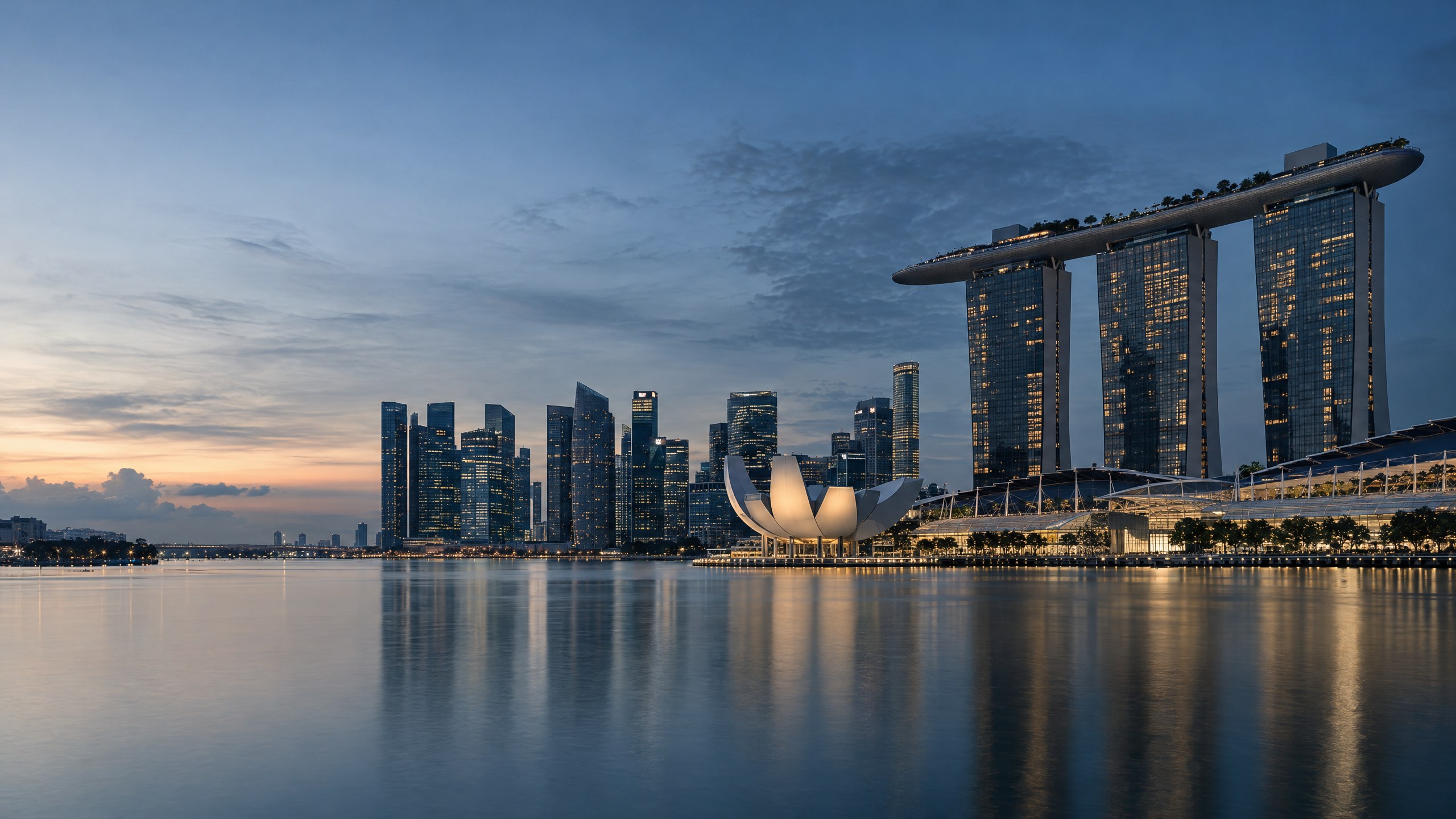
Singapore's two casinos sit within integrated resorts and are licensed under the Casino Control Act 2006. The GRA renewed the Resorts World Sentosa casino licence for a shortened two-year term in 2024 and the Marina Bay Sands licence for three years in 2025. Casino licences are granted under section 49 of the Act, and casino operators face detailed standards on surveillance, cash handling, anti-money laundering, credit, marketing and responsible gambling.
Entry levy and social safeguards
Singapore citizens and permanent residents pay an entry levy to enter a casino; non-residents, such as visitors and employment pass holders, do not. The current levy published by the operators is S$150 for a day and S$3,000 for a year. In 2024, after the 2019 order raising the levy lapsed and the amounts briefly reverted, Parliament passed the Casino Control (Amendment) Act 2024, which wrote these rates into the Act from 30 October 2024. Confirm the current amounts with the GRA or the operator before relying on them. Minors under 21 and excluded persons may not enter.
Exclusion is the second safeguard. Under the Casino Control Act, exclusion orders can be issued by the GRA and the Commissioner of Police (sections 121 and 122) and by the National Council on Problem Gambling, whose orders include family exclusion orders. The 2022 reforms extended NCPG exclusion to gaming machine rooms and Singapore Pools' online products and criminalised proxy gambling in casinos and machine rooms.
Casino marketing and international market agents
Casino operators may use licensed international market agents to bring in premium players from overseas, under provisions in the Act dealing with casino marketing arrangements. Agents, their representatives and the operators that engage them are all subject to licensing and probity checks, and the AML expectations in this area are high. Our page on anti-money laundering compliance explains the wider framework.
Online gambling, payments and advertising
Remote gambling is where gambling law in Singapore reaches furthest. In the second reading speech for the 2022 Bills, MHA explained that offences apply to overseas operators whose customers are in Singapore, and that access blocking and payment blocking are available against unlawful online gambling. Online social gambling remains prohibited even among friends.
Singapore Pools is the main lawful online channel. MHA noted that its online share of sports betting turnover rose from about 30% to 80% over five years, which shows why the government chose to regulate the channel rather than leave demand to offshore sites. Local horse racing ended in October 2024 with the closure of the Kranji racecourse.
Advertising is controlled separately. Section 16 of the Gambling Control Act defines gambling advertisements and inducements to gamble, and the Act limits when and how they may be published in Singapore. Platforms, influencers and media owners can be caught if they carry promotions for unlawful services. Our media and entertainment and online content regulation pages explain the related obligations, and payment businesses should read our page on payment services.
Penalties and enforcement
Enforcement is where gambling law in Singapore bites hardest. The Gambling Control Act uses a three-tier penalty structure. Operators face the heaviest penalties, followed by agents, then punters. Mandatory imprisonment applies to operators and agents of unlawful gambling, with higher penalties for repeat offenders. The minimum age is 21 for most gambling and 18 for Singapore Pools' physical outlets, and it is an offence for underage persons to open online accounts with Singapore Pools.
The GRA uses licence conditions, directives and regulatory action against licensees and class licensees, and its decisions can be reconsidered on request under section 99 of the Gambling Control Act. Criminal enforcement against illegal gambling remains with the Police. A business under investigation should treat the matter as both regulatory and criminal from the outset; see our page on investigation and crisis response.
How to check a game, promotion or product
For businesses outside the gambling industry, a short structured review answers most questions of gambling law in Singapore before launch.
- Describe the mechanic. Write down exactly what participants do, what they pay or give, how winners are chosen and what they can win, including virtual items that can be traded or cashed out.
- Apply the definitions. Test the mechanic against betting, gaming and lottery under sections 5, 7 and 9, and consider whether it is a remote service under section 11.
- Find the route. Decide whether the activity fits a class licence, needs an individual GRA licence, is exempt, or must be redesigned to remove the element of chance or payment.
- Check the conditions. Read the relevant class licence order in full and map each condition, including restrictions on payment, eligibility, prize types and record-keeping.
- Review marketing and payments. Check advertising content, age-gating, influencer arrangements and how money and prizes flow, including any payment provider requirements.
- Document and monitor. Keep a short legal sign-off, train the team running the activity, and review whenever the mechanic, platform or prizes change.
Risks and common mistakes
Purchase-linked lucky draws
Retailers often run draws where each receipt above a threshold earns an entry. Whether that fits the trade promotion class licence depends on the conditions, including the requirement that the business does not collect money from participants for the chance to win. Paid entries, entry fees disguised as administration charges, or prizes funded by participants can take a campaign outside the class licence. Check the current conditions, keep entry free of any separate charge, document how winners are drawn, and avoid mechanics that look like selling chances rather than promoting goods.
Loot boxes and in-game items with value
Games studios and publishers can fall within the remote games of chance class licence where players pay for chance-based items and can win money, money's worth or things of value. The risk increases if items can be traded, sold on marketplaces or converted to cash or tokens. Review whether the game's economy allows value to leave the game, how odds are disclosed, and whether the class licence conditions are met. Track the GRA's consultation on amendments to the order, and coordinate with our digital assets team where tokens are involved.
Mystery boxes sold online
Mystery boxes, where customers pay for a package with unknown contents, are listed by the GRA as a class licence category with conditions to be announced. Until the position is clear, retailers should be cautious about boxes where the value of contents varies widely, where high-value items are advertised as possible prizes, or where the box is marketed as a chance to win. Describe contents honestly, set a fair minimum value, and check the GRA's current guidance before launching, because consumer protection rules also apply.
Hosting or promoting offshore gambling
Media companies, affiliates, influencers and venues sometimes accept sponsorship or advertising from offshore betting brands that are lawful in their home markets. If those services are not authorised in Singapore, carrying their promotions can amount to unlawful gambling advertising, and remote gambling offences reach overseas operators with Singapore customers. Review sponsorship deals, geo-target advertising and include compliance warranties. Our guide to sponsorship contracts explains drafting points.
Clubs and private establishments operating on old assumptions
Before 2022, many social clubs and clan associations relied on exemptions for member gambling. The Gambling Control Act brought member-only gambling at private establishments into licensing, with key personnel screening and surveillance requirements, after a transition period. Clubs still operating on old arrangements, or that allow non-members or commission-based games, risk regulatory and criminal exposure. Review licences, house rules and records, and train committee members on their responsibilities.
Add one question to every marketing approval form: "Does any participant pay, and does chance decide who wins?" If the answer to both is yes, stop and run a gambling law check before launch. Most problems are fixed at design stage by removing payment, removing chance, or fitting the activity squarely within a class licence.
Cross-border angle: the UK, the UAE, Bangladesh and ASEAN
Gambling law in Singapore is stricter than in some markets and more permissive than in others. Regimes differ sharply between the markets TRW & Co serves, so a campaign or product that is lawful in one may be prohibited in another.
- United Kingdom. The UK licenses online and land-based operators under a comprehensive regime. A UK-licensed brand cannot assume that its licence permits marketing to Singapore residents, and Singapore's remote gambling offences reach overseas operators with Singapore customers.
- UAE. The UAE's position on gaming differs from Singapore's and has been evolving. Hospitality and entertainment groups operating in both Singapore and the UAE need jurisdiction-specific advice.
- Bangladesh. Gambling is heavily restricted in Bangladesh. Promotions and apps rolled out regionally should be reviewed separately for Bangladesh, where our Dhaka team advises.
- ASEAN and China. Many neighbouring jurisdictions prohibit most gambling, and cross-border online offerings attract enforcement attention. Regional campaigns should be geo-restricted and reviewed market by market.
Integrated resort and hotel groups should read our hotels and hospitality page for the wider licensing picture.
How TRW & Co helps with gambling law in Singapore
We advise businesses that operate near the edge of the gambling regime, and those within it, on structure, compliance and investigations. Where Singapore court or tribunal representation is required, we work alongside Singapore-qualified counsel.
Promotion and product review
We review lucky draws, contests, loot boxes, mystery boxes and fundraising lotteries against the Gambling Control Act and class licence conditions, and suggest redesigns that keep the commercial goal.
Licensing and regulator engagement
We help clubs, operators and suppliers understand GRA licensing requirements, prepare applications and governance documents, and manage reconsideration requests.
Advertising and sponsorship
We review gambling-related advertising, influencer arrangements and sponsorship contracts for compliance with Singapore rules and the rules in other markets where campaigns run.
Investigations and AML
We support businesses facing GRA or Police enquiries, coordinate internal investigations, and review AML and payment controls for operators, agents and payment providers.
Checklist for decision-makers
- Has someone with authority signed off each activity against gambling law in Singapore, with a record kept?
- Does any product, game or promotion combine payment by participants with prizes decided by chance?
- Has each activity been mapped to a licence, a class licence, an exemption or a redesign?
- Have you read the full conditions of the relevant class licence order, not just a summary?
- Can in-game or promotional items be traded, sold or converted into money or tokens?
- Do sponsorship and advertising deals exclude promotion of gambling services not authorised in Singapore?
- Are age limits, exclusion obligations and record-keeping built into operations where relevant?
- Do clubs and private establishments hold the licences required since the 2022 reforms?
- Is there a plan for responding to a GRA or Police enquiry, including document preservation?
For advice on a campaign, product or licence, contact TRW & Co at info@trw.co or +880 1779 127165, or browse all our practices. Our e-commerce regulation page covers related online selling rules.
Frequently asked questions
01Can we run a lucky draw to promote our products?
Often yes, under the trade promotion class licence, which the GRA has applied since 1 February 2023. You do not need to apply, but you must comply with every condition, including that the business does not collect money from participants for the chance to win. Paid entries, separate entry fees or prizes funded by participants can take the draw outside the class licence. Review the current class licence order before launch and keep records of how winners are chosen.
02Are loot boxes legal in Singapore?
Online games with chance-based elements where players can win money, money’s worth or other things of value fall within the remote games of chance class licence, whose conditions took effect on 15 August 2022. The GRA has also consulted on amendments to that order. Whether a particular loot box is compliant depends on the conditions, including whether in-game items can be traded or cashed out. Studios and publishers should review their game economies and check the current order.
03Who regulates gambling in Singapore?
The Gambling Regulatory Authority of Singapore, a statutory board under the Ministry of Home Affairs, regulates all forms of gambling, including casinos, Singapore Pools products, gaming machine rooms and class-licensed activities. It operates under the Gambling Regulatory Authority of Singapore Act 2022, the Gambling Control Act 2022 and the Casino Control Act 2006. The Police remain responsible for enforcement against illegal gambling, and the National Council on Problem Gambling can issue exclusion orders.
04Is online gambling allowed?
Only through authorised channels such as Singapore Pools’ online products. Remote gambling with unauthorised operators is unlawful, and MHA has explained that offences reach overseas operators whose customers are in Singapore, with access and payment blocking available. Online social gambling remains prohibited even among friends. Businesses that advertise, sponsor or process payments for unauthorised operators can face exposure, so review any arrangement with an offshore gambling brand carefully.
05Is gambling at home with friends legal?
Physical social gambling, as defined in section 12 of the Gambling Control Act, is lawful if it meets the conditions: it takes place in an individual’s home, involves family members or people who know each other personally, and involves no commission, fee or private gain beyond winnings. Void decks, coffeeshops, hotel rooms and chalets do not qualify. Online social gambling is not exempt, so a group game run through an app with real stakes remains unlawful.
06How much is the casino entry levy?
Singapore citizens and permanent residents pay S$150 for a daily levy or S$3,000 for an annual levy, as published by the casino operators. Non-residents, including visitors and employment pass holders, do not pay. Persons under 21 and excluded persons may not enter. After an order setting the higher levy lapsed in 2024, amendments in force from 30 October 2024 wrote these rates into the Casino Control Act; the current amounts should still be confirmed with the GRA or operator before relying on them.
07Can TRW & Co advise on a Singapore gambling matter?
Yes. We review promotions, games and products, advise on GRA licensing and class licences, check advertising and sponsorship arrangements, and support businesses facing enquiries. We do not claim rights of audience in the Singapore courts. Where Singapore court or tribunal representation is required, we work alongside Singapore-qualified counsel. Contact us at info@trw.co or +880 1779 127165, or visit 21A Duxton Hill, Singapore 089604.
Sources and official materials
- Gambling Control Act 2022 — Definitions, remote gambling, class licences and offences
- Casino Control Act 2006 — Casino licensing, exclusion orders and marketing agents
- Gambling Regulatory Authority of Singapore — Regulated products, licences and statutes
- GRA: Class licences — Class licence categories and effective dates
- MHA: Second reading of the Gambling Control Bill — Policy, penalties, social and online gambling
- MHA: GRA operational from 1 August 2022 — Commencement of the GRA and new Acts
General information only, current as at 20 October 2026. It is not legal advice and does not create a lawyer–client relationship. Singapore law and regulatory practice change; check current official sources and take advice on the facts of your matter.



