
TRW & Co · Real Estate, Projects & Energy
Energy Projects in Singapore
Energy projects in Singapore now range from rooftop solar and battery storage to hydrogen-ready gas plant and subsea imports of low-carbon power. Each depends on the right EMA licence, secure site rights, aligned contracts and a clear view of carbon tax. This guide explains the framework, the decisions and the risks for 2026.
Key pointThe licensing category of each generating unit, set by size and grid connection, decides who may sell its output and on what terms; fix it before signing site or offtake contracts, not after.
At a glance
Licence thresholds by size
Grid-connected units below 1 MW are exempt; 1 MW to below 10 MW need a Wholesaler Licence; 10 MW and above need a Generation Licence.
Solar target raised
EMA raised the target to 3 GWp by 2030 in March 2026, after installed solar capacity reached 2 GWp in 2025, mostly on rooftops.
6 GW import goal
Singapore aims to import about 6 GW of low-carbon electricity by 2035, through a staged EMA process of Conditional Approvals and Conditional Licences.
Carbon tax at S$45
The Carbon Pricing Act rate is S$45 per tonne for 2026 and 2027; facilities emitting 25,000 tCO2e or more a year are taxable.
2024 energy amendments
Amendments passed in September 2024 created a Future Energy Fund, centralised gas procurement and new EMA powers over critical energy infrastructure.
Swipe or scroll →
What energy projects in Singapore cover
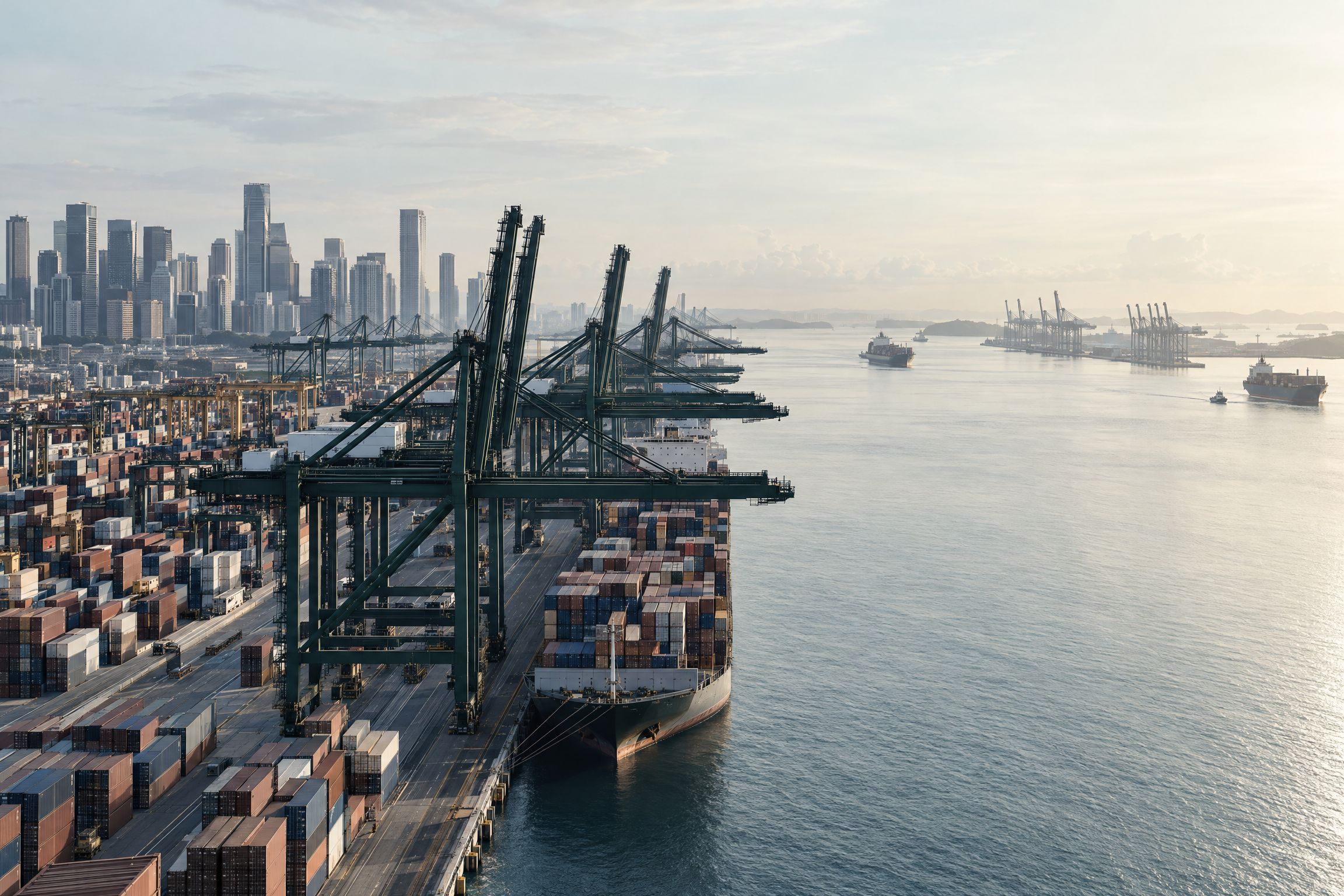
Energy projects in Singapore span far more than power stations. They include grid-connected and rooftop solar, battery energy storage, gas-fired generation built to burn hydrogen in future, cross-border subsea interconnectors for imported low-carbon electricity, district cooling, electric-vehicle charging networks and the energy-efficiency retrofits that large industrial users now have to plan for. Each sits on a different licensing, land and contracting track.
The legal question usually arrives earlier than sponsors expect. It is not "how do we sign the construction contract" but "which licence does this asset need, who is allowed to sell its output, and which carbon and efficiency obligations attach to the site". Getting those answers wrong can strand a project that is technically sound.
Three forces shape the market in 2026. Singapore has limited land and few domestic renewable resources, so solar is squeezed onto rooftops, reservoirs and car parks. Imports of low-carbon electricity from the region are moving from policy to licensed projects. And carbon pricing has stepped up, changing the economics of every fossil-fuelled asset on the island.
The legal and regulatory framework
The core statutes are the Electricity Act 2001, the Gas Act 2001 and the Energy Market Authority of Singapore Act 2001. Together they create the licensing regime, give the Energy Market Authority (EMA) its powers as economic and technical regulator, and set the market rules for the National Electricity Market of Singapore, which Energy Market Company operates.
These Acts were significantly amended by the Energy Transition Measures and Other Amendments Bill, passed by Parliament on 9 September 2024. The amendments set up a Future Energy Fund under EMA for capital investment in energy infrastructure, made centralised gas procurement a licensable activity, and allow EMA to require prescribed generation companies to buy gas from a centralised gas entity.
They also give EMA powers to direct access to critical energy infrastructure and to approve repurposing of key electricity and gas assets. Sponsors should check which provisions are in force when they structure a deal.
Other regulators that touch energy projects in Singapore
The National Environment Agency (NEA) administers the Carbon Pricing Act 2018 and the Energy Conservation Act 2012. The Urban Redevelopment Authority (URA) handles planning permission; the Building and Construction Authority (BCA) handles building plan and structural approvals; and the Singapore Civil Defence Force reviews fire safety, which matters greatly for battery storage. JTC and HDB control much of the land and roof space used for solar.
| Nameplate capacity per unit | Grid-connected? | Licence position | Practical consequence |
|---|---|---|---|
| Below 1 MW | Yes | Exempt from licensing | Typical rooftop and small commercial solar; registration and connection rules still apply |
| 1 MW to below 10 MW | Yes | Wholesaler Licence | Market participation obligations; budget for registration and compliance costs |
| 1 MW to below 10 MW | No | Exempt | Off-grid or behind-the-meter industrial supply |
| 10 MW and above | Yes | Generation Licence | Full licence conditions, market rules, dispatch and reporting duties |
| Imported electricity | Via interconnector | Conditional Approval, then Conditional Licence, then licence | Staged process run by EMA; milestones drive financing and offtake |
The thresholds above come from EMA's licensing guidance. EMA's guidance does not cover every configuration, so units that are off-grid and below 1 MW, or 10 MW and above, should be confirmed with EMA directly before investment decisions.
Project types and the key decisions
Most mandates fall into one of six categories. The first decision in each is the same: what is the revenue model, and does the law allow it? Selling power, selling renewable energy certificates (RECs) and leasing equipment are legally different activities.
Rooftop and land solar
The workhorse of the market. Key issues are roof or land rights, embedded generation registration, how output is sold (self-consumption, export, or a leasing or power purchase structure) and who owns the RECs.
Floating and reservoir solar
Needs agreements with the landowner or water authority, more involved engineering approvals and careful allocation of environmental and access risk between developer and site owner.
Battery energy storage
Fire safety approvals and siting drive the timeline. Revenue may come from market participation or from contracted services, each with distinct licensing and metering questions.
Gas-fired and hydrogen-ready plant
New capacity is procured through EMA's Centralised Process. The April 2026 request for proposal sought hydrogen-ready combined-cycle units of at least 600 MW each for 2031 and 2032.
Electricity imports
Cross-border projects need EMA's staged approvals, rights in the host country, a subsea or overhead route and long-term offtake. These are multi-jurisdiction financings in all but name.
Efficiency and demand-side projects
Energy-as-a-service, district cooling and industrial retrofits. Driven by Energy Conservation Act duties and carbon tax exposure, and often financed off the host's balance sheet.
Own, lease or contract for power
A corporate host can buy panels outright, lease them, or sign a long-term power purchase agreement (PPA) with a developer who owns the system. Ownership gives control and the RECs but puts operating risk on the host. A PPA moves capital and operating risk to the developer but locks the host into a 15- to 25-year relationship, so termination, relocation and change-in-law clauses matter more than the headline tariff. Our renewable energy contracts team works through those trade-offs clause by clause.
Certificates and green claims
RECs are separate from the electrons. A buyer who wants to claim renewable consumption needs contractual title to the certificates and a credible registry trail. Our guide to PPAs and market permissions covers how certificate ownership is usually allocated.
Market direction in 2026: solar, imports and new capacity
On 2 March 2026 EMA raised Singapore's solar deployment target to 3 GWp by 2030, after installed capacity reached 2 GWp in 2025. Rooftops account for more than 80% of that capacity, and EMA is now looking at all feasible rooftops, land and water, plus formats such as solar canopies over car parks. Government programmes remain important: SolarNova on HDB blocks, and SolarRoof and SolarLand across JTC estates. The current position is on EMA's solar page.
Imports are the larger structural shift. Singapore aims to import about 6 GW of low-carbon electricity by 2035, which EMA describes as roughly a third of projected demand. Proposals cover Australia, Cambodia, Indonesia, Malaysia and Vietnam. EMA's page lists 13 Conditional Approvals, of which six projects have advanced to Conditional Licences.
For energy projects in Singapore, the licence is not a formality at the end of the process. It is the asset that lenders, offtakers and host governments are really underwriting.
On the thermal side, EMA's 29 April 2026 request for proposal invited bids for one hydrogen-ready unit for 2031 and up to two for 2032. For sponsors, that signals continued demand for gas-fired capacity, but with design features and fuel arrangements that anticipate a lower-carbon future.
Carbon tax and energy efficiency obligations
Any industrial or generation project must model its carbon cost. Under the Carbon Pricing Act 2018, a facility emitting 2,000 tCO2e or more a year must register as a reportable facility, and one emitting 25,000 tCO2e or more must register as a taxable facility. Registration is due by 30 June of the year after the threshold is crossed.
According to NEA's carbon tax page, the rate is S$45 per tonne for 2026 and 2027, with a stated range of S$50 to S$80 by 2030. Taxable facilities may use eligible international carbon credits to offset up to 5% of their taxable emissions. That interacts directly with our carbon markets practice, because the eligibility of credits is tightly defined.
The Energy Conservation Act 2012 applies to energy-intensive industrial users, with the commonly cited threshold being consumption of 54 TJ or more a year. Registered corporations must appoint energy managers, report energy use and submit efficiency improvement plans, and new energy-intensive facilities face energy efficiency opportunities assessment requirements at the design stage.
Build the carbon and efficiency obligations into the offtake and EPC documents, not just the financial model. If a design change pushes a facility over the 25,000 tCO2e threshold, the contract should already say who bears the tax and who must fund the abatement.
Process and timeline for energy projects in Singapore
Sequencing is where most avoidable delays occur. The steps below reflect a typical grid-connected project; imports and new thermal capacity follow EMA's own competitive processes and run much longer.
- Screen the licensing route. Confirm unit size, grid connection and revenue model against EMA's licensing categories, and identify whether centralised gas procurement or other 2024 amendments affect the asset.
- Secure site rights. Negotiate the roof, land or water lease with the owner, including access, insurance, reinstatement and what happens if the building is redeveloped or sold.
- Obtain planning and technical approvals. Work through URA planning permission where needed, BCA structural approvals, SCDF fire safety and grid connection with the transmission licensee. Battery projects need early fire engineering input.
- Lock in offtake. Sign the PPA, lease or tolling arrangement, together with the REC allocation and any market registration the seller needs.
- Contract the build. Agree EPC and operations and maintenance contracts with performance guarantees, liquidated damages and warranties that match the offtake commitments.
- Close financing. Lenders will test the licence, site rights, offtake and EPC as a package, often with direct agreements and step-in rights.
- Commission and register. Complete testing, obtain licence or registration confirmations, and start carbon and efficiency reporting where thresholds apply.
Where the project sits within a wider build, our infrastructure projects and construction contracts teams run the parallel workstreams.
Documents to assemble
Lenders, investors and regulators look for a coherent document set. Gaps between documents are where disputes later arise.
- Corporate and licensing: constitutional documents of the project company, EMA licence applications or exemption analysis, market registration and any EMA correspondence.
- Site: lease or licence of roof, land or water; landlord consents; title and encumbrance searches; redevelopment and relocation provisions.
- Approvals: planning permission, structural and fire safety approvals, grid connection offer and agreement.
- Commercial: PPA or lease, REC transfer terms, tolling or capacity contracts, fuel supply arrangements for thermal plant.
- Construction and operation: EPC, O&M, equipment supply warranties, performance testing protocols and insurance.
- Finance: facility agreement, security package, direct agreements and, where relevant, green loan or bond framework documents. See our green finance page.
- Compliance: carbon emissions monitoring plan, Energy Conservation Act reports and an internal register of licence conditions.
Risks and common mistakes
Assuming a small project needs no regulatory thought
Exemption from licensing below 1 MW does not remove every obligation. Connection, metering and registration still apply, and aggregating several sites under one seller can change the analysis. Developers rolling out portfolios across many rooftops should check how each unit is configured and how output is sold. A model that treats the developer as selling electricity to multiple customers can raise retail and market questions that a simple lease does not. Confirm the structure with EMA's guidance before signing customer contracts at scale, because restructuring a live portfolio is expensive.
Weak site rights on rented roofs
Rooftop solar often depends on a lease from a building owner who may sell, refinance or redevelop within the PPA term. Without non-disturbance protection, relocation rights and compensation clauses, the developer can lose the asset and the host can lose its supply. Lenders will look for the landlord's consent and a direct agreement. Hosts who are tenants themselves must check that their own lease allows the installation. Our commercial leasing practice reviews the underlying lease chain so the energy contract does not outlive the right to occupy.
Mismatched EPC and offtake obligations
If the PPA promises a commercial operation date or a minimum output, the EPC contract must carry equivalent obligations and liquidated damages, or the project company absorbs the gap. The same applies to degradation guarantees, availability and curtailment. Many disputes in this sector start from a single unaligned definition, such as what counts as "commissioning". Map every performance promise in the offtake against the build and O&M documents before signing either. Our post on energy disputes strategy sets out typical flashpoints.
Ignoring change in law and carbon cost
Singapore has signalled continuing increases in the carbon tax and has expanded EMA's powers in recent years. Long-term contracts that are silent on change in law, carbon cost pass-through or new regulatory charges leave risk with whichever party drafted least carefully. Allocate these risks expressly: who pays the carbon tax, who benefits from any allowance or credit, and what happens if EMA cost-recovery charges or market rules change. Include a mechanism to reprice or exit rather than relying on general frustration doctrine.
Treating cross-border projects as purely Singapore deals
Import projects depend on generation rights, land, environmental approvals and export permissions in the host country, and on cable routes through other states' waters. A Singapore licence does not cure a defect in the host country's approvals. Sponsors need local counsel in each jurisdiction, a clear governing-law and dispute resolution strategy, and political risk analysis. Sanctions and export control checks on equipment and counterparties also matter. Our international arbitration lawyers advise on dispute clauses that work across all the relevant states.
The cross-border angle
Singapore's regional import strategy makes cross-border structuring routine. A typical import project has a generation company in Indonesia, Malaysia, Vietnam, Cambodia or Australia, a transmission route through one or more maritime zones, and a Singapore importer that holds the EMA licence and sells into the market. Each layer has its own law and regulator.
TRW & Co's network adds specific angles. Bangladeshi industrial groups and investors increasingly look at Singapore as a holding and financing base for regional energy assets, and need advice on outbound investment rules in Bangladesh alongside Singapore structuring. UK and Swiss investors bring their own sustainability-reporting expectations. Gulf investors, including those based in the UAE, are active in regional energy and often prefer Singapore-seated arbitration. Chinese manufacturers supply much of the equipment for energy projects in Singapore, so supply contracts, warranties and enforcement against Chinese counterparties are recurring issues.
Where Singapore court or tribunal representation is required, we work alongside Singapore-qualified counsel, and we coordinate local counsel in each host country so that the legal analysis is consistent across the chain.
How TRW & Co helps with energy projects in Singapore
We act as advisers and coordinators across the project lifecycle. The work is organised in workstreams so that licensing, contracts, finance and disputes are planned together rather than in sequence.
Regulatory mapping
We analyse the licensing route under the Electricity Act and Gas Act, identify how the 2024 amendments affect the asset, and prepare questions for EMA where the guidance is silent.
Contract suite
We draft and negotiate PPAs, leases, REC transfers, EPC and O&M contracts with aligned definitions, risk allocation and change-in-law protection.
Transaction support
We run legal due diligence for acquisitions of operating portfolios and development platforms, and structure joint ventures between developers, utilities and investors.
Carbon and ESG compliance
We map Carbon Pricing Act and Energy Conservation Act duties, review credit eligibility and coordinate with reporting teams so disclosures match the contractual position.
For the wider picture of our work, see our practices, or contact us to discuss a specific project.
Checklist for decision-makers
- Have we confirmed the licence category for each generating unit, and the legal basis for selling its output?
- Do our site rights survive a sale, refinancing or redevelopment of the building or land?
- Are fire safety, planning and grid connection approvals on the critical path, with owners and dates?
- Does the PPA say who owns the RECs and how claims will be evidenced?
- Are EPC performance guarantees aligned with every offtake commitment?
- Have we modelled carbon tax at current and announced rates, and allocated it contractually?
- For cross-border energy projects in Singapore, do we have local counsel and consistent dispute clauses in every relevant jurisdiction?
- Is there a register of licence conditions and reporting deadlines with a named owner?
Sponsors who can answer yes to each question are well placed to raise finance and avoid the disputes that most often derail energy projects in Singapore.
Frequently asked questions
01Do we need an EMA licence for a rooftop solar installation?
Usually not, if each generating unit is below 1 MW and connected to the grid, because EMA treats those as exempt from licensing. Grid-connected units from 1 MW to below 10 MW need a Wholesaler Licence, and units of 10 MW or more need a Generation Licence. Exemption does not remove connection, metering and registration requirements, and the way output is sold can raise separate issues. For portfolios spread across many sites, confirm the configuration of each unit and the revenue model with EMA's guidance before signing customer contracts.
02Who owns the renewable energy certificates under a solar PPA?
Whoever the contract says owns them. Renewable energy certificates are separate from the electricity, so a host who wants to claim renewable consumption must secure contractual title to the certificates and a reliable registry trail. Developers sometimes retain them to sell separately, which lowers the tariff but limits the host's claims. Make the allocation explicit, say who registers and transfers the certificates, and address what happens if the system underperforms or the contract terminates early. Align this with any sustainability reporting the host publishes.
03How does the carbon tax affect a new industrial or generation project?
Under the Carbon Pricing Act 2018, facilities emitting 2,000 tCO2e or more a year must register as reportable facilities, and those emitting 25,000 tCO2e or more must register as taxable facilities and pay the tax. NEA states the rate is S$45 per tonne for 2026 and 2027, with a range of S$50 to S$80 indicated for 2030. Taxable facilities can offset up to 5% of taxable emissions with eligible international carbon credits. Model these costs at the design stage and allocate them in offtake and supply contracts.
04How do electricity import projects get approved?
EMA runs a staged process. Following its requests for proposals, it grants Conditional Approvals to proposals it considers suitable and then Conditional Licences to projects that make substantive progress. EMA's published page lists 13 Conditional Approvals and six Conditional Licences, covering projects from Australia, Cambodia, Indonesia, Malaysia and Vietnam. A Singapore licence does not replace approvals in the host country, so sponsors also need generation, land, environmental and export permissions there, plus cable route rights.
05What changed with the 2024 energy amendments?
Parliament passed the Energy Transition Measures and Other Amendments Bill on 9 September 2024, amending the Electricity Act, Gas Act and the EMA Act. It establishes a Future Energy Fund for capital investment, makes centralised gas procurement a licensable activity and lets EMA require prescribed generation companies to buy gas from the central entity. EMA can also direct access to critical energy infrastructure, approve repurposing of key assets and recover costs for energy security initiatives. Check which provisions apply to your asset when structuring.
06Which contracts matter most for financing a solar or storage project?
Lenders look at the package: the EMA licence or exemption position, the site lease and landlord consent, the PPA or lease with the host, the EPC and O&M contracts, insurance, and direct agreements giving lenders step-in rights. The most common problem is misalignment, where the PPA promises a commercial operation date or output level that the EPC contract does not back with matching guarantees and liquidated damages. Fixing those gaps before signing is cheaper than renegotiating during due diligence.
07Can TRW & Co represent us before EMA or in a Singapore court?
We advise on regulatory strategy, prepare and review submissions and coordinate the legal workstreams across jurisdictions. Where Singapore court or tribunal representation is required, we work alongside Singapore-qualified counsel. For arbitration seated in Singapore, we advise on strategy, documents and evidence and coordinate the wider team. Contact us at info@trw.co or +880 1779 127165 to discuss the scope that fits your project and the jurisdictions involved.
Sources and official materials
- Electricity Act 2001 — Licensing and market framework for electricity
- EMA: Which licence should I apply for to generate electricity — Licence thresholds by unit size and grid connection
- EMA: Regional power grids and electricity imports — 6 GW import target, Conditional Approvals and Licences
- EMA: Solar — Solar deployment and programmes
- EMA: Request for proposal for new generation capacity (April 2026) — Hydrogen-ready CCGT units for 2031 and 2032
- NEA: Carbon tax — Carbon Pricing Act rates, thresholds and credits
General information only, current as at 20 October 2026. It is not legal advice and does not create a lawyer–client relationship. Singapore law and regulatory practice change; check current official sources and take advice on the facts of your matter.
Talk it through
before you decide.
Share the decision, the jurisdictions and the timetable. A partner will tell you what matters, what can wait and what it will take.