
TRW & Co · Technology, IP & Data
Registered Designs in Singapore
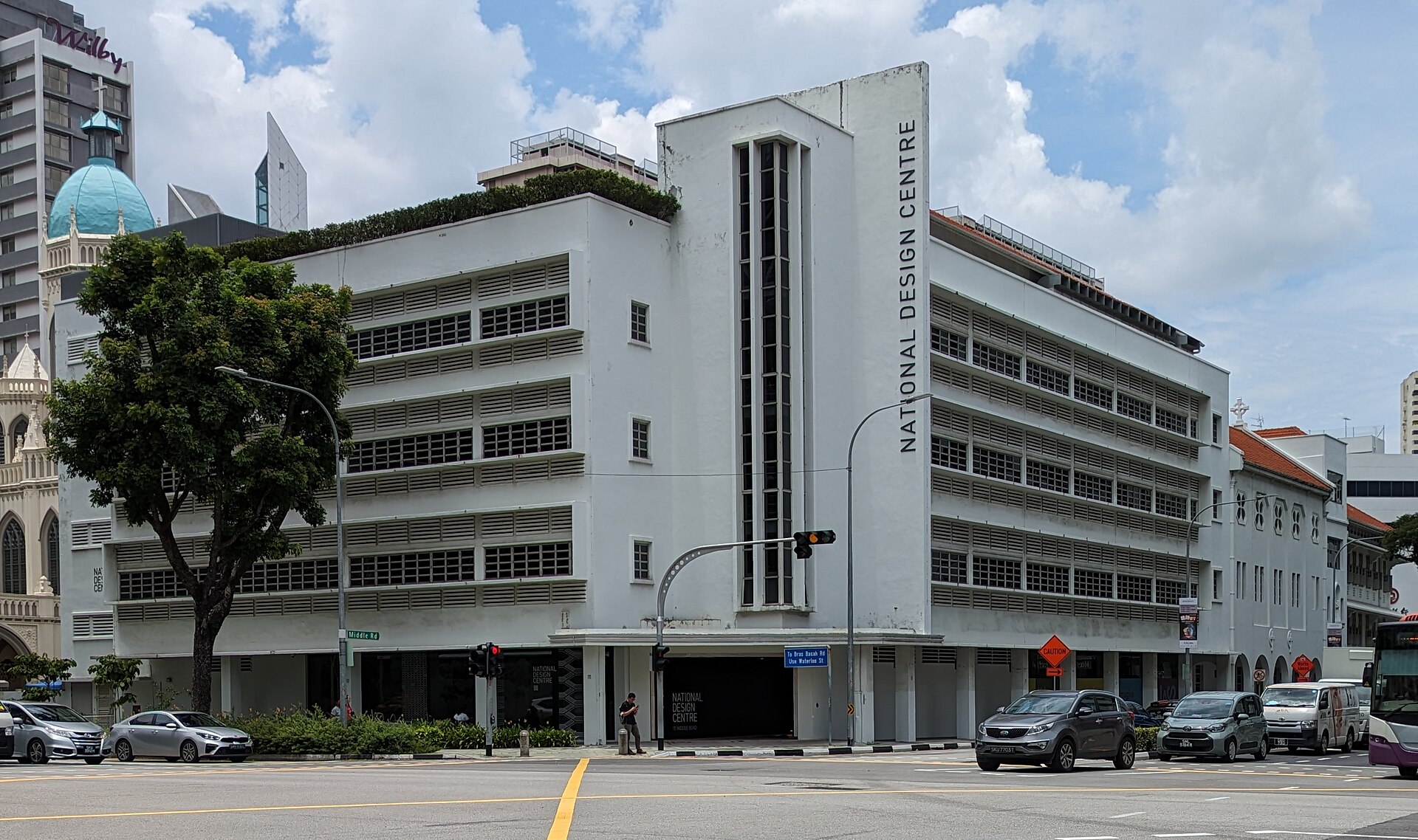
Design registration in Singapore protects how a product looks, from physical goods to certain non-physical products such as projected interfaces. IPOS registers designs under the Registered Designs Act 2000 after a formalities check, typically within months. This guide covers novelty, the grace period, filing, ownership, renewals to 15 years and enforcement.
Key pointSingapore's 12-month grace period lets you file after your own disclosure, but many export markets offer no equivalent, so launching before filing can protect you in Singapore while forfeiting protection abroad.
At a glance
Appearance, not function
A registered design protects features of shape, configuration, colours, pattern or ornament of an article or non-physical product; solely functional designs are excluded.
Formalities examination only
IPOS checks formalities, not novelty, and says registration generally takes about four months from filing if there are no deficiencies.
Twelve-month grace period
For disclosures on or after 30 October 2017, a design can still be filed in Singapore within 12 months of the owner's disclosure.
Up to fifteen years
Protection lasts an initial five years from filing and can be renewed in five-year periods up to a maximum of fifteen years.
Hague route available
Singapore is party to the Geneva Act of the Hague Agreement, so one WIPO application can cover Singapore and other member states.
Swipe or scroll →
What design registration in Singapore covers
Design registration in Singapore protects the appearance of a product: its shape, configuration, colours, pattern or ornament. It is the right that stops competitors copying how a product looks, from a kitchen appliance or a piece of furniture to packaging, a wearable device or a graphical interface that works as a non-physical product. Registration is granted by the Intellectual Property Office of Singapore (IPOS) under the Registered Designs Act 2000.
Designs sit between other IP rights. Patents protect how something works; trade marks protect badges of origin; copyright protects artistic works but has limits for mass-produced industrial articles. A registered design fills the gap for products whose commercial value lies in their look. It is a form of property that can be assigned, licensed or mortgaged, which makes it a bankable asset in investment and licensing deals.
The question usually arises at three moments: before a product launch, when a competitor's look-alike appears, and during due diligence when an investor asks what protects the product line. In each case the answer often depends on decisions taken months earlier, especially about public disclosure.

The legal framework and what can be registered
According to IPOS's designs overview, a design means the features of shape, configuration, colours, pattern or ornament applied to an article or non-physical product that give it its appearance. Colour on its own is not protected unless it creates a pattern or ornament. Non-physical products are items without a physical form that are produced by projecting a design onto a surface or into a medium, and that have a utilitarian function beyond merely displaying appearance or conveying information. IPOS gives a projected virtual keyboard as an example.
What cannot be registered
IPOS's registration guidance lists exclusions that catch many first-time applicants:
- Designs contrary to public order or morality.
- Computer programs and layout designs of integrated circuits.
- Designs applied to certain articles such as medals, and certain printed matter such as calendars and postcards.
- Methods or principles of construction.
- Designs that are solely functional.
- In certain circumstances, designs whose appearance is dependent on the appearance of another article or non-physical product.
Novelty and the grace period
A registered design must be new. In broad terms, that means it must not have been registered or published anywhere before the filing date, or the priority date if priority is claimed. Singapore softens this rule with a grace period: for designs disclosed on or after 30 October 2017, IPOS's Registered Designs Infopack explains that protection can still be sought within 12 months of the disclosure. Many other countries have no grace period or a narrower one, so a disclosure that is harmless for design registration in Singapore can still destroy protection overseas.
| Item | Position | Why it matters |
|---|---|---|
| Grace period for own disclosure | 12 months from disclosure, for disclosures on or after 30 October 2017 | Protects Singapore filing after a launch, but not necessarily abroad |
| Priority claim | File within 6 months of a first filing in a Paris Convention or WTO member | Lets a regional filing programme rely on one first filing date |
| Typical time to registration | About 4 months from filing, if no deficiencies | Plan launches and enforcement around it |
| Deferred publication | Up to 18 months from filing, on request and fee | Keeps a design confidential before launch |
| Term | Initial 5 years from filing, renewable in 5-year periods to a maximum of 15 years | Diary renewals; lapsed rights need restoration |
How the registration process works
Design registration in Singapore is relatively fast because IPOS conducts a formalities examination rather than a full substantive search. The examination checks the statement of novelty, classification, the name of the article and whether the representations are suitable for reproduction. IPOS does not search the prior art for you, and recommends that applicants search existing designs themselves using IPOS Digital Hub.
That approach has a consequence that decision-makers should understand. A registration can be granted for a design that is not in fact new, and its validity may only be tested when the owner tries to enforce it. A registration is therefore only as strong as the novelty position behind it.
- Audit disclosures. List every public showing of the design: trade fairs, crowdfunding pages, social media, catalogues, tenders and samples to customers. Fix the earliest date for grace period and priority purposes.
- Search. Search existing registrations and published designs, in Singapore and in key markets, to test novelty and identify freedom-to-operate risks.
- Decide scope. Choose which features to protect, whether to file several variants, and whether to file the whole product or a part. Up to 50 designs in the same class can be filed in one application.
- Prepare representations and the statement of novelty. Produce clear, consistent drawings or images and a statement in Form D3 identifying the features claimed as new, disclaiming generic elements such as numerals or letters.
- File and claim priority. File through IPOS Digital Hub, claiming priority from an earlier filing where available, and request deferred publication if the launch is still confidential.
- Respond to formalities objections. Correct any deficiencies within the deadlines set by IPOS to avoid delay to registration.
- Register and maintain. Record the registration, diary renewals and record any assignment or licence promptly.
The quality of the representations decides the scope of the right. Images that show unnecessary detail, inconsistent views or surface decoration you do not care about can narrow protection to a design competitors easily avoid. IPOS publishes guidance on acceptable images, colours and virtual designs; review it before preparing drawings, and think about how a court would compare your representations with a competitor's product.
Strategy: what to protect and how
Registered designs, copyright and trade marks
Businesses often assume copyright will protect product appearance. For mass-produced industrial articles that assumption can fail, and IPOS publishes an information note on the interface between registered designs and copyright for this reason. A shape that has become distinctive may also be registrable as a trade mark, but shape marks are harder to obtain. Our pages on copyright and content and trade mark strategy explain how the rights work together. For a new product, a registered design is usually the quickest and clearest route.
One design or a family
Competitors copy with variations. For design registration in Singapore to deter copying, scope matters as much as speed. Filing a small family of designs, such as the overall product, key components and alternative configurations, makes it harder to design around protection. Multiple designs in the same class can share one application, which keeps costs down.
Interfaces and digital products
For technology companies, protection for non-physical products and graphical elements can be valuable. The rules are technical: the product must have a utilitarian function, and IPOS has issued separate guidelines on non-physical products and virtual designs. Combine this with software licensing and copyright protection for the code itself.
Timing the filing against the product roadmap
Product teams iterate right up to launch, which tempts businesses to wait until the design is final. Waiting carries risk if prototypes are shown to retailers, investors or crowdfunding backers along the way. A practical compromise is to file early on the core form, use deferred publication to keep it confidential, and file further variants as the design settles. Each later filing must itself be new, so earlier filings and disclosures by the business can count against variants that are too close to them. Plan the sequence with the launch calendar in front of you.
The most expensive design mistake is not a bad filing; it is a launch, a crowdfunding page or a trade fair appearance that happens before anyone has thought about which countries will be filed and by when.
Ownership, licensing and commercialisation
Who owns a design depends on who created it and under what arrangement. For designs commissioned on or after 30 October 2017, IPOS explains that the designer, not the commissioner, is the default owner unless a contract says otherwise. Businesses that outsource industrial design to agencies or freelancers must therefore take a written assignment. Employee designs raise separate questions, which our article on employee-created IP covers.
As property, a registered design can be assigned, licensed or mortgaged. Licences should define the licensed designs by registration number, the products and territory, quality control, improvements, and who enforces against infringers. Registering transactions with IPOS protects the new owner or licensee. See our IP licensing page for structuring royalty and manufacturing licences.
In investment and M&A, design registrations are checked as part of IP due diligence. Gaps in the chain of title, lapsed renewals and registrations held by a founder personally are common findings that delay closing.
Enforcement, revocation and disputes
Registration gives the owner the right to prevent others from using the design in Singapore without consent. According to IPOS, the owner can take legal action for infringement and seek an injunction, an account of the infringer's profits or damages. Before suing, the owner should be confident of validity, because a defendant will often counter-attack.
Any interested person may apply to the Registrar or the court to revoke a registration. The grounds described by IPOS include that the design was not new at registration, that it corresponds to an artistic work whose copyright expired during the registration, and any ground on which registration could have been refused. Any aggrieved person may also apply to the court for rectification of the register. IPOS provides dispute resolution options, including mediation, and the Supreme Court Practice Directions include a simplified process for certain IP claims. Our IP litigation and brand protection pages cover enforcement strategy.
Documents and evidence to assemble
A strong filing, and later a strong enforcement case, depends on records that are easy to create at the time and very hard to reconstruct later. Before design registration in Singapore, assemble:
- Dated design files, sketches and CAD models showing how the design developed and who created it.
- Signed assignments from employees, agencies and freelancers, and any design brief that set out ownership terms.
- A log of every public disclosure, with dates, channels and copies of what was shown.
- Details of any earlier filing abroad, for a priority claim within six months.
- Search results for earlier designs and a short note of how your design differs.
- Final product photographs at launch, to compare with the registered representations and with later copies.
For enforcement, add evidence of the infringing product, where and when it was bought, sales channels and any communications with the infringer. Test purchases with receipts and photographs are often the most persuasive evidence of all.
IPOS also runs acceleration programmes for designs, and fees are set out on its forms and fees page. Check eligibility and current fees at the time of filing rather than relying on older figures, because both change. Budget for searches, professional drawings and foreign filings as well as official fees: for most businesses, the drawings and the foreign programme cost more than design registration in Singapore itself.
Risks and common mistakes
Disclosing before filing and relying on the grace period abroad
Singapore's 12-month grace period helps only in Singapore. Many key markets, including some of TRW & Co's clients' home and export jurisdictions, have no comparable protection or apply it differently. A product shown at a trade fair or on a crowdfunding site may be unprotectable elsewhere. The safest approach is to file first, then launch, and to use deferred publication if confidentiality is needed. If a disclosure has already happened, map the deadlines in every target country immediately.
Assuming registration proves validity
Because IPOS examines formalities rather than novelty, a registration certificate is not a guarantee that the design is new. Owners sometimes send demand letters on the strength of a registration, only to face a revocation application based on earlier designs they did not know about. Conduct a novelty search before enforcement and before relying on the registration in valuation or financing. Investors should treat unsearched registrations with appropriate caution.
Leaving ownership with the design agency
Businesses that commission product designs often pay for the work but never take an assignment of the rights. Since the 2017 changes, the designer is the default owner of a commissioned design unless the contract provides otherwise. The result can be a registration filed in the wrong name or a dispute when the relationship ends. Put written assignment clauses into every design brief and contractor agreement, and confirm the chain of title before filing.
Missing renewals
Protection lasts for an initial five years and must be renewed every five years, up to fifteen. If renewal is missed, the registration is removed from the register. IPOS allows restoration within a prescribed period on payment of restoration and renewal fees, but there is no reason to take that risk. Centralise renewals in one docket, check the details on IPOS's renewal page and review the portfolio annually to drop designs no longer in use.
Poor drawings and narrow claims
A design right is defined by its representations. Filing photographs of a prototype with background clutter, inconsistent views or decorative features that will change at launch can produce a right that does not cover the final product or that competitors can avoid with minor changes. Prepare clean line drawings or rendered images, consider dotted lines or disclaimers for unclaimed parts where accepted, and align the filing with the commercial product.
Cross-border angle: Hague filings and regional strategy
Singapore is a party to the Geneva Act of the Hague Agreement, administered by WIPO. One international application, in one language and paid in Swiss francs, can designate multiple member countries. Applicants can file directly with WIPO or through IPOS, which forwards the application. Where Singapore is designated, a refusal must be notified within the prescribed period or protection follows automatically.
Not every country that matters to TRW & Co's clients is in the Hague system, and coverage changes over time. For Bangladesh, the UAE and other non-Hague or partly covered markets, national filings may be required, often using the six-month priority period from a first filing. For the UK and China, check current Hague membership and local practice before choosing the route. We coordinate filings with local counsel in each jurisdiction and align them with distribution and manufacturing agreements so that rights are in place before products ship.
Manufacturing in one country and selling in others raises enforcement questions too. Customs measures, marketplace takedowns and contractual protections all play a part, alongside registered rights. Our article on IP portfolio management explains how to budget across markets.
How TRW & Co helps with design registration in Singapore
We advise on design strategy and coordinate filings and enforcement. Where Singapore court or tribunal representation is required, we work alongside Singapore-qualified counsel and registered IP agents. We do not promise registration or enforcement outcomes.
Pre-launch strategy
We map disclosures, deadlines and target markets, recommend what to file and where, and set the order of filings so priority and grace periods are used well.
Filing and portfolio management
We coordinate searches, representations and statements of novelty, Hague and national filings, and a single renewal docket across jurisdictions.
Ownership and transactions
We draft design briefs, assignments and licences, clean up chains of title and support IP due diligence for investors and acquirers.
Enforcement and defence
We assess validity and infringement, prepare demand letters and responses, and coordinate revocation, mediation or court proceedings.
Explore our practices or contact us to discuss a product launch or a design dispute.
Checklist for decision-makers
- Has the design been shown publicly anywhere, and when was the first disclosure?
- Which markets matter in the next three years, and do they offer a grace period?
- Have we searched for earlier designs before filing or enforcing?
- Do we own the design outright, with written assignments from agencies and contractors?
- Do the representations match the product we will actually sell?
- Should we file a family of designs or variants rather than one?
- Is deferred publication needed to protect a confidential launch?
- Are renewals docketed and the portfolio reviewed annually?
Answering these questions before launch turns design registration in Singapore into a dependable commercial asset rather than a certificate on file.
Frequently asked questions
01How long does design registration in Singapore take?
IPOS states that it generally takes about four months from filing to registration, provided the application has no deficiencies and documents are filed on time. This is relatively quick because IPOS conducts a formalities examination rather than a substantive novelty search. Delays usually come from unclear representations, problems with the statement of novelty or classification, or late responses to IPOS's objections. If you need publication delayed, you can request deferment of up to 18 months from filing.
02Can I register a design after showing it at a trade fair?
In Singapore, possibly. For designs disclosed on or after 30 October 2017, IPOS explains that a 12-month grace period allows the owner to file after its own disclosure. But many other countries do not offer a comparable grace period, so the same disclosure may prevent registration abroad. If the product will be sold internationally, file before any public showing, or take advice immediately on the deadlines in each target market.
03How long does protection last?
A registered design is protected for an initial five years from the filing date. It can be renewed every five years on payment of renewal fees, up to a maximum of fifteen years. If renewal is missed, the design is removed from the register, but IPOS allows restoration within a prescribed period on payment of a restoration fee and the renewal fee. Keep renewals in a central docket rather than relying on reminders.
04Does IPOS check whether my design is new?
No. IPOS conducts a formalities examination covering the statement of novelty, classification, the article name and the suitability of representations. It does not search earlier designs, and recommends applicants search IPOS Digital Hub themselves. This means a registration can be granted for a design that is not new, leaving it open to revocation later. Search before filing, and again before enforcing or relying on the registration in a transaction.
05Who owns a design created by an external agency?
For designs commissioned on or after 30 October 2017, the designer is the default owner unless a contract provides otherwise. Paying for the work does not by itself transfer ownership. Businesses should include a written assignment in every design brief or contractor agreement, and confirm the chain of title before filing. Employee-created designs raise separate questions that depend on the employment relationship and contract terms.
06Can a graphical user interface be registered as a design?
Possibly, if it qualifies as a non-physical product or is applied to an article. Non-physical products are items without a physical form, produced by projecting a design onto a surface or into a medium, that have a utilitarian function beyond merely displaying appearance or conveying information. IPOS has issued guidelines on non-physical products and virtual designs. Software code itself is excluded from design registration but may be protected by copyright.
07Can we file one application for several countries?
Yes, through the Hague System administered by WIPO. Singapore is party to the Geneva Act, so a single international application can designate Singapore and other members, filed directly with WIPO or through IPOS. Not every market is a member, so national filings may still be needed, often claiming six-month priority from a first filing. TRW & Co coordinates Hague and national filings with local counsel in each jurisdiction.
Sources and official materials
- IPOS: Designs — What a registered design is and term of protection
- IPOS: How to register designs — Criteria, exclusions, examination and timeline
- IPOS: Registered Designs Infopack — Grace period, priority, ownership, revocation and Hague
- IPOS: Renew or restore your design — Renewal and restoration
- IPOS: Designs guides — Non-physical products, colours, images and copyright interface
- WIPO: Hague System — International design registration
- IPOS: Resolve IP disputes — Mediation and dispute options
General information only, current as at 20 October 2026. It is not legal advice and does not create a lawyer–client relationship. Singapore law and regulatory practice change; check current official sources and take advice on the facts of your matter.



