
TRW & Co · Disputes & Investigations
Environmental Disputes in Singapore
Environmental disputes in Singapore arise from pollution enforcement, site contamination, carbon tax costs, carbon credit contracts and sustainability disclosures. With the carbon tax at S$45 per tonne in 2026 and climate reporting now mandatory for listed issuers, environmental risk has become a contractual and financial question. This guide covers the law, the disputes, the evidence and the decisions.
Key pointMost environmental disputes are decided by contracts and records, not environmental statutes: a baseline study, a clear carbon cost clause and timely warranty notices usually matter more than the underlying pollution facts.
At a glance
Carbon tax at S$45
NEA's carbon tax is S$45 per tonne in 2026 and 2027 for facilities emitting at least 25,000 tCO2e, rising towards S$50 to S$80 by 2030.
NEA leads enforcement
NEA administers the Environmental Protection and Management Act and related statutes, while PUB regulates trade effluent and MPA handles pollution from ships.
Contracts allocate cost
Leases, supply agreements and sale contracts usually decide who pays for contamination and carbon costs, so wording and notice deadlines are decisive.
Haze has extraterritorial reach
The Transboundary Haze Pollution Act 2014 creates offences and civil liability for conduct outside Singapore causing haze pollution in Singapore.
Disclosure creates exposure
Climate reporting by listed issuers and consumer-facing sustainability claims can found investor, customer and regulatory claims if not substantiated.
Swipe or scroll →
What environmental disputes in Singapore cover
Environmental disputes in Singapore are less about dramatic courtroom battles over pollution and more about who pays when environmental risk becomes a cost. A tenant leaves contaminated soil at an industrial site. A plant exceeds its discharge limits and a regulator investigates. A buyer discovers that a target's emissions data was wrong. A carbon credit buyer receives credits that fail eligibility checks. A green bond investor alleges misleading disclosures. All of these are environmental disputes, and most are fought under contract, regulation and company law rather than a single environmental code.
Three forces are making them more frequent. Carbon pricing now attaches a rising dollar figure to emissions. Mandatory climate reporting puts environmental data into public filings, where errors carry legal consequences. And Singapore's role as a hub for carbon trading, shipping and regional headquarters means more contracts allocate environmental risk across borders.
For boards and general counsel, the practical question is rarely whether an environmental law was breached in the abstract. It is which contract, permit or disclosure creates exposure, who bears it, and how quickly the facts can be established before positions harden.
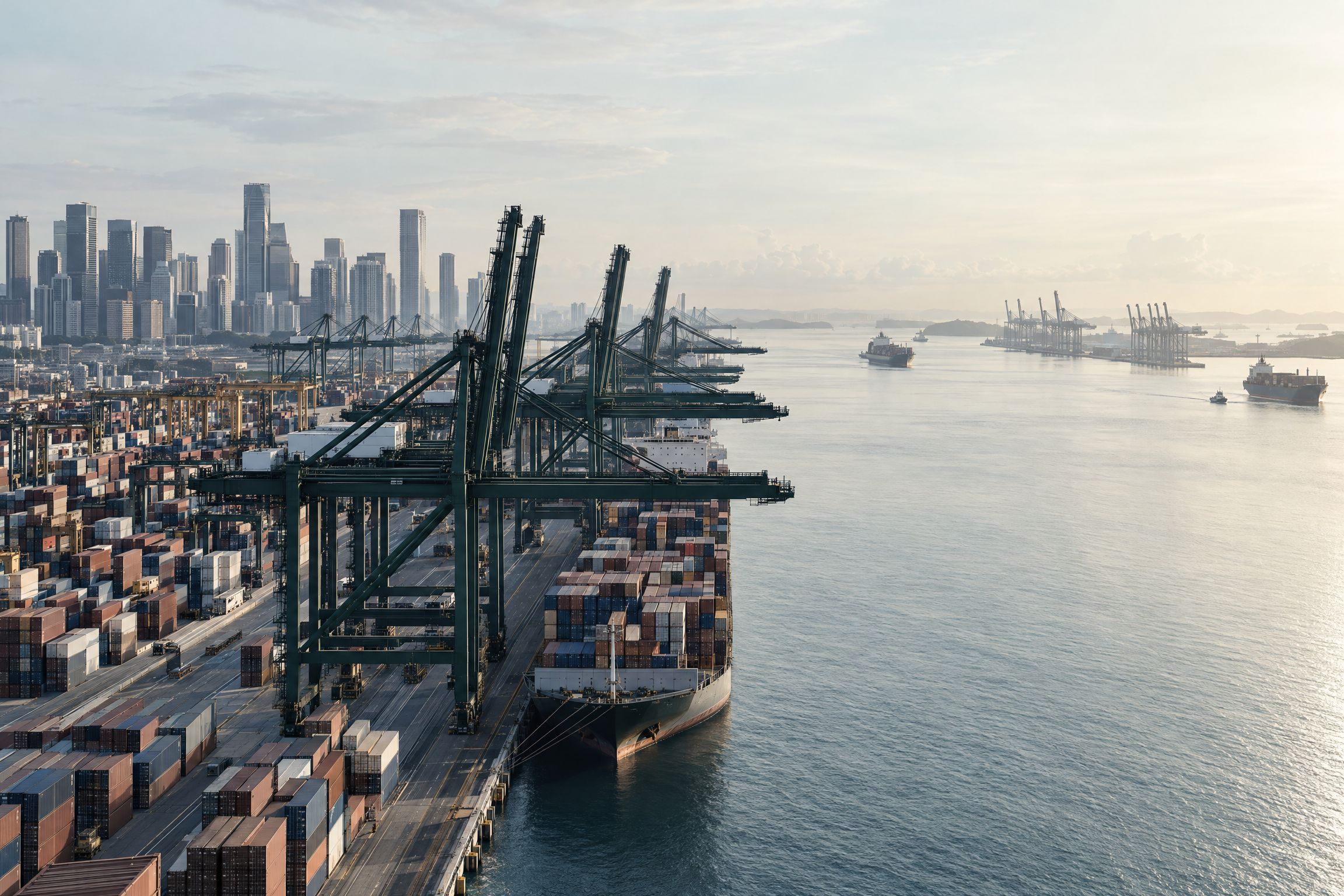
The regulatory framework behind environmental disputes in Singapore
The National Environment Agency (NEA) administers most environmental legislation. Its legislation page lists the core statutes, including the Environmental Protection and Management Act 1999, the Environmental Public Health Act 1987, the Carbon Pricing Act 2018, the Energy Conservation Act 2012, the Resource Sustainability Act 2019, the Hazardous Waste (Control of Export, Import and Transit) Act 1997, the Radiation Protection Act 2007 and the Transboundary Haze Pollution Act 2014.
The Environmental Protection and Management Act is the main pollution control statute, covering air emissions, hazardous substances, toxic industrial waste and noise. NEA's pollution control functions include licensing hazardous substances and monitoring air and water quality. The Public Utilities Board regulates trade effluent discharged into public sewers and drainage. The Maritime and Port Authority handles marine pollution from ships. The Ministry of Sustainability and the Environment sets policy above these agencies.
Carbon pricing
The carbon tax applies to industrial facilities with annual direct greenhouse gas emissions of at least 25,000 tonnes of carbon dioxide equivalent. According to NEA's carbon tax page, the rate was S$5 per tonne from 2019 to 2023, rose to S$25 in 2024 and 2025, is S$45 in 2026 and 2027, and is intended to reach S$50 to S$80 by 2030. Since 2024, taxable facilities have been able to use eligible international carbon credits to offset part of their liability, within limits and subject to eligibility criteria.
Carbon pricing turns emissions into a cost that someone must bear. Who bears it, under a tolling agreement, power purchase agreement, supply contract or lease, is now a common source of environmental disputes in Singapore.
Common law claims
Private claims rely on familiar causes of action: nuisance, negligence, the rule in Rylands v Fletcher for escapes of dangerous things, and breach of statutory duty where the statute permits it. The Transboundary Haze Pollution Act is notable for creating civil liability, alongside offences, for conduct outside Singapore that causes or contributes to haze pollution in Singapore.
Carbon pricing has turned emissions into a line item, and every line item eventually becomes a contract dispute.
The main types of environmental dispute
| Dispute type | Typical trigger | Legal basis | Usual forum |
|---|---|---|---|
| Regulatory enforcement | Discharge exceedance, unlicensed hazardous substance, waste offence | EPMA, Environmental Public Health Act, PUB legislation | Regulator investigation; State Courts for prosecution |
| Land and lease contamination | Site handback, reinstatement, contamination found on sale | Lease covenants, sale warranties, common law | High Court or arbitration |
| Transactional warranty and indemnity claims | Post-completion discovery of non-compliance or liabilities | Share or asset purchase agreement | Arbitration or courts per contract |
| Carbon cost and credit disputes | Pass-through of carbon tax; credits failing eligibility or delivery | Supply contracts, ERPAs, credit purchase agreements | Arbitration, often SIAC |
| Disclosure and greenwashing claims | Misleading sustainability claims or climate reports | Consumer, securities and company law | Regulators, courts, advertising standards bodies |
| Neighbour and community claims | Noise, odour, dust, vibration from operations or construction | Nuisance, negligence, permit conditions | Courts; regulator complaints |
Each category has its own evidence and cost profile. Regulatory matters move quickly and carry criminal risk; transactional claims depend on notice provisions and caps; carbon disputes turn on technical eligibility and registry rules. Our carbon markets page explains how credits are structured.
Construction, noise and neighbour disputes
In a dense city, construction and industrial activity sit close to homes and offices. NEA sets permissible construction noise limits and working hours, and breaches can lead to enforcement against the contractor or developer. Neighbours affected by noise, dust or vibration may complain to the regulator and also sue in nuisance. Developers usually allocate this risk to contractors, but the developer's reputation and approvals are still at stake. Our construction disputes page covers how these claims interact with building contracts.
Green finance and covenant disputes
Sustainability-linked loans and green bonds tie pricing or use of proceeds to environmental performance. Disputes arise when key performance indicators are missed, data is restated or proceeds are used for ineligible projects. The documents decide whether the consequence is a margin step-up, a reporting obligation or an event of default. Borrowers should treat environmental data in financing documents with the same rigour as financial covenants, because lenders increasingly do.
Key decisions and how to approach them
Cooperate, contest or both
When NEA or PUB investigates, the company must decide how to engage. Full cooperation and prompt remediation often influence enforcement outcomes, but statements made to a regulator can be used in later proceedings. Separate the operational response, which must be immediate, from the legal position, which deserves advice. Our environmental investigations guide and investigation and crisis response page cover the playbook.
Contractual allocation of environmental cost
For carbon costs, contamination and regulatory change, the contract usually decides the outcome. Change-in-law clauses, pass-through mechanisms, reinstatement obligations and environmental indemnities should be read together. Where contracts predate the carbon tax increases, arguments about whether higher rates were foreseeable or fall within change-in-law are common. Our climate-risk contracting page explains drafting that avoids those fights.
Managing disclosure exposure
Listed issuers now report climate-related information under SGX's sustainability reporting framework. Errors in emissions data, targets or transition plans can found claims by investors or regulatory action, and marketing claims about sustainability can engage consumer protection law administered by the Competition and Consumer Commission of Singapore. Our guide to sustainability claims explains how to substantiate them.
Choosing how to resolve environmental disputes in Singapore
The resolution method for environmental disputes in Singapore depends on whether the counterparty is the state or a private party. With regulators, there is no forum choice: the agency investigates, may issue warnings, directions or composition offers, and may prosecute in the State Courts. Many environmental offences are strict liability, so the defence usually concerns mitigation, the scale of harm and the company's compliance systems rather than intent. Remediation already completed and cooperation shown are relevant to how the matter ends.
Several environmental statutes also allow officers of a company to be held liable for offences committed by the company in defined circumstances, for example where they consented to or connived in the offence or failed to exercise due diligence. Directors of industrial operators should therefore treat environmental compliance as a board matter, with regular reporting and documented oversight. Our guide to directors' duties and risk explains the wider governance expectations.
With private parties, the contract usually sets the forum. Arbitration suits cross-border carbon and supply disputes, because awards are confidential and enforceable abroad; our international arbitration page compares institutions. Court proceedings suit disputes needing urgent injunctions, such as stopping an ongoing nuisance, or involving several parties who have not agreed to arbitrate. Mediation and expert determination work well for technical questions, such as the extent of contamination or a remediation standard, where a neutral specialist can narrow the issues before money is spent on full proceedings.
Insurance should be checked at the start. General liability policies often exclude gradual pollution, and specialist environmental policies have their own notification rules. Knowing whether a loss is insured often determines whether the business wants a fast settlement or a contested process.
Handling an environmental incident or claim: step by step
- Contain and report. Stop the release, protect people and comply with any mandatory reporting to NEA, PUB or other agencies. Late reporting can be an offence in its own right.
- Preserve evidence. Secure monitoring data, maintenance logs, permits, CCTV and sampling results. Take independent samples if the regulator is sampling.
- Engage specialists. Appoint environmental consultants through legal counsel where possible, so that their analysis supports legal advice and the scope is controlled.
- Map liability. Identify every relevant contract: leases, supply agreements, insurance, sale agreements and contractor terms. Check notice deadlines immediately.
- Notify counterparties and insurers. Serve warranty, indemnity and insurance notices in the form and within the time the documents require.
- Remediate and document. Agree a remediation plan with the regulator or counterparty, and record costs carefully because they become the measure of any claim.
- Resolve the dispute. Negotiate, mediate or arbitrate. Technical disputes often benefit from expert determination or a jointly appointed expert before formal proceedings.
Documents and evidence to assemble
- Licences, permits and approvals, including hazardous substance licences, trade effluent approvals and any conditions.
- Monitoring data, emissions reports and measurement, reporting and verification records under the carbon pricing regime.
- Environmental baseline studies, site investigation reports and handback surveys for leased industrial land.
- Contracts allocating environmental risk: leases, supply and tolling agreements, sale agreements and carbon credit purchase agreements.
- Board papers and disclosures, including sustainability and climate reports, and the data and assurance supporting them.
- Correspondence with regulators and records of any warnings, notices or compositions offered.
- Insurance policies, especially pollution exclusions and any specialist environmental liability cover.
A baseline study at the start of a lease or acquisition is the single most useful document in a later contamination dispute. Without one, the parties argue about when contamination occurred and who caused it, and that argument is expensive to resolve. Commission it before you take possession, and agree it with the counterparty.
Risks and common mistakes
Missing warranty and indemnity notice deadlines
Environmental problems discovered after an acquisition are often covered by warranties or specific indemnities, but only if notice is given in the form and within the time the agreement requires. Notices commonly need reasonable detail of the claim and an estimate of loss. Buyers who wait for consultants to finish their full investigation may miss the deadline. Serve a protective notice promptly with the detail available, then supplement it. Check also whether caps, de minimis thresholds and exclusions for disclosed matters will limit recovery. Our environmental due diligence guide explains how to avoid the gap.
Assuming carbon costs can always be passed on
Many supply and service contracts were priced when the carbon tax was S$5 per tonne. As the rate rose to S$25 and now S$45, emitters have sought to pass costs to customers, relying on change-in-law, tax or price adjustment clauses. Whether that works depends on the wording, the timing of the contract and whether the increase was announced when the contract was signed. Customers resisting pass-through, and emitters seeking it, should assess the clause carefully before taking a position that may be tested in arbitration.
Buying carbon credits without robust contractual protection
Credit purchase agreements must address what happens if credits are not delivered, are delivered late, fail eligibility criteria for use under Singapore's carbon tax regime, lack the required host country authorisation, or are later invalidated. Buyers should require clear eligibility representations, delivery mechanics, replacement obligations and remedies. Sellers should limit exposure to matters they control. Our carbon credits guide covers these terms.
Treating sustainability claims as marketing
Statements that a product is carbon neutral, recyclable or sustainable are factual claims. If they cannot be substantiated, they can expose the business to consumer protection action, advertising complaints under the code administered by the Advertising Standards Authority of Singapore, and contractual claims from customers who relied on them. Keep evidence supporting each claim, avoid absolute terms, and align marketing with what the company reports in its sustainability disclosures.
Leaving site reinstatement to the last month of the lease
Industrial leases often require the tenant to remove installations and return the land free from contamination, sometimes to a defined standard. Tenants who leave assessment until the final months find that remediation takes longer than the remaining term, triggering holding-over costs and disputes with the landlord. Start a handback assessment well before expiry, agree the standard with the landlord, and budget accordingly.
Cross-border environmental disputes
Many environmental disputes in Singapore have their facts elsewhere. A Singapore holding company may own plants in Bangladesh, Indonesia or Vietnam. A Singapore trader may buy carbon credits generated in South or Southeast Asia, often under Article 6 implementation agreements Singapore has concluded with host countries. A UK or Chinese investor may acquire a regional business whose environmental liabilities sit in several jurisdictions. Singapore arbitration is a common forum for these disputes because awards are enforceable widely.
TRW & Co's network helps connect the strands. For a Bangladeshi industrial group with Singapore financing, environmental compliance at home affects loan covenants and green finance terms here. For a Dubai-based buyer of credits through a Singapore platform, eligibility and authorisation questions involve several governments. We coordinate local law advice with the Singapore contractual and arbitral strategy. See our energy projects page for project-level risk allocation.
Two practical points recur in regional matters. First, environmental standards and enforcement intensity differ sharply between countries, so a warranty that a business complies with "all applicable environmental laws" can mean very different things across a portfolio; define the standard and the sites it covers. Second, evidence held by a foreign subsidiary may be subject to local data, labour or state secrecy rules, which can delay its use in a Singapore arbitration. Plan document collection with local counsel from the outset rather than discovering those limits during disclosure.
How TRW & Co helps with environmental disputes in Singapore
We advise industrial operators, investors, lenders, traders and landlords on environmental risk, regulatory interaction and dispute strategy. Where Singapore court or tribunal representation is required, we work alongside Singapore-qualified counsel.
Incident and regulatory response
We coordinate the response to incidents and investigations, manage engagement with NEA, PUB and other agencies, and protect the legal position.
Transactional environmental claims
We assess warranty and indemnity claims, serve notices and pursue or defend claims arising from acquisitions and disposals.
Carbon cost and credit disputes
We advise on carbon tax pass-through, change-in-law arguments and disputes under credit purchase and emission reduction agreements.
Disclosure and greenwashing risk
We review sustainability claims and climate disclosures, and respond to complaints, investor challenges and regulatory queries.
Related areas include environmental compliance and ESG governance. Browse our practices or contact us to discuss a matter.
Checklist for decision-makers
- Do we know every permit, licence and reporting obligation that applies to our sites?
- Is there a baseline study for each leased or acquired site?
- Have we mapped how carbon costs are allocated in our major contracts?
- Do our carbon credit contracts address eligibility, authorisation, delivery failure and replacement?
- Are our sustainability claims and climate disclosures backed by evidence and consistent with each other?
- Have we diarised notice deadlines under sale agreements and insurance policies?
- Is there an incident protocol that separates operational response from legal analysis?
- For regional operations, do we know where liability would be litigated or arbitrated?
Environmental disputes in Singapore reward the party with the better records. Baselines, monitoring data and clear contracts cost far less than the arguments they prevent.
Frequently asked questions
01Who enforces environmental law in Singapore?
The National Environment Agency administers most environmental statutes, including the Environmental Protection and Management Act, the Environmental Public Health Act and the Carbon Pricing Act. The Public Utilities Board regulates trade effluent and drainage, and the Maritime and Port Authority handles pollution from ships. Policy sits with the Ministry of Sustainability and the Environment. Prosecutions are heard in the State Courts. Private parties can also sue in nuisance or negligence for harm caused by pollution.
02What is the carbon tax rate in 2026?
According to NEA, the carbon tax is S$45 per tonne of carbon dioxide equivalent in 2026 and 2027, up from S$25 in 2024 and 2025, with a view to reaching S$50 to S$80 per tonne by 2030. It applies to industrial facilities emitting at least 25,000 tonnes of carbon dioxide equivalent a year. Facilities may use eligible international carbon credits to offset part of their taxable emissions, subject to the criteria and limits set under the regime.
03Can we pass carbon tax costs on to customers?
Only if the contract allows it. Supply, tolling and service contracts may contain tax pass-through, change-in-law or price adjustment clauses, and their wording decides the outcome. Courts and tribunals will consider whether the carbon tax increase falls within the clause and whether it was known when the contract was signed. Where contracts are silent, recovery is unlikely. Review clauses before invoicing pass-through costs, and negotiate explicit carbon cost provisions in new contracts.
04Who is liable for contamination on leased industrial land?
Primarily the lease decides. Industrial leases commonly require the tenant to reinstate the site and remove contamination it caused, sometimes to a specified standard, and may require baseline and handback studies. Without a baseline study, proving when contamination occurred becomes difficult. Regulatory liability under pollution laws may apply separately to whoever caused the pollution. Buyers of businesses or land rely on warranties, indemnities and due diligence to allocate historic contamination.
05Can a company be sued for greenwashing in Singapore?
Yes, in several ways. Misleading environmental claims to consumers can engage the Consumer Protection (Fair Trading) Act, administered by the Competition and Consumer Commission of Singapore, and advertising complaints under the Singapore Code of Advertising Practice. Inaccurate disclosures by listed companies can found investor claims or regulatory action. Business customers who relied on claims may sue for misrepresentation or breach of contract. Substantiation and consistent disclosure are the best defences.
06Where are carbon credit disputes usually resolved?
Most carbon credit purchase agreements and emission reduction agreements contain arbitration clauses, and Singapore is a frequent seat because of its neutral courts, experienced arbitral institutions and the enforceability of awards under the New York Convention. The disputes typically concern delivery, eligibility, authorisation under Article 6 arrangements and pricing. Expert determination may be used for technical questions about methodology or verification before or alongside arbitration.
07What should we do first after an environmental incident?
Contain the incident and protect people, then comply with any mandatory reporting to NEA, PUB or other agencies. Preserve monitoring data, logs and samples, and consider taking independent samples alongside the regulator's. Engage environmental consultants through legal counsel where possible. Check contracts and insurance policies for notice requirements and serve notices promptly. Keep the operational response separate from legal analysis, and be careful in statements to regulators.
Sources and official materials
- NEA: Legislation — Environmental statutes administered by NEA
- NEA: Carbon tax — Carbon tax rates, threshold and MRV
- NEA: Pollution control — Air, water, hazardous substances and noise
- Public Utilities Board — Trade effluent, sewerage and drainage
- SGX: Sustainability reporting — Climate and sustainability disclosure for listed issuers
- Ministry of Sustainability and the Environment — Environmental and climate policy
- Competition and Consumer Commission of Singapore — Consumer protection and misleading claims
General information only, current as at 20 October 2026. It is not legal advice and does not create a lawyer–client relationship. Singapore law and regulatory practice change; check current official sources and take advice on the facts of your matter.
Talk it through
before you decide.
Share the decision, the jurisdictions and the timetable. A partner will tell you what matters, what can wait and what it will take.