
TRW & Co · Disputes and arbitration
Investor-State Arbitration from Singapore: Structuring for Treaty Protection and Enforcing Awards
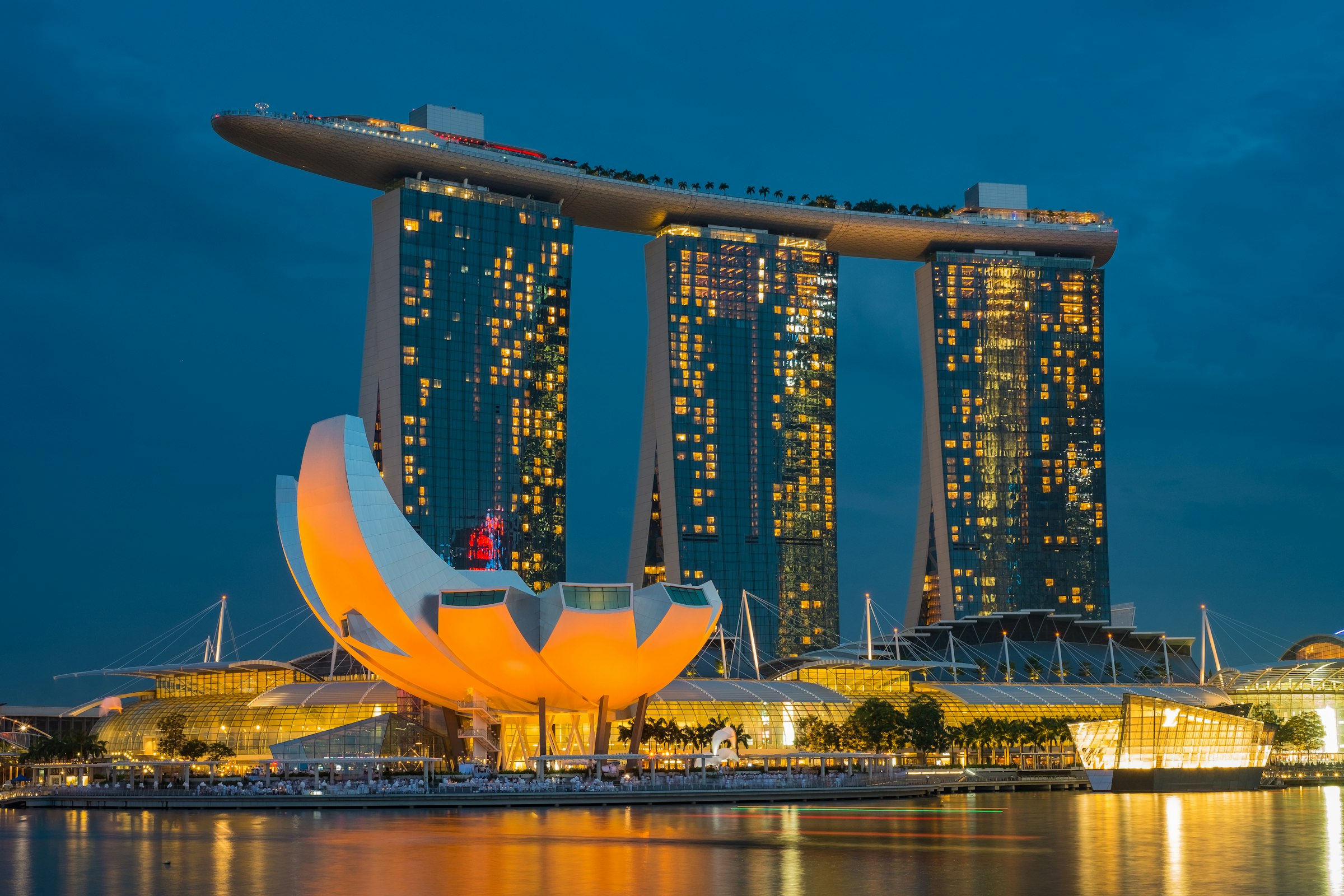
Investment treaty arbitration in Singapore lets a protected investor sue a host state for breaching a treaty, and lets award creditors register ICSID awards in the High Court. Singapore has investment agreements with over 60 partners, but protection depends on the treaty's wording, real substance in Singapore and structuring before any dispute is foreseeable.
Key pointThe best treaty claim is built at the time of investment: a Singapore holding company added once a specific dispute is foreseeable risks being treated as an abuse of process, however strong the merits.
At a glance
Over 60 treaty partners
MTI lists BITs, investment guarantee agreements and FTA investment chapters in force with over 60 trading partners, including a Bangladesh BIT in force since 2004.
Structure early
Tribunals may refuse claims where the investor restructured to gain treaty protection when a specific dispute was already foreseeable, as in Philip Morris Asia v Australia.
Substance matters
Investor definitions and denial-of-benefits clauses can exclude Singapore shell companies, so board control, staff and real activity in Singapore strengthen the claim.
ICSID registration
Under the Arbitration (International Investment Disputes) Act 1968, ICSID awards can be registered in the High Court and enforced like a High Court judgment.
Immunity still applies
Registration does not override execution immunity; under the State Immunity Act 1979, generally only state property used for commercial purposes can be seized.
Swipe or scroll →
The short answer: who can use investment treaty arbitration in Singapore
Investment treaty arbitration in Singapore lets a foreign investor sue a host state directly before an international tribunal when the state breaches a bilateral investment treaty (BIT) or the investment chapter of a free trade agreement. Singapore matters in two ways: a Singapore company can be the investor that holds the treaty protection, and Singapore's courts can register and enforce the resulting award.
Protection is not automatic. The investor must fall within the treaty's definition of an investor, the asset must be a protected investment, and the structure must be in place before a dispute is foreseeable. Get those three right and a Singapore holding company can carry real legal leverage against a host government.
This article focuses on the investor's practical choices: how to structure through Singapore, how to test a treaty before relying on it, and how an ICSID award is enforced here. For the wider legal framework, see our page on investor-state arbitration in Singapore.

Why investors structure through Singapore
According to the Ministry of Trade and Industry's list of international investment agreements, Singapore has BITs, investment guarantee agreements and FTA investment chapters in force with over 60 trading partners. The ministry describes these as giving foreign investors avenues to bring claims directly against the host state before international arbitral tribunals.
The list includes BITs with Bangladesh (in force since 19 November 2004), several Gulf states and a broad range of Asian, African and European economies, plus regional agreements such as the ASEAN Comprehensive Investment Agreement and the CPTPP. Some recent BITs, including those with Côte d'Ivoire and Nigeria, entered into force in 2025.
For a group investing into a market where its home state has no treaty, or only a weak one, a Singapore holding company may be the vehicle that turns a commercial investment into a treaty-protected one. Singapore's tax treaties, company law and banking system mean the holding company usually has a business case of its own, which helps answer the abuse-of-process objection discussed below.
Treaty protection is also a negotiating asset. A host government that knows the investor has a credible route to investment treaty arbitration in Singapore or at ICSID, with an award enforceable in many jurisdictions, has a reason to consult before changing tariffs, licences or tax terms. Many disputes settle during the cooling-off period precisely because that leverage exists.
The EU picture is changing
Singapore's older BITs with individual EU member states remain on the MTI list, but the ministry notes that each will be terminated once the EU-Singapore Investment Protection Agreement (EUSIPA) enters into force. As of October 2026 the MTI list still shows those BITs as in force. Investors relying on them should monitor EUSIPA's status, because its dispute settlement system is a permanent tribunal model rather than ad hoc arbitration.
Testing the treaty before you rely on it
Every treaty is different, and the success of investment treaty arbitration in Singapore or elsewhere turns on the wording of the specific instrument. Read the text on the MTI site, not a summary. The table below sets out the questions we work through for any proposed structure.
Also check which version of the treaty applies. Some agreements have been renegotiated or replaced, and transition clauses decide whether an investment made under the old text keeps its protection for a period after termination. Sunset clauses of this kind can be decisive where a treaty is about to lapse.
| Clause | What to check | Why it matters |
|---|---|---|
| Definition of investor | Incorporation only, or also seat, management or substantive business operations in Singapore | A shell company may fail a substance test |
| Definition of investment | Asset-based or enterprise-based; exclusions for portfolio or short-term holdings; any approval-in-writing requirement | Some older treaties protect only investments specifically approved by the host state |
| Denial of benefits | Whether the host state can deny protection to companies owned by third-country nationals with no substantial business in Singapore | A frequent jurisdictional objection in holding-company claims |
| Substantive standards | Fair and equitable treatment, expropriation, full protection and security, free transfers, any MFN clause | Newer treaties often narrow these standards |
| Carve-outs | Tax, prudential, security or public welfare measures | May remove the very measure you fear |
| Dispute clause | Cooling-off period, local remedies, fork-in-the-road, available forums (ICSID, UNCITRAL, others) | Determines when and where you can file and how the award is enforced |
A treaty that offers ICSID arbitration is generally preferable where both states are ICSID Contracting States, because ICSID awards cannot be set aside by national courts. Where ICSID is unavailable, the treaty may allow UNCITRAL arbitration, in which case choosing Singapore as the seat brings the Singapore courts' supervisory jurisdiction.
Structuring for treaty protection: a step-by-step approach
Structuring for investment treaty arbitration in Singapore is legitimate if it is done early and for genuine reasons. The steps below reflect the order in which questions usually arise.
- Map the investment chain. Identify every company between the ultimate owner and the asset, its nationality and the treaties that each nationality unlocks.
- Compare available treaties. Rank the candidate treaties by investor definition, substantive protection, carve-outs and forum, using the official texts.
- Build substance in Singapore. Board meetings, decision-making, staff and a real business role for the holding company reduce denial-of-benefits and substance objections.
- Time the structure. Put the Singapore company in place when the investment is made or at least before any specific dispute is foreseeable.
- Align contracts. Check that concession or offtake agreements do not contain exclusive forum clauses or waivers that undercut treaty rights.
- Document the rationale. Record the tax, financing and governance reasons for the structure; they are evidence if the state alleges abuse.
- Keep it under review. Treaties are amended and terminated; revisit the structure when new agreements enter into force or old ones lapse.
Timing is the trap. In Philip Morris Asia v Australia, a tribunal constituted under the Australia–Hong Kong BIT declined to hear the claim in its 17 December 2015 award on jurisdiction and admissibility, finding that the group had restructured to gain treaty protection when a specific dispute was foreseeable. A Singapore holding company added after a host state has signalled the measure you fear may be treated the same way.
Bringing the claim: forum, funding and seat
Once a dispute arises, most treaties require written notice and a cooling-off period for negotiation before arbitration. Use that period: it is often the best moment to secure a settlement, and failing to observe it can give the state a procedural objection.
The main forums are the International Centre for Settlement of Investment Disputes (ICSID), ad hoc arbitration under the UNCITRAL Rules (often administered by the Permanent Court of Arbitration), and, where the parties agree, the SIAC Investment Arbitration Rules. The SIAC rules include early dismissal and third-party funding disclosure provisions designed for disputes involving states.
Treaty claims are expensive and slow, and third-party funding is common. Singapore law permits funding of international arbitration subject to conditions, and tribunals increasingly require disclosure of funders. Budget for the jurisdictional phase separately: in investment treaty arbitration in Singapore and elsewhere, the state's objections to jurisdiction are often heard first and can decide the case. For the commercial arbitration side, see our international arbitration page and our article on the SIAC Rules 2025.
Enforcing ICSID awards in Singapore
Winning is half the battle; collecting from a state is the other half. Singapore gives effect to the ICSID Convention through the Arbitration (International Investment Disputes) Act 1968. An award creditor can apply to register an ICSID award in the General Division of the High Court, after which its pecuniary obligations can be enforced as if it were a judgment of that court.
The Singapore courts have confirmed that this route is robust. In NextEra Energy Global Holdings BV v Kingdom of Spain [2026] SGHC 43, decided on 24 February 2026, the General Division refused to set aside the registration of an ICSID award made under the Energy Charter Treaty. The court rejected Spain's state immunity objections and noted that public policy is not a recognised ground on which an ICSID award can be challenged. Check for any appeal before relying on the decision.
Registration is not the same as execution. The State Immunity Act 1979 separately protects state property from execution, and only property in use or intended for use for commercial purposes can generally be reached. Asset tracing should start well before the award is issued.
Singapore is also a sensible place to register an award because of the commercial links many states and state-owned entities have here. Whether an entity's assets can be treated as the state's own, rather than those of a separate state enterprise, is a fact-sensitive question that should be investigated early in any enforcement plan.
Non-ICSID awards
A Singapore-seated UNCITRAL or SIAC treaty award is supervised by the Singapore courts under the International Arbitration Act 1994, and can be challenged on the limited Model Law grounds. In Swissbourgh Diamond Mines v Kingdom of Lesotho [2018] SGCA 81 the Court of Appeal upheld the setting aside of a treaty award because the tribunal lacked jurisdiction under the treaty relied on. Jurisdiction is decided afresh by the court, so a strong jurisdictional case at the outset is essential. See our articles on grounds for setting aside an award and our page on enforcement of arbitral awards.
Illustrative scenario: a regional power investor
This scenario is illustrative and does not describe any real investor or state. A family-owned group headquartered outside Singapore plans to build a solar plant in a South Asian country. Its home state has no investment treaty with the host state. The group sets up a Singapore holding company to own the project company, appoints Singapore-resident directors, and runs regional treasury and procurement from Singapore.
Before closing, its advisers check the host state's BIT with Singapore: the investor definition, whether the investment needs written approval, the dispute clause and any carve-outs for tariff regulation. They obtain the approval the treaty requires and record the commercial reasons for the Singapore holding structure.
Five years later a new government cuts the feed-in tariff retroactively. The holding company serves notice under the treaty and negotiates during the cooling-off period. When talks fail, it files at ICSID. Because the structure predates any foreseeable dispute and has real substance, the state's abuse-of-process and denial-of-benefits objections are weaker than they would otherwise be. If an award follows, the group can seek to register it in Singapore and pursue commercial assets of the state where they exist.
Risks and common mistakes
Restructuring after the dispute is foreseeable
Tribunals accept that investors may plan for treaty protection, but not once a specific dispute is foreseeable. Moving an investment into a Singapore company after a regulator has announced the measure, or after negotiations have broken down, invites an abuse-of-process finding. The safest course is to build the structure at the time of investment and to document the independent business reasons for it.
Relying on a shell company
Some treaties require the investor to have its seat or substantive business operations in Singapore, and many allow the host state to deny benefits to companies owned by third-country nationals with no real activity here. A brass-plate company with no staff or decision-making in Singapore is vulnerable. Substance is cheaper to build at the outset than to explain later.
Ignoring approval and contract clauses
Older treaties sometimes protect only investments approved in writing by the host state. Concession agreements may contain exclusive forum clauses or waivers. Either can defeat a claim that looks strong on the treaty's substantive standards. Review the investment approvals and the project contracts alongside the treaty.
Assuming an award will be paid
States often resist payment for years. Registration of an ICSID award in Singapore is relatively straightforward, but execution against state assets runs into immunity rules. Plan an enforcement strategy across several jurisdictions, identify commercial assets early and consider settlement or award monetisation options.
Cross-border angle: Bangladesh, the Gulf, China and the UK
For investors from Bangladesh, the Singapore–Bangladesh BIT works in both directions: it protects Bangladeshi investors in Singapore and Singapore-incorporated investors in Bangladesh. Groups from the Gulf, China and the UK should compare their home state's treaty with the host state against the Singapore treaty with the same host, because the wording and forums differ.
Treaty structuring interacts with tax, foreign investment approvals and sanctions. See our pages on foreign direct investment in Singapore and double tax treaty questions. Our offices in Dhaka, Dubai, London and China coordinate home-state advice while the Singapore holding structure is built.
Checklist before you invest or file
- Identify every treaty your corporate chain can access and read the official texts.
- Confirm the Singapore entity meets the investor definition and any substance test.
- Obtain any host-state approvals the treaty requires and keep the records.
- Check project contracts for exclusive forum clauses and waivers.
- Put the structure in place before any specific dispute is foreseeable.
- Plan forum, funding and enforcement together when investment treaty arbitration in Singapore becomes likely.
Investment treaty arbitration in Singapore rewards early planning and punishes late restructuring. If you are making a significant investment into a higher-risk jurisdiction, or a host state has taken a measure against your investment, contact TRW & Co to review the treaty position. Where Singapore court or tribunal representation is required, we work alongside Singapore-qualified counsel.
Frequently asked questions
01Can a Singapore company bring an investment treaty claim?
Yes, if it qualifies as an investor under a treaty between Singapore and the host state and holds a protected investment there. Singapore has BITs, investment guarantee agreements and FTA investment chapters in force with over 60 trading partners. Each treaty defines investors differently: some require only incorporation in Singapore, others look for a seat or substantive business operations here, and many let the host state deny benefits to companies owned by third-country nationals with no real business in Singapore.
02Is it legitimate to restructure through Singapore to get treaty protection?
Planning for treaty protection is generally accepted, provided it is done before a specific dispute is foreseeable and the structure has genuine substance. In Philip Morris Asia v Australia, a tribunal declined to hear a claim because the group restructured into a treaty-protected company when a dispute over plain packaging was foreseeable. The safest approach is to build the Singapore holding company at the time of investment and document its independent tax, financing and governance rationale.
03How is an ICSID award enforced in Singapore?
Singapore gives effect to the ICSID Convention through the Arbitration (International Investment Disputes) Act 1968. The award creditor applies to register the award in the General Division of the High Court, after which its pecuniary obligations can be enforced as if it were a High Court judgment. In NextEra v Spain [2026] SGHC 43, the court refused to set aside registration and noted that public policy is not a recognised ground to challenge an ICSID award. Execution against state assets remains subject to the State Immunity Act 1979.
04What is the difference between ICSID and UNCITRAL treaty arbitration?
ICSID arbitration takes place under the ICSID Convention, which is available only where both the host state and the investor's state are Contracting States. ICSID awards are reviewed only through ICSID's internal annulment process, not by national courts. UNCITRAL arbitration is ad hoc, needs a legal seat, and the courts of that seat supervise the award. If Singapore is chosen as the seat, the Singapore courts hear any challenge under the International Arbitration Act 1994.
05Does the Singapore–Bangladesh investment treaty protect investors?
The Singapore–Bangladesh BIT has been in force since 19 November 2004, according to the Ministry of Trade and Industry's list. It protects qualifying investors of each state in the other. Whether a particular investment is covered depends on the treaty's definitions, any approval requirements and its dispute settlement clause, so the official text should be reviewed for each structure. Investors should also consider other agreements their corporate chain can access.
06How long does an investment treaty arbitration take?
Treaty arbitrations usually take several years from notice to award, because most treaties require a cooling-off period, jurisdictional objections are common and states often seek annulment or set-aside. Enforcement can add further years. Timelines vary widely, so investors should budget for a long process, consider third-party funding, and keep negotiating channels open throughout. Early structuring and a clean record of approvals reduce the scope for jurisdictional fights and can shorten the process.
Sources and official materials
- Ministry of Trade and Industry: International Investment Agreements — Official list and texts of Singapore BITs and FTA investment chapters
- Arbitration (International Investment Disputes) Act 1968 — Gives effect to the ICSID Convention; registration of awards
- NextEra Energy Global Holdings BV v Kingdom of Spain [2026] SGHC 43 — Registration of an ICSID award and state immunity
- Swissbourgh Diamond Mines v Kingdom of Lesotho [2018] SGCA 81 — Setting aside of a Singapore-seated treaty award
- State Immunity Act 1979 — Immunity of foreign states from jurisdiction and execution
- International Centre for Settlement of Investment Disputes — ICSID Convention, rules and caseload
- Singapore International Arbitration Centre — SIAC Investment Arbitration Rules
General information only, current as at 20 October 2026. It is not legal advice and does not create a lawyer–client relationship. Singapore law and regulatory practice change; check current official sources and take advice on the facts of your matter.



