
TRW & Co · Disputes and arbitration
Setting Aside an Arbitral Award in Singapore: Grounds and Deadlines
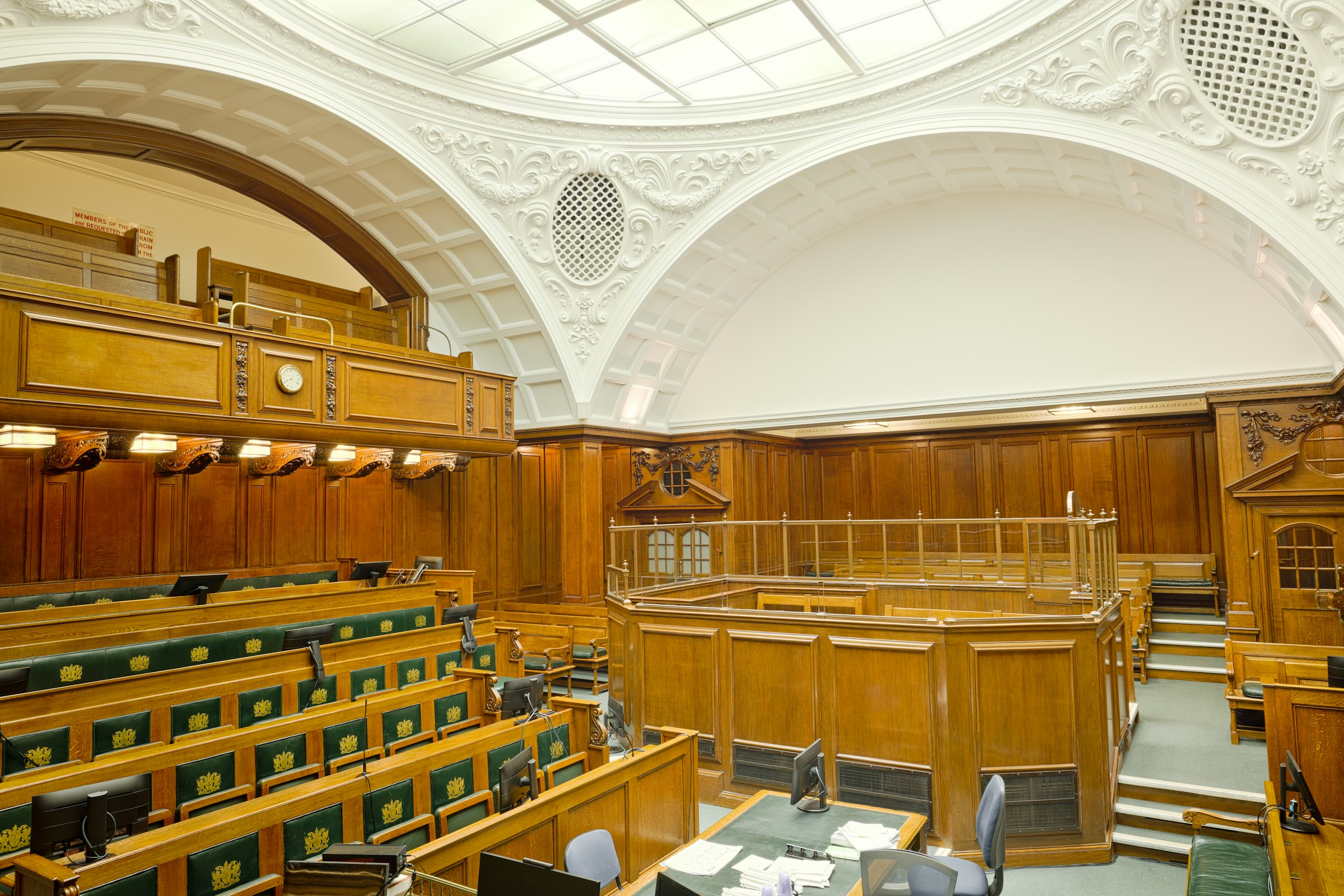
Setting aside arbitral award in Singapore requires an application within three months of receiving the award, on narrow grounds such as lack of jurisdiction, inability to present your case, excess of mandate, public policy, fraud or a prejudicial breach of natural justice. The court will not review the merits, which is why most challenges fail.
Key pointPrejudice is where most natural justice challenges fail: you must show the outcome could reasonably have been different if you had been heard, not merely that the tribunal's process was imperfect.
At a glance
Three months, strictly
An application must be made within three months of receiving the award, or of the disposal of a correction or interpretation request, with no general power to extend.
Closed list of grounds
Grounds come from Article 34 of the Model Law plus section 24 of the IAA, covering jurisdiction, due process, scope, public policy, fraud and natural justice.
No review of the merits
Errors of fact or law by the tribunal are not grounds in international arbitrations; domestic awards allow a limited appeal on law with consent or permission.
Prejudice must be proved
A natural justice challenge must show which rule was breached, how, its connection to the award and how it prejudiced the applicant's rights.
Reform under consideration
A 2025 Ministry of Law consultation canvassed changes on time limits, costs and permission to appeal; check whether any amendments have since been enacted.
Swipe or scroll →
The short answer: narrow grounds and a strict three-month deadline
Setting aside arbitral award in Singapore is possible, but only on a short, closed list of grounds and only if the application is filed within three months of receiving the award. The court does not rehear the case. A tribunal that got the facts wrong, or misapplied the law, has not by that alone made an award that can be set aside.
For international arbitrations seated in Singapore, the grounds come from Article 34 of the UNCITRAL Model Law, which has the force of law under the International Arbitration Act 1994, plus two further grounds in section 24 of that Act: fraud or corruption, and a breach of natural justice that prejudiced a party's rights. Domestic arbitrations follow a parallel regime under the Arbitration Act 2001, which also allows a limited appeal on a question of law.
That is why most applications fail. Singapore courts follow a policy of minimal curial intervention, and they look hard at whether a complaint is really about process and jurisdiction, or simply disagreement with the result. This guide explains the grounds, the deadline, the procedure and the practical judgement calls for both award debtors and award creditors.

Legal framework: which statute applies
The first question in any application for setting aside arbitral award in Singapore is whether the arbitration is international or domestic. An arbitration is generally international under the IAA where, for example, the parties have their places of business in different countries, or the parties have expressly agreed that the IAA applies. Otherwise, a Singapore-seated arbitration usually falls under the Arbitration Act 2001.
The distinction matters. Under the IAA, there is no appeal on a point of law: recourse against the award is limited to setting aside. Under the Arbitration Act, section 48 provides set-aside grounds that broadly mirror the Model Law, and section 49 permits an appeal to the court on a question of law arising out of the award, but only with the agreement of all other parties or with the court's permission, and the parties may exclude that right by agreement.
Applications are made to the General Division of the High Court, and international matters may be heard in the Singapore International Commercial Court. The procedure is set out in the Rules of Court 2021. Because of the tight deadline, the procedural steps should be mapped on the day the award arrives.
Grounds for setting aside arbitral award in Singapore
The grounds are exhaustive. Parties cannot contract to widen them, and an applicant must bring itself squarely within one of them.
| Ground | Source | What the applicant must show | Typical weakness |
|---|---|---|---|
| Incapacity or invalid arbitration agreement | Model Law Art 34(2)(a)(i) | A party lacked capacity, or the agreement is invalid under its governing law | Raised late, after participating without objection |
| No proper notice or inability to present case | Model Law Art 34(2)(a)(ii) | The applicant was not given proper notice or was otherwise unable to present its case | The party had a fair chance but chose not to use it |
| Award beyond the scope of submission | Model Law Art 34(2)(a)(iii) | The award deals with a dispute or issue not submitted to the tribunal | The issue was in fact live in pleadings or submissions |
| Tribunal composition or procedure not as agreed | Model Law Art 34(2)(a)(iv) | Departure from the agreed procedure or appointment process | Departure was minor and caused no real prejudice |
| Non-arbitrable subject matter | Model Law Art 34(2)(b)(i) | The dispute cannot be settled by arbitration under Singapore law | Most commercial disputes are arbitrable |
| Conflict with public policy | Model Law Art 34(2)(b)(ii) | The award conflicts with the most basic notions of morality and justice | Construed narrowly; not a back door to the merits |
| Fraud or corruption | IAA section 24(a) | The making of the award was induced or affected by fraud or corruption | Evidence was available during the arbitration |
| Breach of natural justice causing prejudice | IAA section 24(b) | A breach of the rules of natural justice in connection with the making of the award prejudiced the applicant's rights | No real prejudice; tribunal simply preferred the other side's case |
Natural justice: the most frequently argued ground
Natural justice complaints usually allege that a party was not heard on a point, or that the tribunal decided the case on a basis neither side argued, or failed to deal with an essential issue. Singapore courts generally ask which rule was breached, how it was breached, how the breach was connected to the making of the award, and how it prejudiced the applicant's rights. All four elements must be shown.
Prejudice is the point on which many applications founder. If the outcome could not reasonably have been different had the party been heard, the application is unlikely to succeed. In DKT v DKU, the Court of Appeal also confirmed that alleged "manifest incoherence" in an award is not, on its own, a ground to challenge it for breach of natural justice.
Jurisdiction and excess of mandate
Jurisdictional objections, such as a claim that a party never agreed to arbitrate, are reviewed by the court afresh, without deference to the tribunal's own ruling.
Excess of mandate is narrower: it asks whether the tribunal decided something outside what the parties submitted. Courts read the submissions generously, looking at pleadings, lists of issues and closing arguments together, not just the notice of arbitration. An issue that was fairly raised and argued at any of those stages is unlikely to be treated as outside the mandate, even if it was not in the original notice. Conversely, a remedy that no party asked for, or a claim the tribunal added of its own motion, is more vulnerable.
The three-month deadline and how to calculate it
Under Article 34 of the Model Law, an application to set aside may not be made after three months from the date the applicant received the award, or, if a request for correction or interpretation was made, from the date that request was disposed of. The Arbitration Act imposes a corresponding three-month limit for domestic awards. Singapore courts treat the deadline strictly, and there is currently no general power to extend it. For the purposes of setting aside arbitral award in Singapore, a late application will normally fail regardless of its merits.
Count from receipt of the award by the party, not from when the board considered it. Where the award arrives through an institutional platform or by courier to an agreed address, keep proof of when it was received. A request for correction under institutional rules can affect the starting point, but should not be used purely to buy time.
The Ministry of Law's public consultation on the International Arbitration Act in 2025 asked whether the time limit should be shortened, and canvassed allowing courts to extend time for fraud or corruption challenges, requiring permission to appeal set-aside decisions, and giving the court power over the costs of the arbitration after a successful challenge. At the time of writing we are not aware of amending legislation having been enacted, so the current statutory position should be checked before filing.
Diarise the deadline on the day the award is received, and work backwards. The supporting affidavit needs the record, the key transcripts and a clear explanation of prejudice. Building that evidence takes most of the three months, so the decision whether to challenge should be made in the first two to three weeks.
How a set-aside application works in practice
Applications for setting aside arbitral award in Singapore are decided largely on affidavit evidence, so the quality of the written record matters more than advocacy at the hearing. The sequence below is the one we use when advising either side.
- Secure the record. Collect the award, the pleadings, procedural orders, transcripts, submissions and correspondence with the tribunal. Note receipt dates.
- Triage the grounds. Identify each candidate ground and test it against the evidence, separating genuine process failures from disagreement with the result.
- Assess prejudice and waiver. Ask how the outcome might have differed, and whether any objection was raised during the arbitration. Objections not taken in time may be treated as waived.
- Decide strategy and forum. Weigh setting aside against resisting enforcement, settlement or doing nothing, considering where the award creditor will try to enforce.
- File within three months. Issue the originating application with a supporting affidavit exhibiting the material relied on. Consider confidentiality protections for the hearing and the judgment.
- Manage enforcement in parallel. The award creditor may seek leave to enforce. Consider whether to seek a stay or offer security pending the outcome.
- Prepare for appeal. Either side may wish to take the decision further. Factor appellate time and cost into the commercial plan from the start.
Options for the award debtor compared
Setting aside is not the only response to an adverse award. For a Singapore-seated award, the choice between challenging at the seat and resisting enforcement elsewhere needs care, and Singapore law on how those remedies interact has developed through appellate decisions. Do not assume you can simply wait and argue the point later. Our guide to enforcement of arbitral awards in Singapore explains the enforcement side.
| Option | Effect | Advantages | Risks |
|---|---|---|---|
| Apply to set aside at the seat | If successful, the award is annulled at the seat | Strongest remedy; may influence recognition abroad | Strict deadline; costs; public scrutiny of weak arguments |
| Resist enforcement where enforcement is sought | Award is not enforced in that country | Can be raised only where assets are pursued | Must be raised in every enforcing court; seat-related issues may be limited |
| Request correction or interpretation | Fixes errors or ambiguities in the award | Quick and cheap | Not a route to reopen the merits |
| Negotiate payment terms or settlement | Resolves exposure commercially | Certainty and lower cost | Requires a realistic view of the challenge's prospects |
Illustrative scenario: a damages award on an unargued basis
Illustrative only; generic parties. A tribunal seated in Singapore awards damages to a buyer against a seller. Both parties had argued damages on a lost-profits basis, but the tribunal instead calculates damages using a market-price method that neither expert addressed, and the seller had no opportunity to comment on it.
The seller has a credible natural justice argument: the tribunal decided an essential issue on a basis the parties were not given a chance to address. It must still show prejudice, for example that its expert would have produced materially different figures on the market-price method. If the evidence shows the outcome would have been much the same, the challenge is likely to fail.
The seller should decide within weeks whether to file, while assessing where the buyer is likely to enforce. A partial set-aside, limited to the damages part of the award, may be a realistic target, and the court can sometimes remit matters to the tribunal rather than annul the award.
Risks and common mistakes
Re-arguing the merits
The most common reason applications fail is that they ask the court to revisit the tribunal's findings of fact or law. Singapore courts consistently refuse. Dressing a merits complaint as a natural justice or public policy point rarely works and can lead to adverse costs.
Ask honestly whether the complaint would exist if the tribunal had reached the opposite result on the same process.
Missing or miscalculating the deadline
The three-month limit runs from receipt of the award, or from disposal of a correction or interpretation request. Waiting for internal approvals or a second opinion can consume most of the period. There is no general power to extend time.
Diarise the date on receipt, and plan the evidence backwards from it.
Failing to object during the arbitration
A party that knew of a procedural irregularity and carried on without objecting may be treated as having waived it. Tribunals and courts look closely at the procedural history, including correspondence and hearing transcripts.
During the arbitration, raise procedural objections promptly and on the record.
Ignoring the enforcement map
An award creditor will typically enforce wherever assets sit, often under the New York Convention. A debtor who focuses only on Singapore may be surprised by fast enforcement elsewhere, and may need a coordinated strategy across several countries.
See our guide to arbitration award enforcement for the creditor's perspective.
Cross-border angle
Because setting aside arbitral award in Singapore operates at the seat, its effects travel. Singapore is a party to the New York Convention, and an award annulled at the seat may face difficulties being recognised abroad, although practice varies between countries. For parties in Bangladesh, the UK, the UAE or China, the effect of a Singapore set-aside decision on local enforcement should be checked with local counsel at an early stage.
Time bars outside the award matter too. If an award is set aside, the IAA allows the court to exclude the period of the arbitration when calculating the limitation period for fresh proceedings. Our guide to the limitation period in Singapore explains the underlying clocks, and our international arbitration and Singapore-seated arbitration teams coordinate challenges and enforcement across jurisdictions.
Where Singapore court representation is required, we work alongside Singapore-qualified counsel.
What to do next: a decision checklist
- Record the date the award was received and diarise the three-month deadline immediately.
- Assemble the full record, including transcripts and procedural correspondence.
- Map each potential ground against the evidence and against the prejudice requirement.
- Check whether objections were raised in the arbitration, or may have been waived.
- Identify where the award creditor is likely to enforce and what that means for strategy.
- Estimate costs, timing and the realistic outcome, including a partial set-aside or remission.
- Consider settlement or payment terms in parallel with any challenge.
The test for setting aside arbitral award in Singapore is demanding by design, and a well-chosen challenge is narrow and evidence-led. Applying the rules on setting aside arbitral award in Singapore early protects options for both sides: the debtor keeps a viable challenge alive, and the creditor can prepare to defend the award and enforce quickly. For an early view, contact TRW & Co with the award and the key procedural documents.
Frequently asked questions
01How long do I have to apply to set aside an arbitral award in Singapore?
Three months from the date you received the award. If a party asked the tribunal to correct or interpret the award, time runs from when that request was disposed of. The limit comes from Article 34 of the Model Law for international arbitrations, and the Arbitration Act 2001 sets a corresponding limit for domestic awards. Singapore courts apply the deadline strictly and there is currently no general power to extend it, so record the date of receipt and plan the application backwards from it.
02Can I appeal an arbitral award on a point of law in Singapore?
Not in an international arbitration under the International Arbitration Act 1994: recourse is limited to setting aside on the statutory grounds. In a domestic arbitration under the Arbitration Act 2001, section 49 allows an appeal to the court on a question of law arising out of the award, but only with the agreement of all other parties or the court's permission. Parties can exclude this right by agreement, and agreeing to dispense with reasons counts as an exclusion.
03What counts as a breach of natural justice?
The two core rules are that each party must have a fair opportunity to present its case and respond to the other side, and that the tribunal must be independent and impartial. Common complaints are that the tribunal decided on a basis neither party argued, ignored an essential issue, or refused a party a fair opportunity to respond. The applicant must also show the breach was connected to the making of the award and caused real prejudice.
04Can a Singapore court set aside part of an award only?
Yes. Where the defective part of an award can be separated from the rest, the court may set aside only that part. The court may also, in appropriate cases, suspend the setting-aside proceedings to give the tribunal an opportunity to resume the arbitration or take other action that eliminates the grounds for setting aside. A targeted application aimed at the affected part, such as a damages calculation, is often more realistic than seeking to annul the whole award.
05Which court hears applications to set aside awards in Singapore?
Applications are made to the General Division of the High Court, and international commercial matters may be heard in the Singapore International Commercial Court. The procedure is governed by the Rules of Court 2021. Decisions may be taken further to the Court of Appeal. The Ministry of Law's 2025 consultation asked whether appeals should require permission, so check the current rules when planning an application or an appeal.
06Why do most applications to set aside arbitral awards fail?
Because Singapore courts follow a policy of minimal intervention and the grounds are narrow. Many applications are, in substance, complaints about the tribunal's findings of fact or law, which are not grounds for setting aside. Others fail because the applicant cannot show real prejudice, raised the objection too late in the arbitration, or relies on public policy arguments the courts construe narrowly. A well-founded application focuses on one or two strong process or jurisdiction points.
Sources and official materials
- International Arbitration Act 1994 — Section 24 grounds and the Model Law (First Schedule) as applied in Singapore
- Arbitration Act 2001 — Sections 48 and 49 on setting aside and appeals for domestic arbitrations
- UNCITRAL Model Law on International Commercial Arbitration — Article 34 grounds and time limit
- Ministry of Law – Public Consultation on the International Arbitration Act 1994 — 2025 proposals on set-aside time limits, costs and appeals
- Singapore International Commercial Court — Forum for international commercial and arbitration-related matters
- Singapore Courts — Court procedure and filing information
General information only, current as at 20 October 2026. It is not legal advice and does not create a lawyer–client relationship. Singapore law and regulatory practice change; check current official sources and take advice on the facts of your matter.



