
TRW & Co · Shipping and maritime
Registering a Ship Under the Singapore Registry of Ships
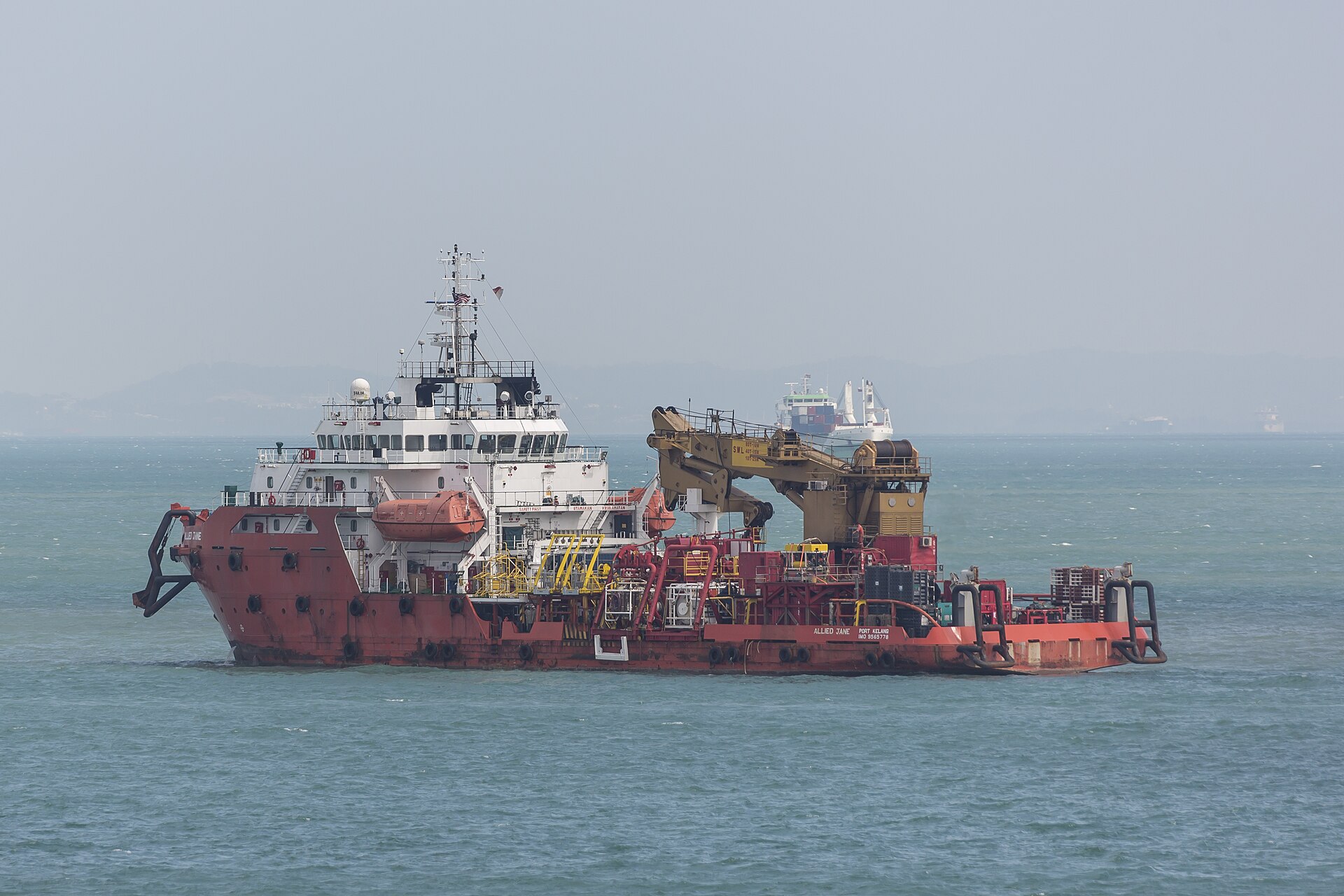
Ship registration in Singapore is open to citizens, permanent residents and Singapore-incorporated companies. Foreign-owned companies need S$50,000 paid-up capital and a self-propelled ship of at least 1,600 GT, unless exempted. Provisional registration lasts up to a year; permanent registration follows once title, tonnage and class documents are complete. Fees are tonnage-based.
Key pointRegistered mortgages on Singapore ships rank by the date and time they are recorded, not when they were signed, so lenders should be ready to lodge the mortgage the moment the ship is registered.
At a glance
Eligible owners
Singapore citizens, permanent residents, and Singapore-incorporated companies, whether locally or foreign owned, can register ships with the Singapore Registry of Ships run by MPA.
Foreign-owned companies
Need S$50,000 paid-up capital and a self-propelled ship of at least 1,600 GT, with case-by-case exemptions for ships operated from or based in Singapore.
Ship age and class
Ships under 17 years from keel laying that meet IMO conventions and are classed with one of eight authorised societies are normally accepted for registration.
Provisional for one year
A provisional Certificate of Registry lasts up to one year with no extension; transfer to the permanent register is free once documents are filed.
Section 13A exemption
Qualifying income from operating Singapore-registered ships outside port limits is exempt from income tax under section 13A without any application to IRAS.
Swipe or scroll →
The short answer: who can register and how
Ship registration in Singapore is open to Singapore citizens, permanent residents and companies incorporated in Singapore, whether locally or foreign owned. A foreign-owned Singapore company needs a paid-up capital of at least S$50,000 and, unless the Registrar grants an exemption, a self-propelled ship of at least 1,600 gross tonnage. Ships should normally be under 17 years old and classed with one of eight recognised classification societies.
Registration can be provisional, valid for up to one year with no extension, or permanent. The process runs through the Maritime and Port Authority of Singapore (MPA) in five main steps, from name reservation on digitalPORT@SG to issue of the Certificate of Registry. Fees are calculated on net tonnage, with an initial registration fee and an annual tonnage tax.
The flag matters beyond paperwork. Income from operating Singapore-registered ships in international waters can be exempt from Singapore income tax under section 13A of the Income Tax Act 1947, without any application, and registered mortgages over Singapore ships rank by the time they were recorded. This guide explains each element and the points that commonly delay a flag change.
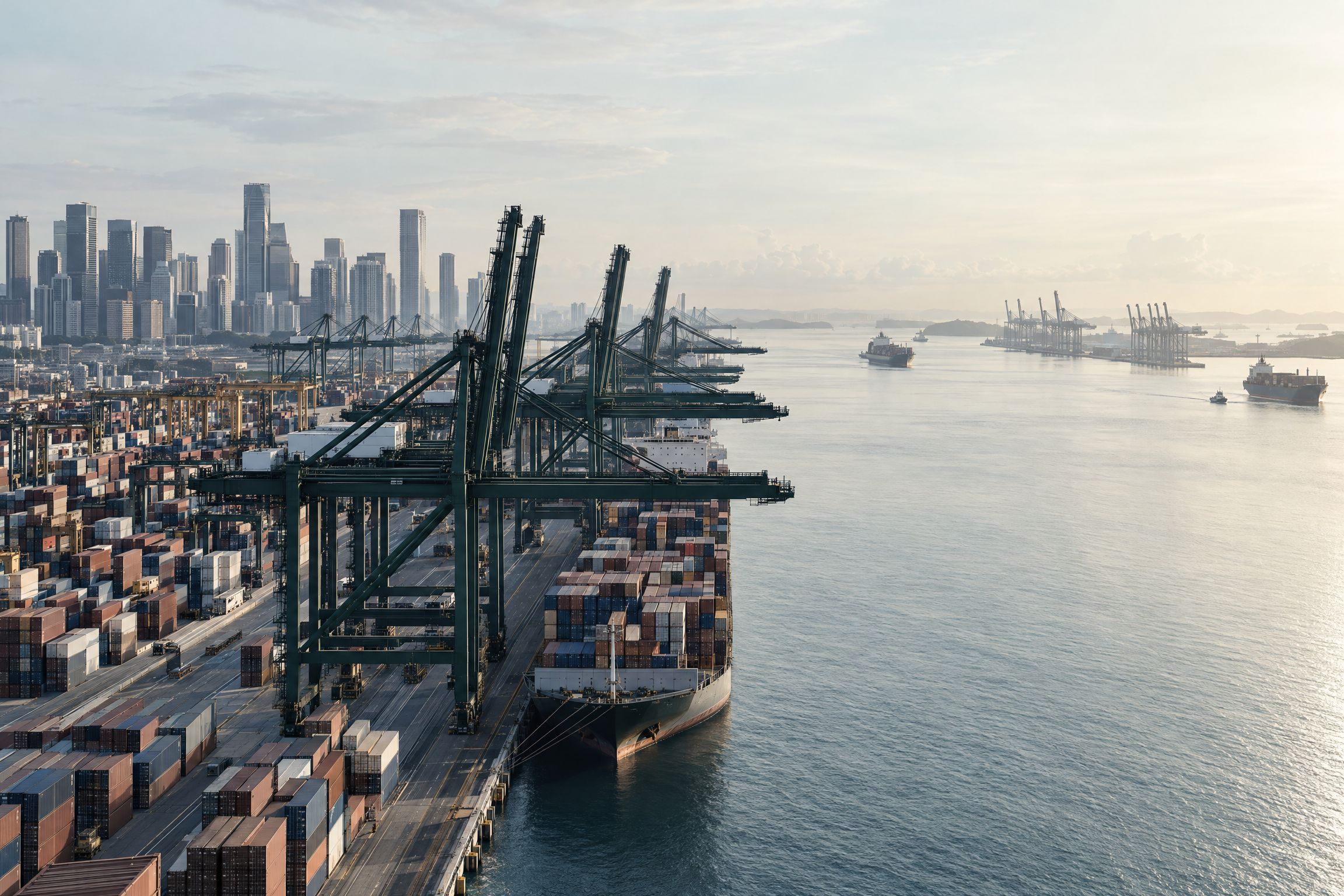
The legal framework and the Registrar of Ships
Registration is governed by the Merchant Shipping Act 1995 and its subsidiary legislation, including the tonnage regulations that give effect to the 1969 International Convention on Tonnage Measurement of Ships. The Registrar of Ships sits within MPA and runs the Singapore Registry of Ships (SRS).
MPA's guidance describes the registry as open to all types of ships, including offshore units such as oil rigs and floating platforms, but not fishing vessels, hydrofoils or wooden vessels. Ships must comply with the main IMO conventions, including SOLAS, Load Lines, Tonnage Measurement and MARPOL.
Two other regulators often become relevant. ACRA holds the corporate records the Registrar checks to confirm the owning company's status, and IRAS administers the shipping tax exemptions that make the flag attractive. Our shipping and maritime practice covers the wider regulatory picture.
Why owners choose ship registration in Singapore
Owners weigh the Singapore flag against open registries and their own national flags. The usual reasons for choosing ship registration in Singapore are the reputation of the flag with port state control and charterers, the section 13A tax exemption, a register that lenders are familiar with, and the ability to manage the ship and its crew from a major maritime centre.
The trade-offs are the ownership conditions, the age and class requirements and the need for a resident manager. For a group that already has, or plans, a Singapore presence, those requirements are rarely an obstacle. For a single ship managed entirely elsewhere, the analysis is closer and should be done before the purchase contract fixes the delivery flag.
Who can own a Singapore ship
The ownership rules are the first hurdle in any ship registration in Singapore plan. MPA's pre-requisites for ship registration distinguish between individuals, locally owned companies and foreign-owned companies, and the conditions differ for each.
| Owner type | Definition | Key conditions |
|---|---|---|
| Individual | Singapore citizen or permanent resident | May appoint himself or herself as the resident manager |
| Locally owned company | Singapore company with more than 50% of its equity owned by Singapore citizens or another locally owned company | Minimum paid-up capital of S$50,000, subject to waiver for qualifying fleets |
| Foreign-owned company | Singapore company with more than 50% of its equity owned by non-citizens | Paid-up capital of S$50,000; ship of at least 1,600 GT and self-propelled, unless exempted |
| Tug and barge owners | Local companies owning tugs or barges, and their holding companies | Paid-up capital pegged to 10% of the first vessel's value or S$50,000, whichever is lower, with a minimum of S$10,000 |
The Registrar may waive the paid-up capital requirement where the company and its related corporations register, or commit to register, a qualifying fleet. MPA lists the thresholds as one or two ships aggregating 40,000 net tonnage (NT), three ships aggregating 30,000 NT, four ships aggregating 20,000 NT, or five ships of any tonnage. The 1,600 GT threshold for foreign-owned companies may also be waived, case by case, for ships operated from or based in Singapore.
Every Singapore ship must have a manager resident in Singapore, who handles registry correspondence and annual tonnage tax. The technical manager responsible under the ISM and ISPS Codes may be based outside Singapore. A single-purpose company incorporated through our company incorporation team is the usual owning vehicle.
Which ships qualify
Ships under 17 years old that meet IMO convention requirements and are classed with an authorised classification society are normally accepted. Age is measured from the year the keel was laid. Dispensations may be considered for ships under special operating circumstances, but owners of older tonnage should raise the question with the Registrar before buying.
MPA authorises eight classification societies to act for Singapore in surveys, certification and tonnage measurement: the American Bureau of Shipping, Bureau Veritas, China Classification Society, DNV, Korean Register, Lloyd's Register, Nippon Kaiji Kyokai and RINA. A ship classed elsewhere will need to change class before permanent registration.
Provisional and permanent ship registration in Singapore: the process
MPA's overview of ship registration summarises the procedure in five steps. In practice, a change of flag also requires coordination with the seller, the former registry and the financier, so the timetable is usually set by the slowest document.
- Confirm eligibility. Check that the owner, the ship's age and class, and the paid-up capital meet MPA's pre-requisites, and that any waivers needed have been requested in writing.
- Reserve the ship's name. Submit a name reservation through digitalPORT@SG under the Singapore Registry of Ships services.
- Assemble the documents. Prepare the application and declaration, ACRA business profile, appointment of manager, evidence of title, a clean transcript or deletion certificate, tonnage certificate and class certificate.
- Execute the declaration. The owner's declaration must be made on or after acquiring legal title, before an authorised person such as a Justice of the Peace or Commissioner for Oaths.
- Pay fees and tonnage tax. Pay the initial registration fee and the first annual tonnage tax.
- Receive the Certificate of Registry. A provisional or permanent certificate issues once the Registrar is satisfied. Provisional registration must be converted to permanent within one year.
Provisional registration
According to MPA's provisional registration guidance, a provisional Certificate of Registry is valid for a maximum of one year and cannot be extended. The ship must move to the permanent register before it expires, and no fee is charged for the transfer once the outstanding documents are filed.
Provisional registration is useful where some documents will only be available after delivery. For example, a tonnage certificate issued by another state party to the Tonnage Convention may be accepted for provisional registration only, and must be re-issued by MPA or an authorised class society within one year.
Title and encumbrances
Evidence of title is a builder's certificate for a newbuilding or a bill of sale for an existing ship, with every intermediate bill of sale so that there is an unbroken chain of title. Documents signed outside Singapore must be notarised. A clean transcript from the former registry, dated no more than three days before the flag change, shows that the ship is free of registered encumbrances. If it is not available, MPA may accept an owner's undertaking that no mortgage will be registered in Singapore until the clean transcript or deletion certificate is produced.
Fees and annual tonnage tax
The cost of ship registration in Singapore is modest by international standards and is driven by net tonnage. The figures below are from MPA's published fee schedule; MPA also offers an online fee calculator.
| Item | Rate | Minimum and maximum |
|---|---|---|
| Initial registration | S$2.50 per NT | Minimum S$1,250; maximum S$50,000 |
| Block Transfer Scheme registration | S$0.50 per NT | Minimum S$1,250; maximum S$20,000 per ship |
| Annual tonnage tax | S$0.20 per NT | Minimum S$100; maximum S$10,000 |
| Registration anew on change of ownership | S$1.25 per NT | Minimum S$1,250; maximum S$6,000 |
| Registration, transfer or transmission of a mortgage | S$48 plus S$1 per 100 GT or part | Subject to prevailing GST |
| Recording a bill of sale | S$50 per ship | Fixed |
The Block Transfer Scheme applies to owners bringing fleets that meet the same aggregate tonnage thresholds as the capital waiver. Annual tonnage tax is payable at registration and then on or before each anniversary, and is not refunded if the registry is closed during the year.
Ship mortgages on the Singapore register
Lenders take security over Singapore ships by registering a statutory mortgage. Under MPA's guidance on ownership, shares and mortgage priority, where more than one mortgage is registered over the same ship, they rank according to the date and time each was recorded in the register, not the date of the mortgage itself, and regardless of notice. Speed of registration therefore matters on refinancings.
Property in a Singapore ship is divided into shares, and MPA advises 64 shares unless there is a special difficulty. No more than five persons may be registered as joint owners of a share, and fractional ownership of a share is not registered.
A registered mortgage is strong security, but it does not rank first. Maritime liens such as crew wages, salvage and collision damage rank ahead of it in a judicial sale. Financiers should read our analysis of maritime liens and priority claims before relying on the ship's value alone, and our page on ship arrest for how a mortgagee enforces on default.
The tax link: section 13A and the Maritime Sector Incentive
The most valuable consequence of ship registration in Singapore is often the tax treatment. IRAS guidance on shipping companies explains that a shipping enterprise operating Singapore-registered ships is exempt from tax under section 13A of the Income Tax Act 1947 on qualifying income from operating those ships outside Singapore port limits. No application is needed; the company reports the income in its annual return.
Qualifying income includes the carriage of passengers, mail, livestock or goods, towage and salvage, ship charter, and certain offshore uses. Gains on the sale of a Singapore ship can be exempt, as can gains on selling all the ordinary shares of a special purpose company that owns a Singapore ship and no foreign ship, subject to IRAS's conditions and exclusions such as ship trading.
Foreign-flagged fleets look instead to section 13E and the Maritime Sector Incentive – Approved International Shipping Enterprise award, administered by MPA. That route requires an application and compliance with award conditions. TRW & Co works with your tax advisers on structuring; see our Singapore tax structuring page for how we coordinate that work.
The section 13A exemption is self-assessed, so the burden is on the company to keep evidence that each income stream qualifies. Mixed fleets, bareboat arrangements and ship-management income need careful analysis, and it is better to map the income streams before the flag change than to discover a gap at the first tax filing.
Illustrative scenario: reflagging a second-hand tanker
The following example is illustrative only. A group based outside Singapore buys a nine-year-old product tanker with bank finance and wants to fly the Singapore flag. It incorporates a Singapore special purpose company with S$50,000 paid-up capital, which is foreign owned. The tanker exceeds 1,600 GT and is classed with an authorised society, so it is eligible.
The seller's former registry cannot issue a deletion certificate until after delivery, so the buyer's lawyers arrange provisional registration at the moment of closing. The bank's mortgage is lodged immediately afterwards so that it is recorded first. Within the year, the permanent documents, including a re-issued tonnage certificate, are filed and the ship moves to the permanent register without further fee.
In parallel, the group's tax advisers confirm which charter income will fall within section 13A and how the special purpose company's eventual sale might be treated.
Risks, common mistakes and next steps
Signing the declaration before title passes
The owner's declaration must be made on or after the date the owner acquires legal title. A declaration signed in advance of the bill of sale is defective. Where a post-dated certificate is needed, MPA asks for the application, without signatures, at least three working days before collection, with the declarant attending on the day.
Breaks in the chain of title
Every intermediate bill of sale must be produced, and documents signed abroad must be notarised. Ships that have passed through several group companies, or through a sale and leaseback, often have gaps that take time to fill. Start collecting title documents as soon as the purchase is agreed.
Not notifying changes
Owners must notify the Registrar of changes to the ship's particulars within 30 days, and a change of manager within seven days. Missed notifications cause problems when a ship is later sold, refinanced or arrested, because the register no longer reflects reality.
Assuming the tax exemption covers everything
Section 13A covers defined categories of income from Singapore ships. Income from ship trading, certain finance leases and activities within port limits fall outside it, and foreign ships are treated differently. Each income stream should be reviewed with tax advisers rather than assumed to be exempt.
Leaving the financier out of the timetable
Banks financing an acquisition usually want their mortgage recorded the moment the ship is registered, and will make that a condition of drawdown. If the ship registration in Singapore timetable is fixed without the bank, closing can slip while documents are re-signed. Agree the sequence of bill of sale, deletion from the old register, provisional registration and mortgage recording in a closing memorandum that every party has signed off.
If you are planning ship registration in Singapore, start with the ownership vehicle and the title documents, then fix the timetable with your financier and the former registry. Contact TRW & Co to coordinate the corporate, registry, finance and tax workstreams, including for owners based in Bangladesh, the UAE, China or the UK.
Frequently asked questions
01Can a foreign company register a ship in Singapore?
Not directly. Only Singapore citizens, permanent residents and companies incorporated in Singapore can be registered owners. A foreign group can, however, incorporate a Singapore subsidiary. If more than 50% of that company's equity is owned by non-citizens, it is foreign owned and must have at least S$50,000 paid-up capital, and the ship must normally be self-propelled and at least 1,600 GT. The Registrar can grant exemptions from the tonnage requirement case by case for ships based in Singapore.
02How long does provisional registration last?
A provisional Certificate of Registry is valid for a maximum of one year and cannot be extended. The owner must submit the outstanding documents, such as a clean transcript or deletion certificate and a re-issued tonnage certificate, and move the ship to the permanent register before the year ends. MPA does not charge a fee for the transfer from provisional to permanent registration.
03How much does it cost to register a ship in Singapore?
MPA charges an initial registration fee of S$2.50 per net ton, with a minimum of S$1,250 and a maximum of S$50,000, plus annual tonnage tax of S$0.20 per net ton, with a minimum of S$100 and a maximum of S$10,000. Fleets qualifying under the Block Transfer Scheme pay a reduced registration fee. Mortgage registration, bill of sale recording and certificates carry separate fees, and professional costs for the transaction are additional.
04Is there an age limit for ships on the Singapore register?
MPA states that ships under 17 years old, measured from the year the keel was laid, that comply with IMO conventions and are classed with an authorised classification society are normally accepted. Dispensations may be considered for ships under special operating circumstances. Owners of older ships should discuss eligibility with the Registrar before committing to a purchase that depends on the Singapore flag.
05Do I need to apply for the section 13A tax exemption?
No. IRAS explains that there is no need to apply for the section 13A exemptions. A company with qualifying income from operating Singapore-registered ships reports the amount and nature of that income in its annual corporate tax return and computation. The company must keep records showing that the income falls within the exempt categories, so the analysis should be done before the flag change. Foreign-flagged fleets need an MPA award under section 13E instead.
06How do ship mortgages rank on the Singapore register?
Where more than one mortgage is registered over the same Singapore ship or share, the mortgages rank according to the date and time each was recorded in the register, not the date the mortgage was signed, and regardless of any notice. Registered mortgages rank after maritime liens, such as crew wages and salvage, but ahead of statutory claims such as bunker and repair debts in a judicial sale.
Sources and official materials
- MPA: Pre-Requisites for Ship Registration — Owner, ship and manager requirements
- MPA: Provisional Registration — Provisional certificate, documents and title evidence
- MPA: Singapore Registry of Ships fees — Registration fees, tonnage tax and other charges
- MPA: Additional Information — Shares in a ship, mortgage priority and tax exemption
- MPA: Overview of Ship Registration — Five-step registration process
- IRAS: Tax Treatment for Shipping Income — Section 13A and section 13E exemptions
- Merchant Shipping Act 1995 — Statutory basis for registration and mortgages
General information only, current as at 20 October 2026. It is not legal advice and does not create a lawyer–client relationship. Singapore law and regulatory practice change; check current official sources and take advice on the facts of your matter.



