
TRW & Co · Startups and founders
Flipping to a Singapore Holding Company Before a VC Round
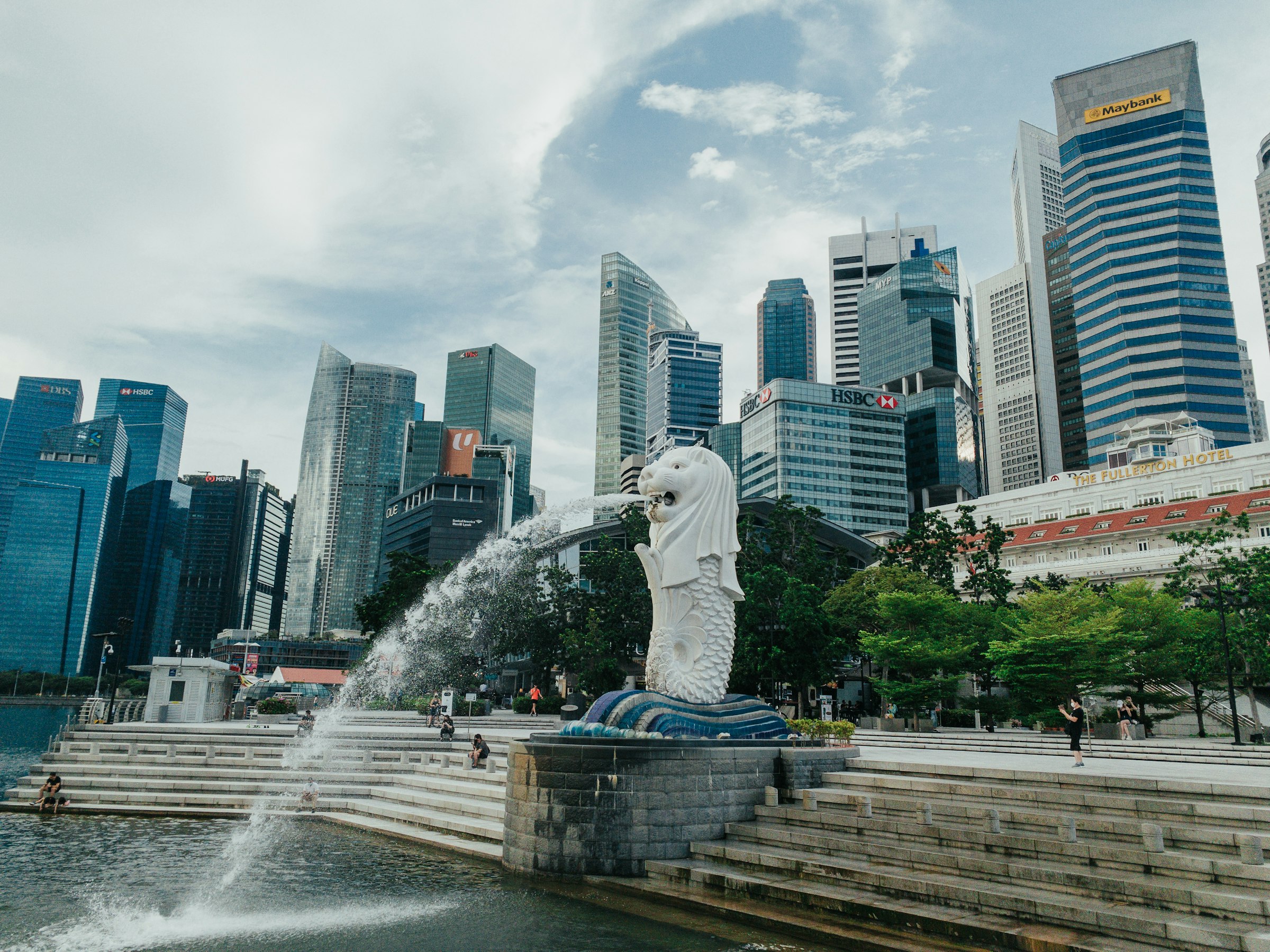
A Singapore holding company flip puts a new Singapore company at the top of a start-up group, usually by a share swap in which founders and investors exchange operating company shares for holding company shares. Investors often ask for it before a priced round. Plan it early: home-country approvals, tax, IP and option plans set the timetable.
Key pointIRAS's reconstruction relief is not available for a restructuring that facilitates a material divestment of more than 10% of the new holding company, so a flip closed together with founder secondary sales can lose the relief.
At a glance
Share swap is standard
Shareholders exchange operating company shares for new Singapore holding company shares in the same proportions, leaving the business in its original legal entity.
Investors want Singapore
Singapore company law, preference share practice, courts and arbitration, and ACRA's registers make a Singapore top company familiar to regional venture investors.
Relief has conditions
Section 15 reconstruction relief needs 90% continuity of ownership, 90% share consideration, timely claims and two-year retention of shares and assets.
Local rules drive timing
Exchange-control, foreign-investment and tax rules in the operating company's country usually take longer than the Singapore corporate steps.
IP and options move too
Investors expect the group to control its IP and employees to hold holding company options; both need separate documents and local tax checks.
Swipe or scroll →
The short answer: what a flip is and when to do it
A Singapore holding company flip moves a start-up's ownership so that a newly incorporated Singapore company sits at the top of the group, with the original operating company becoming its subsidiary. The usual method is a share swap: founders and existing investors transfer their shares in the operating company to the Singapore holding company and receive holding company shares in return, in the same proportions.
Venture investors often ask for this before a priced round because they want to invest in a familiar jurisdiction, with predictable company law, English-language courts, established preference share terms and a clear route to a later sale or listing. Done well, the flip is largely a mirror image: the same people own the same business through a different top company.
Done late or carelessly, it can trigger tax in the operating company's country, require regulatory approvals that take months, break employee option plans and leave the valuable intellectual property in the wrong entity. The rule of thumb is to start the flip well before the term sheet, not as a closing condition.

Why investors ask for a Singapore holding company
Investors in regional start-ups commonly want the investment vehicle to be a Singapore private company limited by shares. The reasons are practical. Singapore company law under the Companies Act 1967 accommodates the instruments venture deals use, including preference shares with liquidation preferences, anti-dilution protection and conversion rights. Shareholder agreements can be enforced in Singapore courts or arbitration. Registers are maintained by ACRA and are easy to verify in diligence.
A Singapore top company also simplifies later rounds. New investors can subscribe at the holding company level without approvals in each operating country, and a future buyer can acquire the group in one transaction. Our venture capital investments page explains the investment documents that typically follow.
When a Singapore holding company flip is not the answer
None of this means a Singapore holding company flip is always right. Where the business, customers and team are entirely in one country with a functioning venture ecosystem, or where local rules make outbound structures difficult, investors may accept a local top company. The decision should be made deliberately, not by default.
There are also costs that do not appear in the term sheet: a second set of annual filings and audits, Singapore directors and a company secretary, transfer pricing documentation for dealings between the holding company and the operating company, and the time founders spend on two corporate systems. For a company that may never raise outside its home market, those costs can outweigh the benefits. Founders should ask lead investors directly whether the flip is a firm requirement, a preference, or something that can wait until a later round.
Flip structures compared
There is more than one way to carry out a Singapore holding company flip. The right method depends on where the operating company is incorporated, its regulatory profile and what investors will accept.
| Method | How it works | Advantages | Watch-outs |
|---|---|---|---|
| Share swap | Shareholders transfer operating company shares to the Singapore holding company in exchange for new holding company shares | Mirrors existing ownership; business stays in the same legal entity | Foreign-exchange, investment and tax rules in the operating company's country; third-party consents |
| Cash acquisition | Holding company buys the operating company shares for cash, funded by new investment | Simple where the operating company is small | Founders may realise taxable gains; funding and valuation questions |
| Asset or IP transfer | Holding company acquires key assets, especially IP, and the operating company becomes a service provider or subsidiary | Puts IP in Singapore directly | Transfer pricing, valuation, possible tax on the transfer and employee and customer novations |
| New top company for new business only | Singapore company holds the regional expansion while the original company remains separate | Avoids moving the original company | Investors may see a split group; inter-company arrangements needed |
Most flips use the share swap, sometimes combined with an assignment or licence of IP to the holding company. Whatever the method, the cap table at the top should match the cap table of the operating company immediately before, adjusted only for deliberate changes such as a new option pool.
The Singapore holding company flip, step by step
A typical Singapore holding company flip runs on two tracks at once: Singapore corporate steps and the operating company's local steps. The local track usually sets the timetable.
- Map the starting point. Prepare an accurate cap table, including options, convertible notes, SAFEs and side letters, and list every consent needed under existing shareholder agreements, loans and key contracts.
- Take local advice early. Confirm the operating country's foreign-investment, exchange-control and tax rules for an inbound share swap, and any approvals required by founders as residents investing abroad.
- Incorporate the holding company. Incorporate the Singapore company through ACRA, adopt a constitution suited to venture investment, and appoint directors who meet the local resident director requirement. Our company incorporation team handles this stage.
- Document the swap. Prepare a share exchange agreement, transfer instruments for the operating company shares and allotment documents for the holding company shares, then make the required ACRA filings.
- Deal with stamp duty and tax. Assess Singapore stamp duty and any available relief, foreign transfer taxes, and the tax position of each shareholder in its own jurisdiction.
- Move or license the IP. Decide where the IP should sit, document assignments or licences, and record changes of ownership of registered rights with the relevant IP offices.
- Roll over employee equity. Replace operating company options with holding company options on equivalent terms, with employee communications and local securities and tax checks.
- Close and clean up. Update registers, bank mandates, customer and supplier records, and prepare a closing set that will satisfy investor diligence.
Stamp duty, relief and tax in the flip
Singapore stamp duty is a tax on documents. Where the operating company is itself a Singapore company, the instruments transferring its shares to the new holding company are dutiable, at the share transfer rate on the higher of price and value; our guide to stamp duty on share transfers explains the calculation. Where the operating company is incorporated abroad, the principal transfer taxes usually arise in that country, and the Singapore position should be confirmed against IRAS guidance on stamp duty for shares rather than assumed.
For a Singapore operating company, relief from stamp duty may be available under section 15 of the Stamp Duties Act 1929 for a reconstruction. IRAS's guidance on reconstruction and amalgamation relief sets out the main conditions, including that:
- ownership of the assets remains substantially the same before and after, with the owner retaining at least 90% directly or indirectly;
- the holding company is incorporated, or increases its capital, to acquire at least 90% of the voting shares of the target;
- unless the companies are wholly associated, at least 90% of the consideration is settled by issuing voting shares, issued to the transferor when shares are acquired;
- the relief is claimed within 14 days of execution in Singapore, or 30 days if executed overseas; and
- the consideration shares and the acquired assets are retained for two years from the relevant dates.
IRAS also states that a restructuring carried out to facilitate a material divestment of more than 10% of the transferee will not qualify. That is the key timing issue for a flip done immediately before a round that includes founder secondary sales. If the conditions are later breached, the duty becomes payable with interest. Our stamp duty practice can assess the position for your structure.
Income tax runs alongside. Some countries tax shareholders on a share swap as if they had sold their shares, even though no cash changes hands, while others offer roll-over relief. In Singapore, the new holding company's tax residence depends on where control and management are exercised, which affects treaty access and the treatment of dividends from the operating company. TRW & Co coordinates with your tax advisers in each jurisdiction; we do not act as a tax agent.
Founders sometimes plan the flip and the first priced round as a single closing. If the round includes a secondary sale by founders or early investors, or the IRAS conditions on retention of consideration shares may be broken, the reconstruction relief may be unavailable or clawed back. Separating the flip from the round, and modelling the cap table changes in advance, avoids that trap.
Moving the intellectual property
Investors in the holding company want to know that the group owns its core IP and that the IP sits somewhere sensible. A share swap alone leaves the IP in the operating company, now a subsidiary. That may be acceptable, but many investors prefer the holding company, or a dedicated Singapore IP company, to own or control it.
Moving IP out of the operating company is a disposal in that country and may be taxable there, may require valuation and may attract transfer pricing scrutiny for later royalties. A licence instead of an assignment can be simpler, but must be drafted to give the holding company real control. Registered rights should be re-recorded with IPOS and other offices after any assignment.
Before any move, confirm that the operating company actually owns what it thinks it owns: founder and contractor assignments, employee invention terms and open-source compliance. Our guide to startup IP strategy covers that groundwork.
Illustrative scenario: a Dhaka start-up before its Series A
The following example is illustrative only. A Bangladesh-incorporated software company with three resident founders, two angel investors and an option pool is negotiating a Series A led by a Singapore fund. The fund asks for a Singapore top company. The founders' counsel in Bangladesh advises that outbound investment by residents is tightly regulated and that the proposed swap needs regulatory analysis and possibly approval before the founders can hold shares in a foreign company.
The parties therefore separate the steps. The Singapore holding company is incorporated with a nominal share capital. While the Bangladesh approvals are pursued, the fund invests through a convertible instrument at the holding company level, and the group enters into an exclusive licence from the operating company to the holding company of the software IP for markets outside Bangladesh. Once approvals are in hand, the share swap completes, employee options are rolled over and the convertible converts in the priced round.
The example shows that a Singapore holding company flip for founders in a country with exchange controls is a regulatory project as much as a corporate one, and should start months before the money is needed.
Risks and common mistakes
The same handful of problems appear in almost every Singapore holding company flip that runs late. Most are avoidable with a few weeks of preparation.
Forgetting existing instruments
Outstanding SAFEs, convertible notes, warrants and side letters at the operating company must be dealt with. Some convert into operating company shares, which would sit outside the new structure. Each instrument should be amended, novated to the holding company or terminated with the holder's consent before or at the flip.
Breaking employee option plans
Options over operating company shares lose much of their value once that company becomes a subsidiary. Employees should receive equivalent holding company options, with vesting credit for past service. The roll-over itself may have tax consequences in the employees' countries, and the plan must comply with local securities rules. See our employee share plans page.
Underestimating local approvals
Several countries in the region regulate inbound share swaps, require valuations at prescribed bases, or limit residents' ability to hold foreign shares. Approvals can take months. Founders who promise investors a flip within weeks often end up renegotiating closing conditions.
Treating the holding company as an empty shell
A Singapore holding company with no directors, decision-making or substance in Singapore may not be tax resident here and may not obtain treaty benefits. It may also struggle to open bank accounts. Plan for real governance: board meetings, a company secretary and, where appropriate, management functions in Singapore.
Leaving minority holders behind
If some operating company shareholders do not swap, the holding company will not own 100%, which complicates later rounds and may affect stamp duty relief thresholds. Check drag-along rights and secure written commitments from every shareholder before announcing the flip.
Checklist before you flip
- Agree with lead investors whether a Singapore holding company is truly required, and by when.
- Prepare a full cap table, including every convertible and option, and a consents list.
- Obtain local tax and regulatory advice in the operating company's country.
- Decide where the IP will sit and how it will get there.
- Model stamp duty and any relief, and separate the flip from secondary sales if relief matters.
- Prepare employee communications and the option roll-over.
- Build Singapore governance and banking into the plan.
TRW & Co coordinates the Singapore and home-country workstreams for founders in Bangladesh, the UAE, China, the UK and across ASEAN. To plan your Singapore holding company flip, contact us before the term sheet is signed. Founders should also read our article on founder share sale tax for how the structure affects an eventual exit.
Frequently asked questions
01What is a Singapore holding company flip?
It is a restructuring in which a new Singapore company becomes the parent of an existing start-up group. Usually, the shareholders of the operating company transfer their shares to the Singapore company in exchange for its shares, so the same people own the same business through a new top company. Investors often request it before a priced venture round because Singapore law and courts are familiar to them.
02Is stamp duty payable on a flip?
If the operating company is a Singapore company, the instruments transferring its shares are dutiable at the share transfer rate, but relief may be available under section 15 of the Stamp Duties Act 1929 for a reconstruction if IRAS's conditions are met, including 90% continuity of ownership and share consideration and two-year retention periods. If the operating company is foreign, the main transfer taxes usually arise in its home country, and the Singapore position should be confirmed.
03How long does a flip take?
The Singapore steps, such as incorporating the holding company and issuing shares, can usually be completed quickly. The overall timetable depends on the operating company's country: some require approvals for residents to hold foreign shares or for foreign companies to acquire local ones, valuations at prescribed bases or tax clearances. Allow time for consents from existing investors and lenders. Starting several months before the funding round is prudent.
04Do founders pay tax on a share swap?
It depends on the founders' tax residence and the operating company's country. Some countries treat a share swap as a disposal and tax any gain even though no cash is received, while others allow deferral or roll-over relief in qualifying cases. Singapore does not tax capital gains, but founders resident elsewhere must check their home rules. TRW & Co coordinates with your tax advisers on this; we do not act as a tax agent.
05What happens to employee stock options in a flip?
Options over operating company shares are usually replaced with options over holding company shares on equivalent economic terms, preserving vesting credit. That requires a new or amended plan at the holding company, employee consents or communications, and checks on local securities and tax rules in each employee's country. Leaving options at the operating company level is generally unattractive to employees and investors.
06Should the IP move to the Singapore holding company?
Often, but not always. Investors want the group to own and control its core IP, and many prefer it to sit at or near the top company. Assigning IP out of the operating company may be a taxable disposal in its country and may raise transfer pricing questions, so an exclusive licence is sometimes used instead. Before moving anything, confirm that the operating company owns the IP through proper founder, employee and contractor assignments.
Sources and official materials
- IRAS: Reconstruction or Amalgamation of Companies (stamp duty relief) — Section 15 relief conditions and timing
- IRAS: Stamp Duty for Shares — Dutiable share documents and stamping
- Accounting and Corporate Regulatory Authority (ACRA) — Incorporation and corporate filings
- Companies Act 1967 — Share issues, classes of shares and directors
- IRAS e-Tax Guide: Certainty of non-taxation of companies' gains on disposal of equity investments — Section 13W safe harbour for corporate shareholders
- Intellectual Property Office of Singapore (IPOS) — Recording changes in ownership of registered IP
General information only, current as at 20 October 2026. It is not legal advice and does not create a lawyer–client relationship. Singapore law and regulatory practice change; check current official sources and take advice on the facts of your matter.



