
TRW & Co · Disputes and debt recovery
Small Claims Tribunal vs Magistrate's Court in Singapore: Limits and Costs
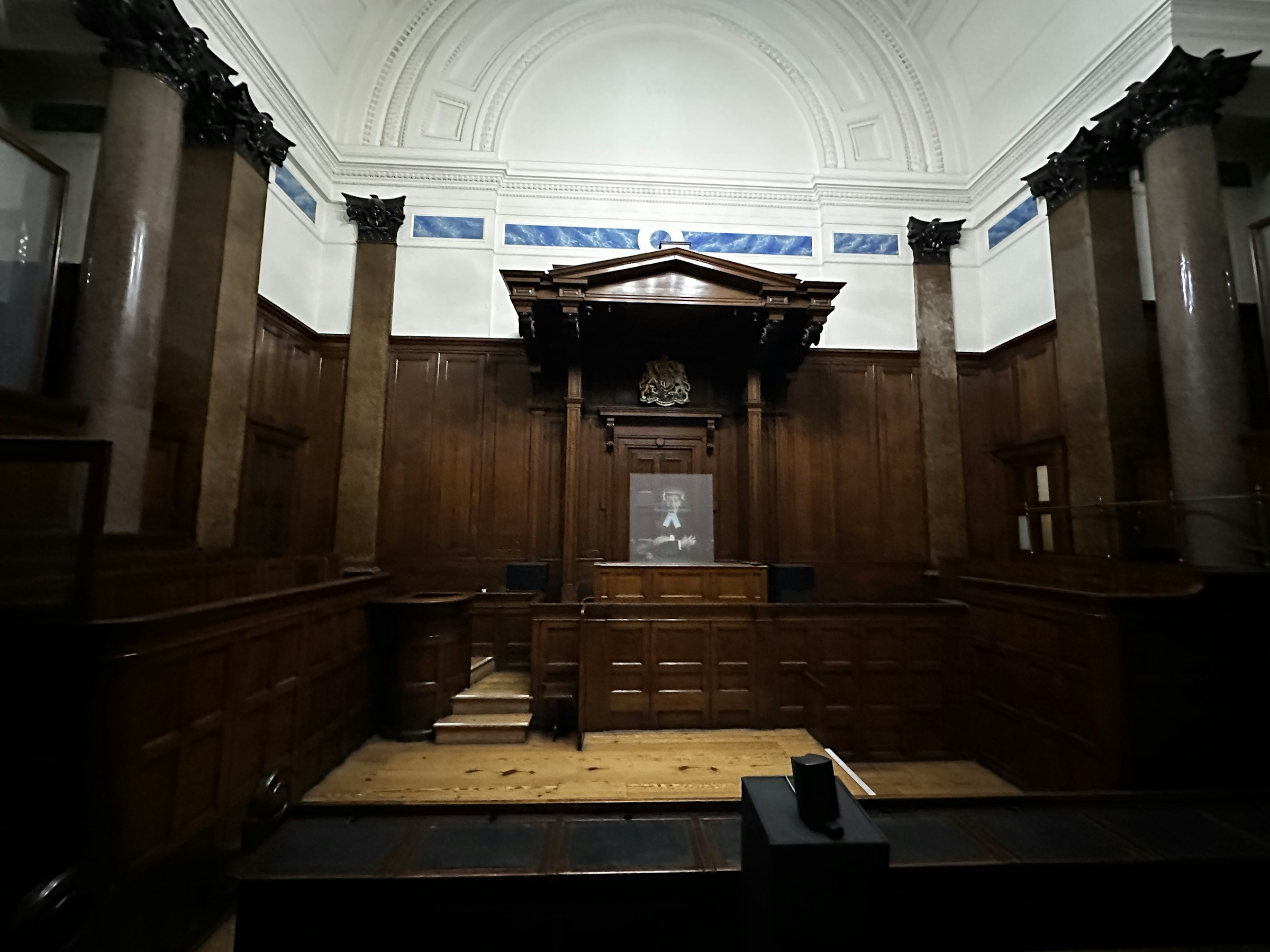
The Small Claims Tribunal in Singapore hears claims about goods, services, short residential tenancies and some property damage up to S$20,000, or S$30,000 with both parties' consent, within two years and without lawyers. Larger or excluded claims, including commercial leases and claims against foreign parties, go to the Magistrate's Court, which handles claims up to S$60,000.
Key pointCommercial and industrial leases are outside the tribunal's jurisdiction whatever the amount, and so are respondents outside Singapore; for those claims, the Magistrate's Court simplified process is the low-cost route, with default judgment still available.
At a glance
Tribunal claim limit
Claims up to S$20,000 are heard, rising to S$30,000 where both parties sign a Memorandum of Consent; excess can be abandoned but not split.
Two-year filing window
Claims must be filed within two years of the event giving rise to them, far shorter than the ordinary court limitation periods for contract claims.
No lawyers at hearings
Lawyers cannot represent parties at consultations or hearings; companies send an officer or full-time employee with authority to settle the claim.
Magistrate's Court limit
The Magistrate's Court hears claims up to S$60,000 under a simplified civil process with upfront documents, case conferences and simplified trials.
Narrow tribunal appeals
Appeals lie only on law or jurisdiction, with permission from the District Court sought within 14 days of the tribunal magistrate's order.
Swipe or scroll →
The short answer
The Small Claims Tribunal in Singapore (formally, the Small Claims Tribunals of the State Courts) hears specified low-value disputes, mainly about goods, services and short residential tenancies, worth up to S$20,000, or up to S$30,000 if both parties sign a Memorandum of Consent. Claims must be filed within two years, the respondent must be in Singapore, and lawyers cannot represent either side.
Claims outside that range or those categories go to the State Courts' civil process. The Magistrate's Court hears claims up to S$60,000 under a simplified civil process, and the District Court hears claims above S$60,000 up to S$250,000. In both courts, lawyers may act and the court decides costs at the end.
For a business, the choice is less about the amount than about the type of claim, who will present it, whether the other side is in Singapore, and what happens if the debtor does not pay. This guide compares the two routes in detail.
What the Small Claims Tribunal in Singapore can hear
The Small Claims Tribunal in Singapore can only hear the types of claim listed in the Small Claims Tribunals Act 1984. According to the Singapore Courts' page on eligible cases, these include claims arising from:
- a contract for the sale of goods;
- a contract for the provision of services;
- damage to property, other than damage arising from the use of a motor vehicle or caused by a neighbour;
- a tenancy agreement for residential premises not exceeding two years;
- an unfair practice by a supplier under the Consumer Protection (Fair Trading) Act; and
- refunds of motor vehicle deposits under the related regulations.
Some statutory claims can also be brought, such as town council conservancy charges, HDB improvement contributions, and management corporation contributions for strata properties.
What it cannot hear
Leases of commercial or industrial premises are outside the jurisdiction, as are licences of any premises. Property damage from motor vehicles is excluded, and disputes between neighbours go to a separate tribunal. Claims against a respondent located outside Singapore cannot proceed, because the claim must be served in Singapore. Employment disputes are handled by a separate tribunal and are not covered here.
The monetary limit
The limit is S$20,000, rising to S$30,000 with a Memorandum of Consent signed by both parties. A claimant with a larger claim may abandon the excess to bring it within the limit, but cannot split one claim into several cases to get under the cap. Abandoning the excess is permanent, so it makes sense only where the amount given up is worth less than the cost and time of a court action.
The Magistrate's Court and District Court route
Claims that do not fit the tribunal start as an originating claim in the State Courts. According to the Courts' guide to starting a civil claim, the Magistrate's Court hears claims up to S$60,000, and the District Court hears claims above S$60,000 up to S$250,000 (with a higher limit for certain accident claims). Claims above that go to the General Division of the High Court.
All Magistrate's Court claims begun by originating claim follow the simplified civil process, which also applies in the District Court if all parties consent. Its main features are:
- upfront production of documents, so each side sees the other's case early;
- early, robust case management at a civil simplified case conference before a judge;
- encouragement to use alternative dispute resolution;
- simplified trials, with strict time limits where the court directs; and
- no interlocutory applications for document production or summary judgment; the court deals with those issues at the case conference.
The last point matters to creditors. In the High Court and a District Court case outside the simplified process, a creditor facing a thin defence can apply for summary judgment, as explained in our guide to summary judgment and striking out. In the simplified process, the judge manages that question at the case conference instead.
Default judgment is still available in the Magistrate's Court. A defendant served in Singapore that fails to file a notice of intention to contest within 14 days, or a defence within 21 days of the statement of claim, can face judgment without a trial. Many straightforward business debts end at this stage.
Small Claims Tribunals versus the Magistrate's Court compared
| Feature | Small Claims Tribunals | Magistrate's Court |
|---|---|---|
| Claim limit | S$20,000, or S$30,000 with a Memorandum of Consent | Up to S$60,000 |
| Types of claim | Listed categories only, mainly goods, services, short residential tenancies and some property damage | Most civil claims, including commercial leases, loans and claims against foreign parties |
| Time limit to file | Two years from the event giving rise to the claim | The ordinary limitation periods, often six years for contract |
| Respondent outside Singapore | Not possible | Possible, subject to the rules on service out of Singapore |
| Lawyers | Not allowed at consultations or hearings | Allowed; companies may also self-represent in some cases |
| Filing fees | From S$10 for individuals; for businesses from S$50, and 3% of the amount claimed where the claim exceeds S$10,000 | Court fees under the Rules of Court; usually higher overall once legal fees are added |
| Process | eNegotiation or eMediation, consultation with a registrar, hearing before a tribunal magistrate | Pleadings, case conference, possible ADR, simplified trial |
| Typical duration | Most cases conclude within four months of filing | Longer, depending on whether the claim is defended |
| Appeal | Only on a question of law or jurisdiction, with permission | Ordinary appeal routes |
| Legal costs | No lawyers at consultations or hearings, so legal fees are usually limited to private advice | Court decides costs between parties at the end |
Two cells in the table deserve emphasis for businesses. First, the filing fee for a company is higher than for an individual, at 3% of the amount claimed for claims above S$10,000, as listed in the Courts' filing guide. Second, there is no lawyer involvement at the hearing, so the person who attends must know the file and have authority to settle.
When the tribunal is the better choice for a business
The Small Claims Tribunal in Singapore usually makes sense for a business when the claim is a clean goods or services debt, the customer is in Singapore, the documents are in order and the amount does not justify legal fees. The online negotiation and mediation stages give the debtor an easy way to agree instalments, and an unpaid order can still be enforced through the civil courts.
The Magistrate's Court is usually better when the claim is legally complex, depends on witness evidence that needs careful testing, involves a counterparty abroad, or arises under a commercial lease. It is also the natural route where the business wants a lawyer to run the case from start to finish, or where the claim is too old for the tribunal's two-year window.
How a claim at the Small Claims Tribunal in Singapore works
All filings go through the Community Justice and Tribunals System (CJTS). The process runs as follows.
- Complete the pre-filing assessment. Take the online assessment on CJTS to confirm the claim is likely to be within jurisdiction and obtain an assessment ID.
- Prepare documents. Gather invoices, contracts, receipts, photographs and messages as PDFs. A business claimant also needs a letter of authorisation and an ACRA business profile obtained within one month of filing; if the respondent is a business, its ACRA profile is needed too.
- File and pay. File the claim form on CJTS within two years of the cause of action and pay the fee. Attach a Memorandum of Consent if the claim exceeds S$20,000.
- Serve and negotiate. Serve the claim on the respondent. The parties can try eNegotiation or eMediation online; a settlement avoids attending court.
- Attend the consultation. A registrar tries to help the parties settle. Both must attend, or risk a default order.
- Attend the hearing. If there is no settlement, a tribunal magistrate hears the case in private and makes an order. Witnesses must attend in person with the magistrate's permission to give evidence.
- Enforce if needed. An unpaid order can be enforced in the same way as a District Court order.
Who appears for a company
Because lawyers cannot appear, a company is represented by a director, chief executive, manager, secretary or similar officer, or a full-time employee. The representative must be able to present the case clearly, produce all relevant documents, and have authority to bind the company and agree a settlement. Sending a junior employee without settlement authority wastes the consultation.
Orders the tribunal can make
According to the Courts' page on small claims outcomes, the tribunal can order payment of money, order a party to rectify defective goods or services (a work order), order a tenant to deliver vacant possession for unpaid rent, record a consent order, or make a default order against a party who fails to attend. It can also discontinue a claim outside its jurisdiction or transfer it to another court.
Appeals and enforcement
Tribunal orders are final and binding, and the routes to challenge them are narrow. Under the Courts' guidance on appealing a small claims order:
- An appeal against a tribunal magistrate's order lies only on a question of law or jurisdiction, not on findings of fact, and no new evidence is allowed.
- The appellant must first seek permission from the District Court within 14 days of the order, then file a notice of appeal to the General Division of the High Court and provide security for costs.
- Lawyers may act on the permission application and the appeal, and a company must generally be represented by a lawyer at the High Court appeal hearing.
- A party that missed a hearing cannot appeal a default order but can apply to set it aside, generally within one month.
If the other side does not pay, the order can be executed or enforced like a District Court order, and lawyers can act at that stage because enforcement takes place in the civil courts. An appeal does not automatically stay enforcement. Our guide on recovering a debt from letter of demand to enforcement explains the enforcement tools available.
Illustrative scenario
This scenario is illustrative only and does not describe any real business or matter.
A Singapore interior design firm completes a renovation and is owed S$26,000 by a homeowner who complains about delays. A second client, a company leasing an office, owes S$18,000 for fit-out works.
The homeowner's claim is a services contract and within the S$30,000 extended limit, but the homeowner will not sign a Memorandum of Consent. The firm can either abandon S$6,000 and go to the Small Claims Tribunal in Singapore, or sue for the full amount in the Magistrate's Court with lawyers. Given the legal costs and the delay complaint, abandoning the excess and using the tribunal may be the more efficient choice.
The office client's claim is also a services contract, so it may fall within the tribunal's jurisdiction. If the debt instead related to the office lease itself, it would be outside the tribunal because commercial leases are excluded, and the firm would need the Magistrate's Court.
Risks and common mistakes
Missing the two-year deadline
The tribunal's two-year filing limit is much shorter than the ordinary limitation periods that apply in court. A business that lets a small invoice run beyond two years loses the inexpensive tribunal route and must sue in the Magistrate's Court, where legal costs may exceed the amount at stake. Diarise the two-year date from the event that creates the claim, such as non-payment after delivery, and treat it as the real deadline for low-value debts. Our article on limitation periods explains the court time bars.
Abandoning the excess without thinking it through
Abandoning the amount above the limit lets a larger claim proceed in the tribunal, but the abandoned amount cannot be recovered later in another court. It also cannot be avoided by splitting the claim. Compare the amount surrendered with the realistic cost and duration of a Magistrate's Court claim, including the risk of paying some of the other side's costs if you lose, before deciding.
Sending the wrong representative
Without lawyers, the case depends on the person who attends. Tribunals expect the representative to explain each invoice or defect, produce every document and have authority to settle. A representative who cannot answer questions or agree terms may lose an otherwise good claim or lose the chance to settle at the consultation. Prepare a short chronology, a schedule of sums claimed and a decision on the minimum acceptable settlement before attending.
Choosing the tribunal for a claim against a foreign party
The tribunal can only hear claims served on a respondent in Singapore. Online sellers, overseas suppliers and foreign customers often have no Singapore address. A claim filed against them may be discontinued, and filing fees are not refundable. Where the counterparty is abroad, consider a court claim with service out of Singapore, or the dispute resolution clause in the contract, and think early about where any judgment would be enforced.
Cross-border angle and what to do next
For businesses trading across borders, the Small Claims Tribunal in Singapore is often unavailable because the other party is overseas, and even a court judgment may need to be enforced abroad. TRW & Co advises on recovery strategy across Singapore, Bangladesh, the UK, the UAE and our network in China and Europe. Where Singapore court representation is required, we work alongside Singapore-qualified counsel; because lawyers cannot appear in the tribunal itself, our role there is to help clients prepare.
Before choosing between the Small Claims Tribunal in Singapore and the Magistrate's Court, check:
- Claim type: is it goods, services, a short residential tenancy or eligible property damage, or something outside the tribunal's list?
- Amount: is it within S$20,000, will the other party consent to S$30,000, or is abandoning the excess worthwhile?
- Timing: is the claim within two years of the event that created it?
- Location: can the respondent be served in Singapore?
- People: who will represent the business, and do they have settlement authority?
- Enforcement: does the debtor have assets in Singapore to enforce against?
- Clauses: does the contract contain an arbitration or jurisdiction clause that changes the forum?
Our debt recovery, contract disputes and mediation and settlement practices can help you choose the route. Check the time bar in our guide to limitation periods, and for consumer complaints about faulty products see our article on the lemon law. To discuss a claim, please contact our team.
Frequently asked questions
01What is the claim limit for the Small Claims Tribunals?
The limit is S$20,000. It can be raised to S$30,000 if both parties sign a Memorandum of Consent. A claimant with a larger claim may abandon the excess so that the tribunal can hear it, but the abandoned amount cannot later be recovered, and a single claim cannot be split into separate cases to stay under the limit. Claims above these amounts, or those that do not fit the tribunal's categories, should be brought in the State Courts.
02Can a company file a small claim?
Yes. Companies, sole proprietorships and partnerships can file claims, but pay higher fees than individuals. The Courts' fee table lists S$50 for claims up to S$5,000, S$100 for claims up to S$10,000, and 3% of the amount claimed for claims above S$10,000. A business must provide a letter of authorisation and its ACRA business profile obtained within one month of filing, and must be represented by an officer or full-time employee rather than a lawyer.
03Can I hire a lawyer for the Small Claims Tribunals?
Lawyers cannot represent parties at small claims consultations or hearings. You can still take legal advice privately to prepare your case. Lawyers can act at later stages: on an application for permission to appeal, on the appeal itself in the General Division of the High Court, and in enforcement proceedings, which take place in the civil courts. A company generally needs a lawyer for the High Court appeal hearing unless the court grants permission otherwise.
04Can the Small Claims Tribunals hear a commercial lease dispute?
No. The tribunals can hear disputes under residential tenancy agreements of up to two years, but leases of commercial or industrial premises, and licences of any premises, are excluded. A landlord or tenant with a commercial lease dispute should consider a claim in the Magistrate's Court or District Court, depending on the amount, or any dispute resolution process in the lease. Retail landlords and tenants should also check any applicable industry code.
05How long does a small claim take?
The Singapore Courts state that most small claims conclude within four months of filing. Many settle earlier through eNegotiation, eMediation or at the consultation with a registrar. Cases that go to a hearing take longer, and a tribunal magistrate may fix further hearing dates or reserve judgment. Missing a consultation or hearing can lead to a default order, which can be set aside only on application, generally within one month.
06When should a business use the Magistrate's Court instead?
Use the Magistrate's Court where the claim is above the tribunal's limits but not more than S$60,000, falls outside the tribunal's categories, is against a party outside Singapore, or is more than two years old but still within the ordinary limitation period. The court's simplified civil process keeps procedure proportionate, and lawyers can act. Weigh the legal costs against the amount at stake, and remember that costs may be ordered against the losing party.
Sources and official materials
- Singapore Courts: Cases eligible for a small claim — Claim types, limits, two-year rule and exclusions
- Singapore Courts: How to file and serve a small claim — Fees, documents for businesses and typical duration
- Singapore Courts: Appeal against a small claims order — Grounds, permission to appeal and fees
- Singapore Courts: Execute or enforce a small claims order — Enforcement as a District Court order
- Singapore Courts: Start a civil claim — Magistrate's Court, District Court and High Court limits
- Singapore Courts: Simplified civil process — Key features of the Magistrate's Court process
- Small Claims Tribunals Act 1984 — Statutory jurisdiction of the tribunals
General information only, current as at 20 October 2026. It is not legal advice and does not create a lawyer–client relationship. Singapore law and regulatory practice change; check current official sources and take advice on the facts of your matter.



