
TRW & Co · Shipping and maritime
Ship Arrest in Singapore: Procedure, Costs and Release
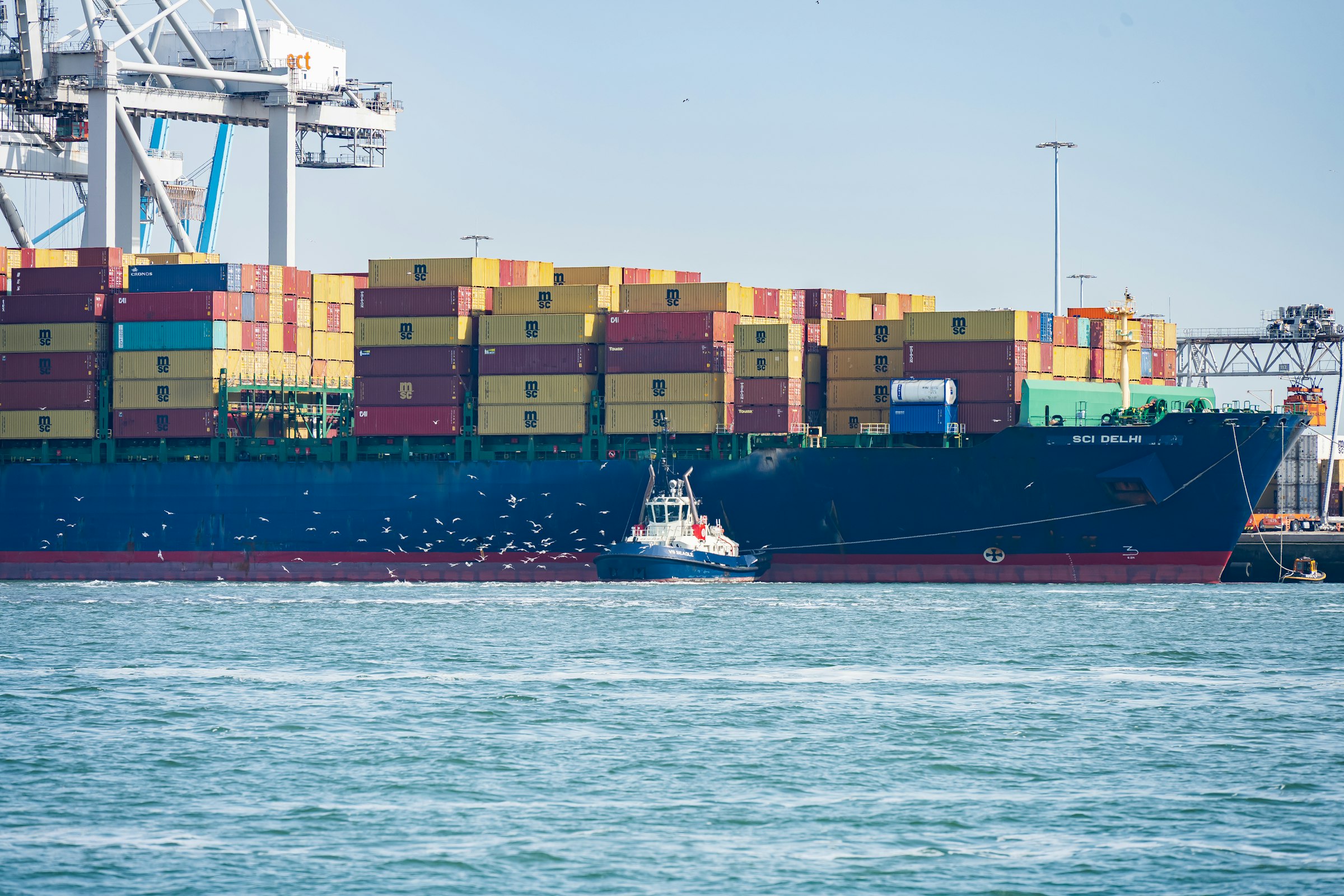
A ship arrest in Singapore can be obtained very quickly if the papers are ready, but the arresting party must fund custody: a S$10,000 Sheriff deposit, an undertaking for the Sheriff's expenses, a panel security guard and daily ship-watch. Release usually follows within days once the owner's club or bank provides acceptable security.
Key pointThe Government does not fund custody of arrested ships, so a claimant whose target owner walks away may carry guard, port and crew costs for weeks before a judicial sale; budget for that before you arrest.
At a glance
S$10,000 Sheriff deposit
Solicitors for the arresting party must deposit S$10,000 with the Sheriff on arrest, in addition to an undertaking to fund the Sheriff's expenses as required.
Custody costs run daily
Security guard charges, port and garbage dues, and crew victuals, fuel and water fall on the arresting party until the vessel is released or sold.
Fifteen-minute caveat searches
Applications for arrest and release must be supported by a caveat search done no more than 15 minutes before the hearing of the application.
24 hours' notice to caveators
Before seeking release, a party must give any caveator against release at least 24 hours' written notice to withdraw or arrest in its own action.
Awards enforced against security
The High Court in The Yangtze Harmony [2026] SGHC 3 lifted a stay to enforce in personam arbitral awards against security retained in Singapore.
Swipe or scroll →
The short answer: what a ship arrest in Singapore costs and how release works
A ship arrest in Singapore is quick to obtain but not free to maintain. The arresting party's solicitors must give the Sheriff an undertaking to fund the costs of keeping the vessel, place a deposit of S$10,000 with the Sheriff on arrest, appoint a security guard from the court's panel and pay for ship-watch services that report the vessel's position every day. Those costs run until the ship is released or sold.
Release usually follows within days, once the owner or its P&I club provides acceptable security, typically a club letter of undertaking, a bank guarantee or a payment into court. The arresting party then holds that security while the merits are decided in court or arbitration. If no security is offered, the claimant can apply for appraisement and sale.
This article focuses on the practical and financial side: what to budget, who pays, how release is obtained and how security is later turned into money. For the jurisdictional rules on which claims and which ships can be arrested, see our practice page on ship arrest in Singapore.

The rules that govern the process
Jurisdiction comes from the High Court (Admiralty Jurisdiction) Act 1961, which lists the maritime claims the court can hear and sets out when they may be brought in rem against a ship. Procedure is in Order 33 of the Rules of Court 2021, supplemented by Part 17 of the Supreme Court Practice Directions 2021 and the Admiralty Court Guide.
The Sheriff takes custody of an arrested ship. The Singapore Courts guidance on Sheriff services explains that once a vessel is arrested, the Maritime and Port Authority of Singapore, the Immigration and Checkpoints Authority and the Police Coast Guard must be notified. It also publishes the panels of security agencies and vessel agents that arresting parties must use, with their fees.
Most of the cost and timing questions in a ship arrest in Singapore are answered by these practice directions rather than by the Act. They are worth reading in full before the first instruction.
Preparing an arrest-ready file
Arrests are won or lost on preparation. Vessels may stay in port for hours, not days, and the court will not issue a warrant on incomplete papers. Claimants who track a vessel's movements usually prepare the following before it arrives.
- Claim in rem and supporting affidavit. The affidavit must set out the claim, the jurisdictional basis and every material fact, including those that hurt the applicant's case.
- Caveat search. The applicant must search the record of caveats against arrest. The practice directions require evidence of a search done no more than 15 minutes before the hearing of the application.
- MPA Digital Port search. A search result from MPA Digital Port showing the ship's agent and its location within port limits must be annexed for service.
- Solicitors' undertaking. The undertaking to indemnify the Sheriff, in the prescribed form, avoids delay in issuing the warrant.
- Security guard and vessel agent. Selected from the court's panels and notified to the Sheriff's Office before execution.
- Funds for the deposit. S$10,000 placed with the Sheriff on arrest, in addition to the undertaking.
Documents must be filed within registry hours so that execution can follow. A separate procedure applies to urgent applications after hours, which matters when a vessel is due to sail at night. Owners who expect claims can file a caveat against arrest, undertaking to provide security, which reduces the risk of a surprise arrest.
What a ship arrest in Singapore costs the arresting party
The Government does not fund the custody of arrested ships. The practice directions say so expressly: funds are needed immediately for the Sheriff's expenses, such as security guard charges, port and garbage dues and, where necessary, minimum victuals, domestic fuel and water for the crew. The arresting party's solicitors undertake to provide those funds as and when the Sheriff requires them, and the Sheriff may enforce the undertaking against them if it is not honoured.
| Item | Source of the requirement | Amount or basis |
|---|---|---|
| Deposit with the Sheriff | Practice Directions, para 146(4) | S$10,000 on arrest, in addition to the undertaking |
| Sheriff's expenses | Practice Directions, para 146(2)-(3) | As incurred: guards, port and garbage dues, crew victuals, fuel and water |
| Security guard on board | Courts' panel of security agencies | Published panel rates of roughly S$270 to S$450 per 12-hour block, plus launch fees |
| Vessel agent, if required | Courts' panel of vessel agents | Published monthly or daily fees, plus crew change handling charges |
| Ship-watch services | Practice Directions, para 146(7) | Commercial rates; daily location updates to the Sheriff until release |
| Sheriff's attendance on release | Fourth Schedule, Rules of Court 2021 | Prescribed fees for each attendance |
| Legal and court costs | Ordinary costs rules | Recoverable in part from the defendant if the claim succeeds |
A short arrest that ends in release within a few days usually costs far less than the claim it secures. A long arrest is different. If the owner is insolvent or abandons the ship, the arresting party may fund custody for weeks or months until a judicial sale. Crew welfare, fuel for generators and port dues accumulate daily.
Those expenses are not lost. On a judicial sale, the Sheriff's expenses and the arresting party's costs of arrest and sale rank ahead of most other claims against the proceeds. But they have to be funded first, and recovery depends on the ship's value exceeding the claims ahead of yours.
Before instructing an arrest, agree a custody budget for at least 30 days and decide who funds it: the claimant, its insurer or a funder. Arrests are sometimes abandoned not because the claim is weak but because nobody planned for a vessel that the owner walks away from.
Security for release: forms, amount and wording
An owner who wants the ship trading again will offer security in exchange for release. The three common forms are a letter of undertaking from an International Group P&I club, a guarantee from an acceptable bank, and payment into court. Club letters are the market norm because they are quick and inexpensive for the owner; claimants accept them where the club is reputable and the wording is right.
The amount is usually the battleground. Security is commonly assessed by reference to the claimant's reasonably arguable best case, including interest and costs, and is generally capped at the value of the ship. If the parties cannot agree, the court can fix the amount. Owners often provide security under protest, reserving their rights on jurisdiction, merits and quantum, so that the ship can sail while those arguments continue.
For owners facing a ship arrest in Singapore, the economics usually favour early security. Every day under arrest means lost hire or freight, port costs and disruption to the next fixture. A club letter that can be agreed within a day or two often costs far less than the delay, even where the owner considers the claim weak. Challenges to jurisdiction, disclosure or quantum can proceed after the ship has sailed, and the security can be reduced or returned if they succeed.
Third parties should also act quickly. A supplier or crew member with its own claim can enter a caveat against release, which ensures it receives notice before the ship is released and has the chance to arrest in its own action.
Wording points that matter later
- Which tribunal's judgment or award the security will respond to, including an arbitration seated outside Singapore.
- Whether the security covers interest and costs, and whether it is capped.
- Governing law and jurisdiction for disputes about the security itself.
- An undertaking to provide alternative security if the first provider becomes unacceptable.
- Whether the owner agrees not to rearrest, and whether the claimant agrees not to arrest sister ships for the same claim.
Release step by step
Once security is agreed, release is administrative but strict. The sequence under the practice directions is as follows.
- Agree security in writing. Exchange the final letter of undertaking or guarantee, or make the payment into court.
- Search for caveats against release. A release must not issue while a caveat against release is in force, unless the ship is under arrest in another action or the court orders otherwise. The search must be no more than 15 minutes old at the hearing.
- Give notice to any caveator. Give at least 24 hours' written notice to anyone who has entered a caveat against release, asking them to withdraw it or arrest the ship in their own action.
- File for the release. Apply for the release; if the caveator neither withdraws nor arrests, the court may issue the release regardless.
- Request the Sheriff's attendance. Where the Sheriff must attend at the port to release the vessel, the arresting party files a Request for Attendance of the Sheriff through the Electronic Filing Service. Requests made any other way are not acceded to, and prescribed fees apply.
- Settle custody expenses. Account for the Sheriff's expenses and the deposit, and stand down the guard, agent and ship-watch services.
Turning security into payment when the merits are in arbitration
Many charterparties and supply contracts provide for arbitration in Singapore or London. An arrest can still be used to obtain security. When the court stays the in rem proceedings in favour of arbitration, section 7 of the International Arbitration Act 1994 allows it to order that the arrested property, or equivalent security, be retained for satisfaction of the award.
In The "Yangtze Harmony" [2026] SGHC 3, decided in January 2026, the High Court dealt with the next step. The vessel had been sold pending arbitration and the balance of the proceeds remained in court. After the claimant obtained arbitral awards in personam that went unpaid, the court lifted the stay and allowed the in rem action to proceed to judgment against the retained security. The decision gives claimants a clear route from award to payment where security is held in Singapore.
For the wider relationship between arrest and arbitration, see our pages on international arbitration and enforcement of arbitral awards.
Illustrative scenario: a bunker claim and a club letter
This scenario is illustrative only; the parties are generic.
A physical bunker supplier is unpaid for a stem ordered by the registered owner of a bulk carrier. The supply terms provide for arbitration. The supplier's lawyers prepare the papers while the vessel is on passage and, when it anchors, carry out the caveat and Digital Port searches, obtain a warrant and execute it with a panel security guard on board. The deposit is placed with the Sheriff the same day.
The owner's P&I club offers a letter of undertaking within two days. The parties argue over interest and costs, and settle on an amount that covers the principal claim, contractual interest and a sum for arbitration costs. The release is filed after a fresh caveat search, the Sheriff attends on request, and the vessel sails. The arrest costs, mostly guard fees and legal fees, are a small fraction of the secured claim and are claimed in the arbitration.
Risks and common mistakes
Material non-disclosure in the arrest affidavit
Arrest warrants are obtained without notice to the owner, so the applicant must give full and frank disclosure. In The "Vasiliy Golovnin" [2008] SGCA 39, the Court of Appeal held that materiality is judged objectively and that material facts must be fairly presented in the affidavit, not buried in exhibits. An arrest set aside for non-disclosure loses the security and may carry costs consequences. Disclose any arbitration clause, any defence the owner has raised and any doubt about ownership.
No budget for a long custody
If the owner abandons the ship, the arresting party funds custody until sale, including guards, port dues and crew provisions. Claimants who have not planned for this may find themselves under pressure to settle cheaply or release without security. Agree funding before the arrest and review it weekly.
Stale caveat searches
Both arrest and release applications must be supported by a caveat search no more than 15 minutes old at the hearing. A late hearing or a long queue can make the search stale. Build a fresh search into the hearing plan and have someone ready to run it.
Arresting in a shipyard without the right order
Where a vessel is arrested in a shipyard, the claimant must apply for an omnibus order within 14 days of the arrest or within 3 days of a request by the yard to move the vessel, whichever is earlier. If the yard asserts a possessory lien, the order should be expressed to be without prejudice to that lien. Missing these steps can lead to friction with the yard and wasted cost.
Accepting security in the wrong form
A letter of undertaking that responds only to a Singapore court judgment may not cover an arbitral award. One that omits interest and costs may leave a large shortfall. Review the wording against the dispute resolution clause before releasing the ship, because release cannot easily be reversed.
What to do next
For claimants, a ship arrest in Singapore should be planned as a funded project: papers ready before arrival, panel providers selected, a custody budget agreed and security wording settled in advance. For owners and clubs, the aim is speed: an early, well-worded offer of security limits off-hire and keeps arguments about the merits where they belong.
TRW & Co advises on shipping disputes, security strategy and enforcement across Singapore, London, Dubai and our wider network. Where Singapore court representation is required, we work alongside Singapore-qualified counsel. Our shipping and maritime and charterparty and cargo claims pages cover related issues. To discuss a vessel or a claim, please contact us.
Frequently asked questions
01How much does it cost to arrest a ship in Singapore?
There is no fixed figure because custody costs run daily. The arresting party's solicitors must deposit S$10,000 with the Sheriff on arrest and undertake to fund the Sheriff's expenses, such as security guards, port and garbage dues and crew provisions. The Singapore Courts publish panel rates for security guards and vessel agents. Ship-watch services, Sheriff attendance fees and legal costs are added. A short arrest ending in release is usually modest relative to the claim; a long custody is not.
02Who pays the costs of keeping an arrested ship?
Initially the arresting party, through its solicitors' undertaking to the Sheriff. The practice directions state that funds for the Sheriff's expenses are not provided by the Government. If the ship is sold, the Sheriff's expenses and the arresting party's costs of arrest and sale rank ahead of most other claims against the proceeds. If the claim succeeds, costs can also be pursued against the defendant.
03How quickly can an arrested ship be released?
Often within days once security is agreed. The owner or its P&I club provides a letter of undertaking, a bank guarantee or a payment into court. The release application needs a fresh caveat search, and any caveator against release must receive at least 24 hours' written notice. Where the Sheriff must attend at the port to effect the release, the arresting party files a Request for Attendance of the Sheriff through the Electronic Filing Service.
04What security is accepted to release a ship in Singapore?
The common forms are a letter of undertaking from an International Group P&I club, a guarantee from an acceptable bank and payment into court. The amount is commonly assessed by reference to the claimant's reasonably arguable best case, including interest and costs, and is generally capped at the value of the ship. If the parties cannot agree, the court can determine the amount. The wording should match the tribunal that will decide the claim.
05Can I enforce an arbitration award against security from a ship arrest?
Yes. When the court stays in rem proceedings in favour of arbitration, section 7 of the International Arbitration Act 1994 allows it to order that the arrested property or equivalent security be retained. In The Yangtze Harmony [2026] SGHC 3, the High Court confirmed that if the award debtor does not pay, the claimant can apply to lift the stay and obtain judgment in rem against the retained security.
06What happens if an owner abandons an arrested ship?
The claimant can apply for appraisement and sale. The application must ask the court to appoint appraisers from the list maintained by the Sheriff, and the Sheriff conducts the sale. Until then, the arresting party continues to fund custody. Sale proceeds are paid into court and distributed according to the statutory priorities, with the Sheriff's expenses and arrest costs ranking high.
Sources and official materials
- High Court (Admiralty Jurisdiction) Act 1961 — Admiralty claims and in rem jurisdiction
- Supreme Court Practice Directions 2021, Part 17 — Arrest, deposit, custody, caveats, release and sale
- Singapore Courts: Sheriff's services for admiralty actions — Panels and fees for security agencies and vessel agents
- International Arbitration Act 1994 — Section 7 retention of security on a stay
- The "Yangtze Harmony" [2026] SGHC 3 — Enforcing in personam awards against retained security
- The "Vasiliy Golovnin" [2008] SGCA 39 — Full and frank disclosure in arrest applications
- MPA Digital Port — Vessel location and agent searches required for service
General information only, current as at 20 October 2026. It is not legal advice and does not create a lawyer–client relationship. Singapore law and regulatory practice change; check current official sources and take advice on the facts of your matter.



