
TRW & Co · Real estate and projects
Collective Sales (En Bloc) in Singapore: Process, Majorities and Objections
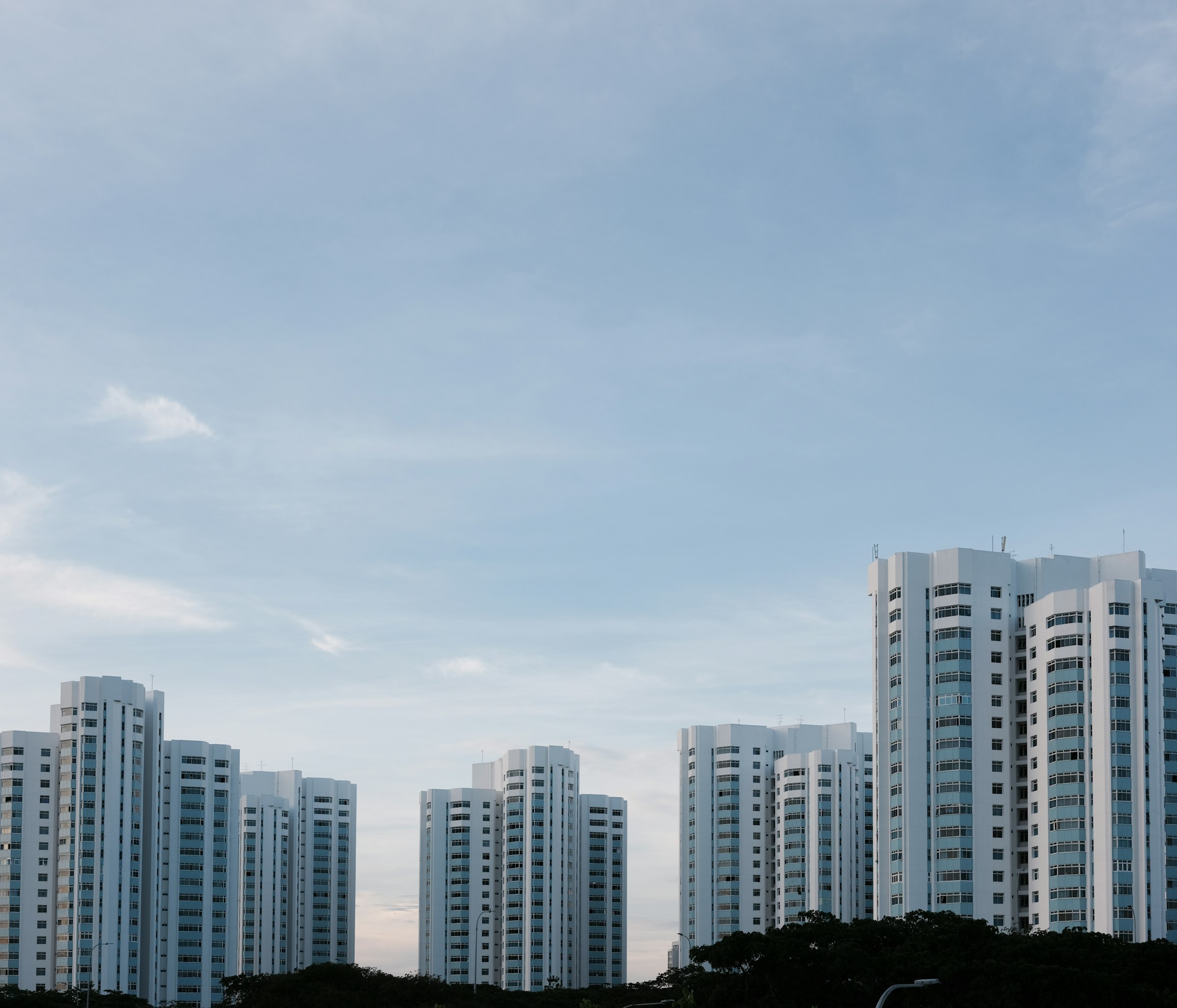
An en bloc sale in Singapore lets a statutory majority of owners sell a whole strata development, binding those who do not sign once the Strata Titles Board approves. Amendments passed on 8 September 2026 lower thresholds to 70% and 65% for estates aged 40 and 60 years, but tighten the requisition, signature and restriction rules.
Key pointAge now runs from the latest temporary occupation permit across all buildings, so an older estate with one later block can fall into a younger band and a higher threshold than owners expect.
At a glance
New lower thresholds
Once the amendments commence, estates aged 40 to under 60 years need 70% and estates aged 60 years or more need 65%, by share value and strata area.
Higher bar to start
A requisition to call a general meeting to form a collective sale committee will need 35% of share value or 35% of owners, up from 20% or 25%.
Six-month signature window
Committees will have six months from the first signature to obtain enough signatures to the collective sale agreement, half the previous twelve-month period.
Opt-in for live sales
Committees still collecting signatures at commencement may terminate and approve a new agreement under the new regime, which must be executed within seven months.
Developer remission extensions
For sites acquired on or after 29 July 2026, large en bloc redevelopments get one or two extra years to complete and sell before ABSD clawback.
Swipe or scroll →
The short answer: how an en bloc sale in Singapore works in 2026
An en bloc sale in Singapore is a collective sale of a whole strata development to a single buyer, usually a developer, on the strength of a statutory majority of owners. Once that majority has signed the collective sale agreement and a purchaser has signed a sale and purchase agreement, the collective sale committee can ask the Strata Titles Board to order the sale, and the order binds owners who did not sign.
Three things decide whether an estate gets there: the consent threshold that applies to it, the quality of the committee's process, and whether a developer can make the numbers work after land costs, stamp duty and build costs. As of October 2026, the first of these is changing. Parliament passed the Land Titles (Strata) (Amendment) Bill on 8 September 2026, lowering thresholds for estates aged 40 years and above and tightening safeguards for owners. The Ministry of Law has said the commencement date will be announced when ready.
This article is a working guide for owners, committee members and developers. It explains what the amendments change, how the age of a development is now counted, how a committee is formed and run, and what each side should check before it signs. Our practice page on collective sales (en bloc) in Singapore covers the underlying legal framework and the leading case law in more depth.

What the 2026 amendments change
The amendments are made to Part 5A of the Land Titles (Strata) Act 1967, the collective sale provisions that begin at section 84A. The Ministry of Law summary and the Bill as introduced set out the main changes. The way consent is measured does not change: it is still counted by share value and by strata area, and both figures must reach the threshold.
The thresholds of 90% and 80% have applied since 1999. They remain for younger estates. Two new bands are added for older ones, and three procedural safeguards are tightened so that owners are not drawn into repeated or drawn-out attempts.
| Rule | Before commencement | After commencement |
|---|---|---|
| Threshold, development under 10 years old | 90% | 90% (unchanged) |
| Threshold, 10 to under 40 years | 80% | 80% (unchanged) |
| Threshold, 40 to under 60 years | 80% | 70% |
| Threshold, 60 years and older | 80% | 65% |
| Requisition to call a general meeting to form a committee | 20% of share value or 25% of units | 35% of share value or of the number of owners |
| Time to collect signatures to the collective sale agreement | 12 months from the first signature | 6 months from the first signature |
| Restriction after a failed attempt | 2 years | 3 years, unless heightened requisition thresholds are met |
The Bill also deals with points that have caused disputes in practice. Where a unit is co-owned, every co-owner must sign for that unit to count towards the threshold, and any one co-owner may object. The Bill as introduced raises a percentage limit that the High Court takes into account when ordering an increase in the sale proceeds paid to objectors, from 0.25% to 0.5% of the proceeds for a lot.
Finally, the Bill opens a majority-consent route for certain residential developments where flat owners hold long leases but do not own the land. Those developments could previously be sold collectively only with unanimous agreement, unless the leases met a very long minimum tenure. The new route comes with a safeguard: the Board or the court cannot approve the sale unless the landowner has agreed in writing to sell for a specified amount and the sale price is sufficient to meet it.
How the age of a development is counted
With four age bands instead of two, the date from which age is counted now matters a great deal for any en bloc sale in Singapore. A development that is 39 years old needs 80%; one that is 40 needs 70%. The Bill inserts a new section 84FE to settle how age is measured.
Age is counted from the latest of the relevant dates for each building in the strata title plan, excluding common property. The relevant date is the issue of the latest temporary occupation permit for the building or, if none was issued, the latest certificate of statutory completion. Special rules apply to some former HUDC estates and to land covered by a repealed provision.
The practical point is that age runs from the latest building, not the oldest. An estate whose original blocks are well over 40 years old, but which added a block much later, may sit in a younger band than owners expect. Committees should obtain the completion records for every building before they quote a threshold to owners or start collecting signatures.
Before announcing that an estate qualifies for the 70% or 65% threshold, pull the temporary occupation permit and certificate of statutory completion dates for every block and annex them to the committee's first circular. A threshold quoted on the wrong band is a gift to objectors and can invalidate months of signature collection.
Forming and running the collective sale committee
An en bloc sale in Singapore starts with a requisition to the council of the management corporation to convene a general meeting to constitute a collective sale committee. Once the amendments commence, owners holding at least 35% of the share value, or at least 35% of the owners, must sign that requisition. It is designed to ensure serious support before owners are put through the process.
At the general meeting, owners elect the committee and, at later meetings, approve the terms of the collective sale agreement: the reserve price, the method of apportioning proceeds and the appointment of advisers. The committee then collects signatures, markets the site, signs with the purchaser and applies to the Strata Titles Board if any owner has not signed.
Committee members act for every owner, including those who have not signed. The courts have treated the committee as owing duties of a fiduciary character, including even-handedness and a duty to obtain the best price reasonably available. Conflicts of interest must be disclosed: a member who owns several units, has a relationship with a bidder or has agreed side terms with the marketing agent must say so.
What owners should see before they sign
- The reserve price and how it was set, including the valuer's basis and any development charge or land betterment charge assumptions.
- The apportionment method and a worked example for each unit type, including penthouses, ground-floor units and any commercial units.
- The terms of appointment of the marketing agent, the lawyers and the valuer, including fees and any success element.
- Committee members' declarations of interest and the number of units each owns.
- The timetable, including the six-month signature window once the amendments apply, and what happens to signed agreements if the threshold is not reached.
The process step by step under the amended regime
The sequence below reflects the regime once the amendments commence. Committees already collecting signatures should read the transitional rules below first.
- Confirm the age band. Assemble completion records for every building and confirm which threshold applies. Check whether the estate is within the three-year restriction period after any failed attempt.
- Requisition the general meeting. Collect requisitions from owners holding at least 35% of share value or 35% of owners, and deliver them to the council.
- Elect the committee and appoint advisers. Elect members, record conflicts and appoint the lawyers, marketing agent and independent valuer on disclosed terms.
- Approve the collective sale agreement terms. Put the reserve price, apportionment method and key terms to a general meeting and circulate them in writing.
- Collect signatures within six months. The window runs from the first signature. Track share value and strata area separately; a co-owned unit counts only when all co-owners sign.
- Tender and sign. Market the site, evaluate bids against the reserve price and sign the sale and purchase agreement with the successful bidder.
- Apply to the Strata Titles Board. Serve notices, deal with objections, attend mediation and, if objections remain, a hearing before the Strata Titles Boards.
- Complete. Once an order is made, mortgages are discharged, CPF refunds are made and net proceeds are distributed using the approved apportionment.
Transitional rules for sales already under way
The amendments do not reset every live en bloc sale in Singapore that is already under way. According to the Ministry of Law, most of the new rules apply where the first signature to a collective sale agreement has not been obtained by the commencement date. Where the first signature has already been obtained, the existing framework continues to apply to that attempt.
There is an opt-in for estates that would benefit from the lower thresholds. A committee still collecting signatures at commencement may convene a general meeting to terminate the existing collective sale agreement and approve terms for a new one under the enhanced regime. The Bill provides that the new agreement must be executed within seven months after commencement.
For an estate aged 40 years or more that is struggling to reach 80%, that choice is significant. It is also a fresh decision point for owners, who will be asked to sign a new agreement on terms that may differ from the first. Committees should treat the opt-in meeting with the same care as the original approval: explain why the agreement is being terminated, what changes, and what the new timetable means for each owner.
Signing, objecting or staying neutral: the owner's decision
For most owners, the question is not whether the price is high in the abstract but whether the sale leaves them better placed than staying. That turns on their share of the proceeds, the cost of a replacement home and the timing of the move.
Replacement purchases deserve particular care. Additional Buyer's Stamp Duty depends on the buyer's profile and property count at the date of purchase, and IRAS rules on when a property drops out of the count are specific. An owner who buys a replacement home before the en bloc property is treated as sold may face second-property rates. Our guide to property acquisition in Singapore sets out the current rates.
| Option | What it secures | What it risks |
|---|---|---|
| Sign early | Influence over terms at general meetings; certainty of inclusion if the sale proceeds | Being bound to a price and apportionment that may look less attractive later |
| Sign late | Time to assess the market and the committee's conduct | Less influence; the six-month window may close before concerns are resolved |
| Object at the Board | A hearing on good faith, apportionment and financial loss | Costs and time; objections on price alone rarely succeed |
| Do nothing | No commitment | If the threshold is met, the order binds the owner on the agreed terms anyway |
Objections to the Board are strongest when they are about process: a committee that failed to disclose a conflict, a reserve price set without proper valuation advice, an apportionment that favours some units without explanation, or a failure to follow the statutory steps. Disputes that cannot be resolved at the Board may go to the High Court. Our page on real estate disputes in Singapore explains how these hearings run.
The developer's side: ABSD remission and the 2026 timeline extensions
For the purchaser, an en bloc sale in Singapore is a land acquisition with a stamp duty clock attached. A licensed housing developer pays Additional Buyer's Stamp Duty of 40% on a residential site: 35% may be remitted upfront and 5% is non-remittable. To keep the remission on a site for five or more units, the developer must, under the IRAS remission conditions, commence development within two years and complete and sell all units within five years of acquisition. Missing the sale deadline triggers a clawback, now scaled by the proportion of units sold, with interest at 5% a year.
Large en bloc sites are hard to build and sell within five years, and the Government has extended timelines for them. On 28 July 2026 it announced further extensions for large-scale redevelopment projects.
For residential sites acquired on or after 29 July 2026, en bloc redevelopments yielding at least 700 but fewer than 1,400 units, and at least 1.5 times the existing number of units, receive one more year for completion and sale and six more months for commencement. Sites yielding 1,400 units or more receive two more years for completion and sale and six more months for commencement, but must sell at least half the units within six years.
Developers bidding for older estates therefore need to model two things together: whether the new thresholds make a sale more likely to complete, and whether the yield on redevelopment qualifies the site for an extended remission timeline. Our article on ABSD for companies, trusts and developers explains the remission conditions in detail, and our real estate development team covers the planning and construction side.
Illustrative scenario: a 42-year-old estate deciding whether to restart
This scenario is illustrative only; the parties are generic.
A freehold condominium completed four decades ago has a committee that has been collecting signatures for several months under the old rules. It has reached about 72% by share value and slightly less by strata area, well short of 80%. Owners are tiring, and the committee expects the window to close without success.
The amendments commence while the committee is still collecting. Its lawyers first confirm the estate's age from the temporary occupation permits of every block, and find that a small block added later still leaves the development comfortably above 40 years. The committee then calls a general meeting to terminate the existing agreement and approve terms for a new one under the enhanced regime, with a seven-month deadline for execution.
Before the meeting, it re-circulates the reserve price, explains why the apportionment method is unchanged and discloses that two members have acquired further units. Several owners who had held out sign the new agreement after their questions are answered in writing. A minority objects at the Board on apportionment; the committee's records of each step become its main evidence.
Risks and common mistakes
Most failed or challenged attempts at an en bloc sale in Singapore trace back to a handful of avoidable errors.
Quoting the wrong threshold
With four age bands, a threshold quoted on the wrong band is a serious error. Age is counted from the latest temporary occupation permit or certificate of statutory completion across all buildings, so later additions can move an estate into a younger band. Committees should check records for every building before the first circular and keep the evidence on file. Owners who signed on the strength of a lower threshold may also question whether they were properly informed, which feeds into good-faith objections later.
Running out of time in the six-month window
Once the amendments apply, the committee has six months from the first signature to collect enough signatures. That is half the previous period. Committees that start collecting before the reserve price and apportionment have been fully explained tend to lose weeks answering questions that should have been dealt with at the outset. Prepare the information pack, the valuation and the frequently asked questions before the first signature, and track share value and strata area separately throughout.
Overlooking co-owners
Under the Bill, a co-owned unit counts towards the threshold only if every co-owner signs, and any one co-owner may object. Couples, siblings and estates with several beneficiaries are common in older developments. A committee that counts a unit because one spouse has signed may overstate its position. Obtain signatures from every registered co-owner and, where an owner has died, confirm who has authority to sign for the estate before counting the unit.
Undisclosed conflicts and side arrangements
The committee's duties to all owners mean that any undisclosed interest can undermine the sale. Typical problems include members who own multiple units without disclosing them, relationships with bidders or marketing agents, and side agreements that give particular owners better terms. Disclosure should be in writing, recorded at general meetings and repeated when circumstances change. Where a conflict is serious, the member should step aside from the relevant decision.
Buying a replacement home too early
Owners who commit to a replacement home before the en bloc sale is treated as completed for stamp duty purposes may pay ABSD at second-property rates. Refunds are available only in specific circumstances and on conditions. Owners should map the expected dates of the sale and purchase agreement, the Board order and completion against their purchase plans and obtain advice before signing an option to purchase.
What to do next
Whether you are an owner, a committee member or a developer, the decisions on an en bloc sale in Singapore are made early and are hard to reverse. Use this checklist before the next general meeting.
- Confirm the development's age from completion records for every building, and the threshold that will apply.
- Check whether the estate is within a restriction period after a previous attempt.
- For a committee already collecting signatures, decide whether to opt in to the new regime once it commences.
- Prepare a complete information pack before the first signature: valuation, reserve price, apportionment examples and conflict declarations.
- For owners, model the net proceeds, replacement home costs and stamp duty position before signing.
- For developers, test unit yield against the remission extension categories and price the clawback risk.
TRW & Co advises owners, committees and developers on collective sales and the related stamp duty, financing and dispute questions. Where Singapore court or tribunal representation is required, we work alongside Singapore-qualified counsel. To discuss a particular estate, please contact us.
Frequently asked questions
01What percentage of owners is needed for an en bloc sale in Singapore?
It depends on the age of the development. Developments under 10 years old need 90% and those aged 10 to under 40 years need 80%. Once the 2026 amendments commence, developments aged 40 to under 60 years will need 70%, and those aged 60 years or more will need 65%. In each case the threshold must be met both by share value and by strata area, so a committee must track two figures, not just a headcount of units.
02When do the new en bloc thresholds take effect?
Parliament passed the Land Titles (Strata) (Amendment) Bill on 8 September 2026. As of October 2026, the Ministry of Law has said the commencement date will be announced when ready. Until then the existing 90% and 80% thresholds apply. Where the first signature to a collective sale agreement is obtained before commencement, the existing framework continues to apply to that attempt, subject to an opt-in procedure for committees still collecting signatures.
03How is the age of a condominium calculated for a collective sale?
Under the new section 84FE inserted by the amending Bill, age is counted from the latest of the relevant dates for each building in the development, excluding common property. The relevant date is the issue of the latest temporary occupation permit or, if none was issued, the latest certificate of statutory completion. Special rules apply to certain former HUDC estates. Because the latest building sets the date, an estate with a later block may be younger than its original towers suggest.
04Can I stop an en bloc sale if I do not want to sell?
An individual owner cannot veto a sale once the statutory majority has signed, but can file an objection with the Strata Titles Board. The Board must not approve a sale that was not made in good faith, taking into account the price, the method of distributing proceeds and the purchaser's relationship to any owner, and it considers objections that an owner will suffer financial loss as defined in the Act. Objections based on process and apportionment tend to carry more weight than objections on price alone.
05What happens if the collective sale fails?
If the committee does not obtain enough signatures within the permitted time, the attempt lapses. Under the amended regime, a further general meeting to form a new committee cannot be convened within three years of the relevant event unless heightened requisition thresholds, which differ by the age of the development, are met. Before commencement, the restriction period is two years. Owners should factor this into their decision to sign or hold out.
06Do co-owners both need to sign the collective sale agreement?
Under the amending Bill, yes. Where a unit is held by joint tenants or tenants-in-common, the unit's share value and area count towards the threshold only if every co-owner has signed. Any one co-owner may file an objection, with or without the others. The High Court may also order an increase in proceeds for some but not all co-owners of an objecting unit where it is just and equitable to do so.
Sources and official materials
- Land Titles (Strata) Act 1967 — Part 5A collective sale provisions, from section 84A
- Ministry of Law: proposed amendments to the collective sale regime — Summary of new thresholds, safeguards and transitional rules
- Land Titles (Strata) (Amendment) Bill (Bill 18 of 2026) — Bill text, new section 84FE on age and explanatory statement
- Strata Titles Boards — Tribunal that hears collective sale applications and objections
- IRAS: ABSD remission for sites for five or more residential units — Housing developer remission conditions and clawback
- IRAS: ABSD remission timeline extensions for complex projects — Category 1A and 1B extensions for large en bloc sites
General information only, current as at 20 October 2026. It is not legal advice and does not create a lawyer–client relationship. Singapore law and regulatory practice change; check current official sources and take advice on the facts of your matter.



