
TRW & Co · Shipping, Aviation & Industries
Shipping and Maritime Law in Singapore
Maritime law in Singapore decides how ships are flagged and financed, how charters and cargo claims are resolved, who pays after a collision, and how claimants secure payment against a vessel. With Singapore at the centre of global bunkering and transhipment, this guide sets out the statutes, forums, deadlines and sanctions risks that owners, charterers and traders face in 2026.
Key pointMost maritime claims are won or lost on two early decisions: commencing proceedings before the Hague-Visby or contractual time bar expires, and securing the claim against a ship while it is within Singapore's reach.
At a glance
Flag ownership rules
Singapore citizens, permanent residents or Singapore companies may register ships; companies generally need S$50,000 paid-up capital and a Singapore-resident manager.
Hague-Visby limits apply
The Carriage of Goods by Sea Act 1972 applies the Hague-Visby Rules, with package or weight-based limits and a one-year time bar from delivery.
LLMC limitation regime
Singapore applies the 1976 Limitation Convention as amended by the 1996 Protocol and 2012 limits, letting owners cap liability by tonnage.
SCMA expedited procedure
Under the SCMA 4th Edition Rules, claims with an aggregate value up to US$300,000 can use a sole-arbitrator expedited procedure with capped costs.
MSI extended to 2031
Budget 2025 extended the Maritime Sector Incentive to 31 December 2031 and added a shipping financing withholding tax award.
Swipe or scroll →
What maritime law in Singapore covers
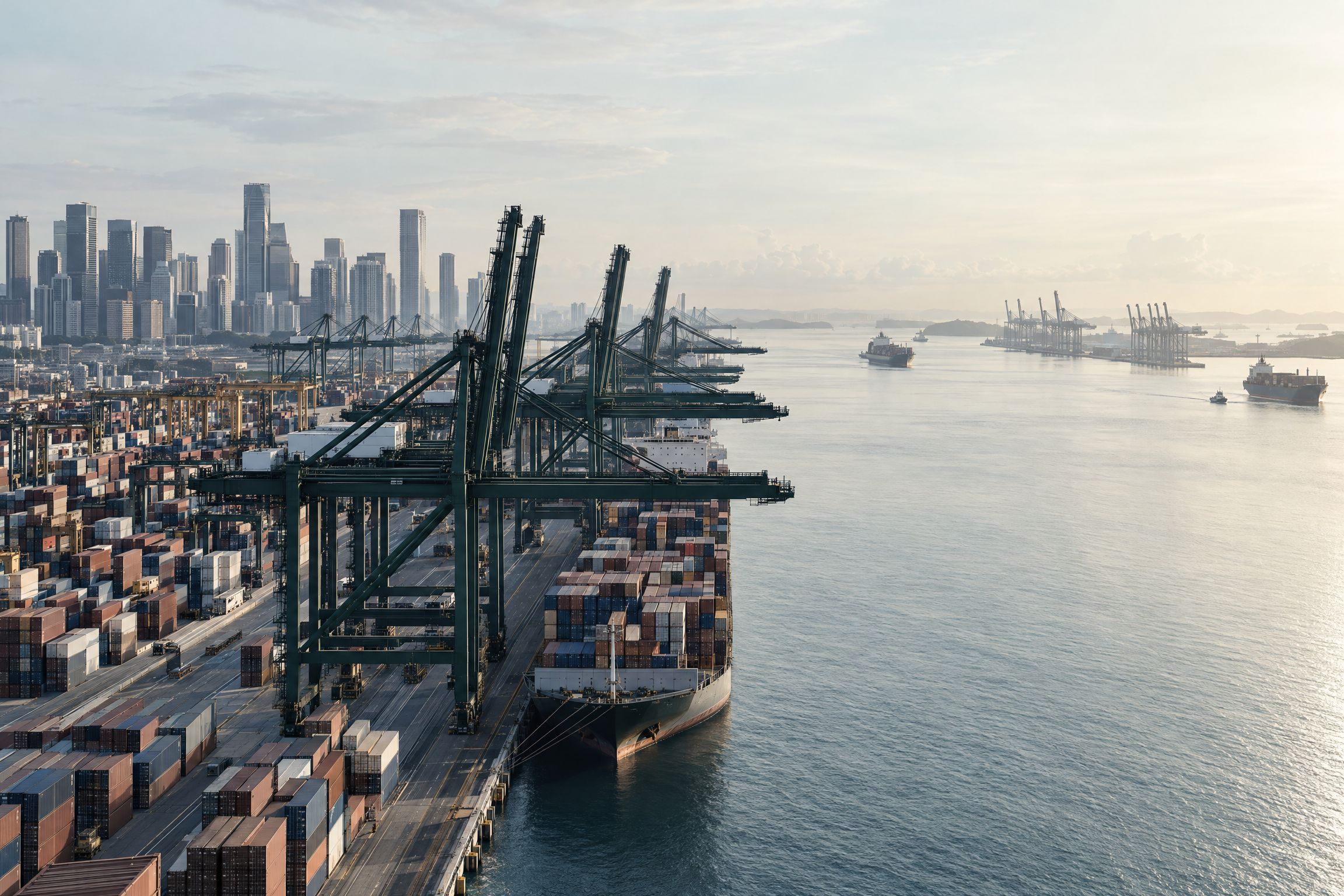
Maritime law in Singapore governs how ships are owned, flagged, financed, chartered, insured, operated and, when things go wrong, arrested or sold. It reaches shipowners and ship managers, charterers and commodity traders, bunker suppliers, banks and lessors, P&I clubs and hull underwriters, ports, terminals and freight forwarders. Because Singapore is both a major flag state and one of the world's busiest bunkering and transhipment hubs, a dispute that begins anywhere along a trade route often ends up being decided, secured or settled here.
The subject is not one statute but a cluster. Registration and safety sit with the Maritime and Port Authority of Singapore (MPA). Cargo and charter rights come from contract, the bills of lading legislation and the Hague-Visby Rules. Security for claims is obtained through the court's admiralty jurisdiction. Most commercial disputes are resolved by arbitration, frequently under the rules of the Singapore Chamber of Maritime Arbitration (SCMA). Overlaying all of it are sanctions and export controls that now shape which voyages, cargoes and counterparties are acceptable.
The legal question usually arrives at one of four moments: when a vessel is being acquired, flagged or financed; when a charter or sale contract is being negotiated; when cargo is damaged, delayed or short-delivered; or when a casualty, collision or unpaid debt demands immediate action against a ship. Each moment has its own timetable, and some of those timetables are measured in hours.
The legal and regulatory framework
The core statutes are the Merchant Shipping Act 1995 (registration, safety, crew and limitation of liability), the Maritime and Port Authority of Singapore Act 1996, the High Court (Admiralty Jurisdiction) Act 1961 (claims that can be brought against ships), the Carriage of Goods by Sea Act 1972 (which gives the Hague-Visby Rules force of law), the Bills of Lading Act 1992 (transfer of rights of suit) and the Marine Insurance Act 1906. Specialist legislation covers crew welfare (the Merchant Shipping (Maritime Labour Convention) Act 2014), wreck removal (the Merchant Shipping (Wreck Removal) Act 2017) and pollution (the Prevention of Pollution of the Sea Act 1990).
Singapore applies the Convention on Limitation of Liability for Maritime Claims 1976, as amended by the 1996 Protocol and the 2012 amendments to the limits. Shipowners, charterers, managers and operators can therefore cap their exposure per incident by reference to tonnage, unless the claimant proves the kind of personal fault that breaks the limit.
| Body | Role | When it matters to you |
|---|---|---|
| Maritime and Port Authority of Singapore (MPA) | Port authority, port regulator and flag administration through the Singapore Registry of Ships | Registration, port clearance, incident reporting, detention for safety or pollution reasons |
| General Division of the High Court (admiralty) | Hears actions in rem, issues warrants of arrest, orders judicial sales and limitation decrees | Obtaining or resisting security, priority disputes, sale of a vessel |
| Singapore Chamber of Maritime Arbitration (SCMA) | Maritime arbitration rules, expedited and small-claims procedures, collision and bunker procedures | Charter, sale, shipbuilding, bunker and collision disputes |
| Monetary Authority of Singapore (MAS) | Targeted financial sanctions for financial institutions | Ship finance, marine insurance, payment of hire and freight |
| Singapore Customs | Trade sanctions and strategic goods controls | Cargo screening, transhipment, permits and enforcement inquiries |
Ship registration and the Singapore flag
The MPA's prerequisites for ship registration are specific. Owners must be Singapore citizens, permanent residents or Singapore-incorporated companies, and a company generally needs paid-up capital of at least S$50,000, which the Registrar may waive depending on fleet tonnage. A foreign-owned Singapore company may register a vessel only if it is self-propelled and of at least 1,600 gross tonnage. Owners must appoint a manager resident in Singapore, although the technical manager responsible for ISM and ISPS matters need not be.
Vessels under 17 years old, classed by a recognised classification society and compliant with the main IMO conventions, are normally accepted. Provisional registration is available but cannot be extended, and dual flagging is not permitted, which matters for bareboat charter structures that depend on it.
Shipping tax incentives
Qualifying shipping income can be exempt under sections 13A and 13F of the Income Tax Act (see IRAS guidance for shipping companies), and the Maritime Sector Incentive (MSI) family of awards supports international shipping, ship leasing and shipping support services. Budget 2025 extended the MSI to 31 December 2031 and introduced an Approved Shipping Financing Arrangement award for withholding tax on qualifying ship and container financing. Incentive conditions should be built into the holding structure before the first vessel is acquired, not retrofitted.
Charterparties, bills of lading and cargo claims
Most shipping risk is allocated by contract. A voyage charter prices the carriage of a cargo between named ports, with laytime and demurrage carrying the delay risk. A time charter hires the ship and crew for a period, with off-hire clauses deciding when hire stops. A bareboat (demise) charter transfers possession and operational control, which is why a demise charterer can expose the ship itself to claims. Standard BIMCO forms are common, but the riders and the governing law and arbitration clause usually decide the outcome of a dispute.
Bills of lading serve as receipt, evidence of the contract of carriage and document of title. The Bills of Lading Act 1992 transfers rights of suit to the lawful holder, so a bank or buyer can sue the carrier directly. The Hague-Visby Rules, applied by the Carriage of Goods by Sea Act 1972, impose minimum duties of seaworthiness and cargo care, cap the carrier's liability at the higher of 666.67 units of account per package or unit and 2 units of account per kilogram of gross weight, and impose a one-year time bar from delivery unless extended by agreement.
The one-year Hague-Visby time bar is the deadline most often missed in maritime law in Singapore. Requesting a written extension from the carrier or its P&I club early, and diarising the extended date, costs nothing. Losing the claim because suit or arbitration was not commenced in time cannot be cured later.
Commodity traders face a recurring trap: delivery of cargo without production of the original bill of lading, against a letter of indemnity. The carrier remains exposed to the lawful holder, and the indemnity is only as good as the party who gave it. Our pages on charterparty and cargo claims and bill of lading disputes explore these structures in more depth.
Collisions, casualties and limitation of liability
Busy straits and crowded anchorages make collisions, allisions with port infrastructure, groundings and bunker spills a constant risk. Singapore-registered ships must report listed incidents to the MPA under its shipping circulars, and the MPA has powers to detain or deny entry to vessels to prevent pollution. Investigations by the flag state and port state can run in parallel with civil claims, and statements given to investigators can resurface in later proceedings.
Claims for damage, loss of life or personal injury caused by the fault of another vessel are subject to a two-year time bar under section 8 of the Maritime Conventions Act 1911. Owners facing a large casualty will usually want to constitute a limitation fund, either by payment into court or by a P&I club letter of undertaking acceptable to the court, so that all claims are channelled to one forum with a known ceiling.
For collisions specifically, SCMA's SEADOCC terms offer an expedited determination process. Salvage, general average and wreck removal claims follow their own regimes and often involve insurers from several jurisdictions. Early coordination with hull underwriters and the P&I club is essential, because their consent may be needed for security, settlement and the choice of forum. See our guide to marine insurance for how cover responds.
In shipping, the forum is often decided by where the ship happens to be. Security obtained in Singapore can shape the whole dispute, even when the merits are argued somewhere else.
Disputes, arbitration and security for claims
Maritime law in Singapore offers three main routes for resolving a dispute: SCMA arbitration, institutional arbitration under the SIAC Rules, and litigation in the admiralty court. The court's role is not limited to cases tried there. An arrest in Singapore can secure a claim that will be decided in an arbitration seated in Singapore or elsewhere, and the International Arbitration Act 1994 allows security obtained by arrest to be retained when proceedings are stayed in favour of arbitration.
The SCMA 4th Edition Rules apply to arbitrations commenced on or after 1 January 2022. They include an expedited procedure where the aggregate of claim and counterclaim does not exceed US$300,000, with a sole arbitrator, short timetables and capped costs, as well as specialist procedures for bunker claims and collisions. Many charterparties and shipbuilding contracts now nominate Singapore as an alternative to London.
| Route | Best suited to | Key features | Watch for |
|---|---|---|---|
| SCMA arbitration | Charter, sale and purchase, bunker and smaller cargo claims | Maritime-specialist panel; expedited procedure up to US$300,000; ad hoc character with institutional support | Clause must clearly adopt SCMA Rules and the seat |
| SIAC arbitration | Shipbuilding, offshore and larger commercial contracts | Full institutional administration; emergency arbitrator; expedited procedure | Higher administrative involvement and costs for small claims |
| Admiralty action in rem | Securing claims against a ship within Singapore waters | Arrest, release on security, judicial sale and priorities | Strict conditions on who is liable and who owns the ship when the action is brought |
| Court action in personam | Claims against a party present or served in Singapore | Interim injunctions and disclosure available | Arbitration clauses will normally lead to a stay |
The admiralty jurisdiction lists the claims that can be brought against a ship, from damage done by a ship and cargo claims to necessaries, bunkers, repairs, wages, disbursements and general average. Our dedicated page on ship arrest explains the sister-ship rules, security and the risk of a wrongful arrest. For the arbitration side, see international arbitration and the post on arbitration in shipping.
Sanctions, export controls and compliance
Sanctions are now a daily operational issue for maritime law in Singapore. Singapore implements United Nations Security Council sanctions through regulations made under the United Nations Act 2001, which bind individuals and non-financial companies in Singapore. Financial institutions, including banks financing vessels and insurers covering them, are subject to MAS targeted financial sanctions under the Financial Services and Markets Act 2022, together with financial measures relating to Russia. Export controls on specified goods to Russia operate through the strategic goods regime, and Singapore Customs enforces trade sanctions with powers to compel documents and board vessels.
Foreign regimes matter as much as local law. US, UK and EU measures reach Singapore operators through dollar payments, insurers, banks, flag states and charterparty clauses. A Singapore company that complies fully with Singapore law can still find its hire unpaid, its cover withdrawn or its vessel refused at a foreign port. Charterparties should therefore contain well-drafted sanctions clauses that allow refusal of orders and allocate delay, and fleets should screen ownership, cargo origin and ship-to-ship transfers.
Our sanctions and restricted trade team works with commercial teams to build screening into fixtures, and the post on sanctions and shipping sets out typical red flags such as AIS gaps and opaque ownership.
How a maritime matter unfolds: process and documents
Whether the trigger is a damaged cargo, an unpaid hire instalment or a collision, the first fortnight decides much of the outcome. A disciplined sequence avoids waived rights and lost security.
- Preserve rights and evidence. Notify insurers and counterparties within the contractual notice periods, issue protest letters, appoint surveyors and secure log books, ECDIS and VDR data, photographs and cargo documents before they are overwritten or lost.
- Map the contracts. Identify every relevant charter, bill of lading, sale contract and letter of indemnity, their governing law and dispute clauses, and any time bars or notice requirements that start running immediately.
- Identify the security target. Establish who is liable in personam, who owns or demise-charters the vessel today, where it is trading and whether a sister ship is within reach.
- Obtain or offer security. Negotiate a P&I club letter of undertaking or bank guarantee, or prepare an arrest application where agreement is not possible. On the defence side, consider whether security can be offered pre-emptively to avoid arrest.
- Commence proceedings in time. Start arbitration or court proceedings before the earliest applicable time bar, or secure written extensions from the right party.
- Run the merits efficiently. Use expedited procedures where the amount justifies them, engage technical and marine experts early and keep the record consistent across parallel investigations.
- Enforce or settle. Convert the award or judgment against the security, or use it as leverage for a structured settlement that releases all parallel claims.
Documents to assemble
- Vessel: certificate of registry, class records, ownership and management chain, P&I and hull certificates.
- Contracts: charterparty with all riders and recaps, bills of lading, sale contracts, letters of indemnity, bunker supply terms.
- Voyage: deck and engine logs, statements of facts, notices of readiness, AIS track, master's reports and port correspondence.
- Cargo: survey reports, mate's receipts, tally and outturn reports, letters of protest and sampling records.
- Payments: hire and freight invoices, payment records, off-hire calculations and laytime statements.
- Compliance: sanctions screening results, cargo origin documents and any regulator correspondence.
Risks and common mistakes
Letting a time bar expire while negotiating
Commercial parties often spend months exchanging correspondence about a cargo or demurrage claim while the one-year Hague-Visby bar, a shorter contractual bar in a charterparty or a demurrage documentation clause runs in the background. Insurers' interest in settlement does not stop the clock. A claim that is otherwise strong can be extinguished entirely. Every maritime claim should be diarised from the first day with the earliest possible bar, and extensions should be obtained in writing from the party who is actually liable, not merely from a broker or agent. If in doubt, commence protective proceedings.
Arresting or chasing the wrong party
A claim against a time charterer for unpaid bunkers, for example, will not usually support an arrest of the ship, because the charterer neither owns nor demise-charters it. Group structures with one-ship companies mean that a vessel operated by the same group is not necessarily a sister ship. Before acting, verify the registered owner, the beneficial ownership of the shares and any demise charter, and confirm the identity of the contracting party in the fixture. A mistaken arrest wastes cost, invites a challenge and may expose the claimant to damages in extreme cases.
Unclear arbitration clauses
Clauses that name "arbitration in Singapore" without specifying rules, or that refer to an institution and a different seat, generate expensive preliminary fights about jurisdiction. Combination clauses copied from older London forms can produce a London seat with Singapore hearings, or the reverse. Choose the seat, the rules, the number of arbitrators and any small-claims procedure deliberately, and make sure the bill of lading incorporates the charterparty clause effectively if cargo claims are to follow the same route.
Treating sanctions as a compliance-only issue
Sanctions affect the commercial bargain as well as compliance. A designation of a cargo owner mid-voyage can leave the ship with cargo it cannot discharge, a charterer it cannot be paid by and insurers asking questions. Without a sanctions clause, the parties fall back on general law such as frustration or illegality, which is uncertain and slow. Negotiate clauses that allow owners to refuse orders, require charterers to indemnify and allocate off-hire and delay, and record the screening done before each fixture.
Ignoring the incentive conditions
Ship-owning and leasing structures in Singapore often rely on MSI awards or the section 13A exemption. Those benefits depend on qualifying activities, substance and conditions set when the award is granted. A change of management, flag or business model can put them at risk. Treat incentive compliance as part of governance, with a named owner and an annual review, and consider the tax effect before agreeing to sale and leaseback or restructuring proposals from financiers.
The cross-border angle
Very few maritime matters are purely domestic. A Singapore-flagged tanker may be owned by a Singapore company held by Hong Kong or Greek interests, chartered to a Swiss or Dubai trader, financed by a European bank and insured in London. Maritime law in Singapore therefore interacts constantly with English law, which governs a large share of charterparties and marine insurance contracts, and with the law of the place where cargo is loaded or discharged.
TRW & Co's network covers several of the key links in that chain. Bangladesh's ports at Chattogram and Mongla depend on feeder services through Singapore, and Bangladeshi importers and exporters regularly face cargo, demurrage and letter of credit disputes where security is obtained in Singapore. UK-law charters and London market insurance are central to most fleets. UAE and Swiss trading houses fix vessels on the Singapore market, and Chinese shipyards and lessors are common counterparties in newbuilding and sale and leaseback deals.
Where Singapore court or tribunal representation is required, we work alongside Singapore-qualified counsel, and we coordinate counsel in the loading, discharge and enforcement jurisdictions so that steps taken in one place do not undermine the position in another. For enforcement across borders, see enforcement of arbitral awards.
How TRW & Co helps with maritime law in Singapore
We advise owners, charterers, traders, financiers and insurers on transactions and disputes, organised into workstreams that can be mobilised quickly when a vessel is about to sail.
Fleet structuring and registration
We structure ship-owning and leasing vehicles, review MPA registration requirements and coordinate tax incentive applications with the client's tax advisers.
Charter and contract drafting
We negotiate charterparties, riders, sale and purchase agreements and shipbuilding contracts, with particular attention to sanctions, dispute and time-bar clauses.
Claims and security
We assess cargo, demurrage, hire and bunker claims, locate security targets and prepare or resist arrest applications with Singapore counsel.
Arbitration strategy
We run SCMA and SIAC arbitrations from notice to award, including expedited procedures and enforcement planning. See our Singapore-seated arbitration practice.
Casualty response
We coordinate evidence preservation, regulator engagement, insurer communications and limitation strategy after collisions, groundings and pollution incidents.
Sanctions and trade compliance
We design screening procedures, review cargo and counterparty risk and advise on clause drafting and responses to enforcement inquiries.
Related areas include insurance and reinsurance and commodities trading. For our full range, see our practices, or contact us about a specific vessel or claim.
Checklist for decision-makers
- Do we know the registered owner, beneficial owner and any demise charterer of every vessel we deal with?
- Are governing law, seat and arbitral rules stated clearly and consistently across charters and bills of lading?
- Is every potential claim diarised with its earliest time bar and any extension recorded in writing?
- Do our fixtures contain sanctions clauses, and is screening documented for each voyage?
- Have we confirmed P&I and hull cover, including any trading or sanctions exclusions?
- Is there an incident playbook naming who preserves evidence and who contacts insurers and the MPA?
- If we rely on Singapore tax incentives, is compliance with award conditions reviewed every year?
- Do we have a plan for obtaining or offering security if a dispute arises while a ship is in Singapore waters?
Businesses that work through these questions before a dispute arises are far better placed when maritime law in Singapore is tested by a real casualty or unpaid claim.
Frequently asked questions
01Who can register a ship under the Singapore flag?
Ships may be registered by Singapore citizens, permanent residents or Singapore-incorporated companies, whether locally or foreign owned. A company generally needs paid-up capital of at least S$50,000, though the Registrar may waive this depending on fleet tonnage. A foreign-owned Singapore company may register only self-propelled ships of at least 1,600 gross tonnage. The owner must appoint a manager resident in Singapore. Vessels under 17 years old that are properly classed and meet the main IMO conventions are normally accepted, and dual flagging is not permitted.
02How long do we have to bring a cargo claim?
Where the Hague-Visby Rules apply through the Carriage of Goods by Sea Act 1972, the carrier is discharged from liability unless suit is brought within one year of delivery, or of the date when the goods should have been delivered. The parties can agree to extend this, and extensions are commonly granted by carriers or their P&I clubs on request. Charterparties may contain shorter bars for particular claims, such as demurrage documentation clauses. Diarise the earliest deadline immediately and obtain extensions in writing from the liable party.
03Is SCMA arbitration better than SIAC for shipping disputes?
It depends on the dispute. SCMA is designed for maritime claims, has a specialist panel and offers an expedited procedure for claims up to US$300,000, plus procedures for bunker and collision claims. SIAC offers fuller institutional administration and tends to suit larger shipbuilding, offshore and commercial disputes. What matters most is that the clause clearly names the rules and the seat. Many charter and sale forms allow parties to choose Singapore as an alternative to London.
04Can we limit our liability after a collision?
Shipowners, charterers, managers and operators can generally invoke the 1976 Limitation Convention, as amended by the 1996 Protocol, which Singapore applies. Limits are calculated by reference to the ship's tonnage, with separate amounts for personal injury and property claims. A limitation fund can be constituted in court by payment or by an acceptable P&I club letter of undertaking. The right to limit can be lost if the claimant proves the loss resulted from the owner's personal act or omission committed with intent or recklessly.
05Do Singapore sanctions apply to our shipping business?
Yes, if you are in Singapore or deal through Singapore. UN sanctions are implemented through regulations under the United Nations Act 2001 that bind individuals and companies. Financial institutions, including banks and insurers, follow MAS targeted financial sanctions under the Financial Services and Markets Act 2022, including measures relating to Russia. Singapore Customs enforces trade and strategic goods controls. US, UK and EU sanctions also affect Singapore operators through banks, insurers and contract clauses, so fixtures need screening and clear sanctions wording.
06What should we do first after cargo damage is discovered?
Give prompt written notice to the carrier and your insurers, appoint an independent surveyor, and preserve samples, photographs and documents such as mate's receipts and outturn reports. Identify the bill of lading holder and the contract of carriage, including any incorporated charterparty clauses. Diarise the time bar and ask the carrier or its P&I club for security and a time extension. If the carrier will not provide security and the vessel is in Singapore, consider whether an arrest is available.
07Does TRW & Co appear in the Singapore admiralty court?
We advise on strategy, contracts, evidence, security and arbitration, and coordinate the overall matter. Where Singapore court or tribunal representation is required, we work alongside Singapore-qualified counsel who appear in the admiralty court. This arrangement lets clients keep one adviser across jurisdictions, including Bangladesh, the UK, the UAE and China, while meeting Singapore's rules on rights of audience.
Sources and official materials
- High Court (Admiralty Jurisdiction) Act 1961 — Claims that may be brought against ships in Singapore
- Carriage of Goods by Sea Act 1972 — Gives the Hague-Visby Rules force of law
- Marine Insurance Act 1906 — Marine insurance contracts in Singapore
- MPA: Pre-requisites for ship registration — Ownership, capital, age and manager requirements
- SCMA 4th Edition Rules — Maritime arbitration rules and expedited procedure
- MAS: Targeted financial sanctions — Sanctions obligations for financial institutions
General information only, current as at 20 October 2026. It is not legal advice and does not create a lawyer–client relationship. Singapore law and regulatory practice change; check current official sources and take advice on the facts of your matter.
Talk it through
before you decide.
Share the decision, the jurisdictions and the timetable. A partner will tell you what matters, what can wait and what it will take.