
TRW & Co · Disputes & Investigations
International Arbitration in Singapore
International arbitration in Singapore resolves cross-border commercial disputes through private tribunals whose awards are enforceable in more than 170 countries. With the SIAC Rules 2025 in force and the International Arbitration Act under review, the choices you make about the clause, the seat and the enforcement route now decide whether an award turns into money.
Key pointThe most important question in any international arbitration in Singapore is asked before filing: where are the counterparty's assets, and will that country's courts enforce a New York Convention award in practice?
At a glance
SIAC Rules 2025
The seventh edition applies to arbitrations commenced on or after 1 January 2025 and expands the rulebook from 41 to 65 rules.
Streamlined Procedure
For disputes of S$1 million or less, a sole arbitrator usually decides on documents and must issue the award within three months of constitution.
Expedited threshold raised
The SIAC Expedited Procedure now covers disputes up to S$10 million, up from S$6 million under the 2016 Rules, and urgent cases.
New York Convention reach
Awards made in Singapore can be enforced in more than 170 contracting states, including Bangladesh, the UK, the UAE, China and the major ASEAN economies.
IAA reform consultation
MinLaw consulted in 2025 on an opt-in appeal on points of law, summary disposal and a statutory rule on the law of the arbitration agreement.
Swipe or scroll →
What international arbitration in Singapore covers
International arbitration in Singapore is the private, binding resolution of cross-border commercial disputes by tribunals chosen by the parties, usually under the rules of an institution such as the Singapore International Arbitration Centre (SIAC). It is the default forum for many Asian supply, construction, energy, shareholder and technology contracts because the resulting award can be enforced in most trading economies.
The subject is wider than "SIAC cases". It covers drafting the arbitration agreement, choosing the seat and the institution, running or defending a claim, interim relief, and turning an award into money in the country where the losing party has assets. A Bangladeshi exporter, a Chinese contractor and a European investor can all end up before the same Singapore tribunal.
The decisions with the most value are usually taken long before any dispute: the words of the clause, the governing law, and whether the counterparty's assets sit in a New York Convention state. This page focuses on those strategic choices. Our separate page on Singapore-seated arbitration deals with the supervisory role of the Singapore courts in detail.
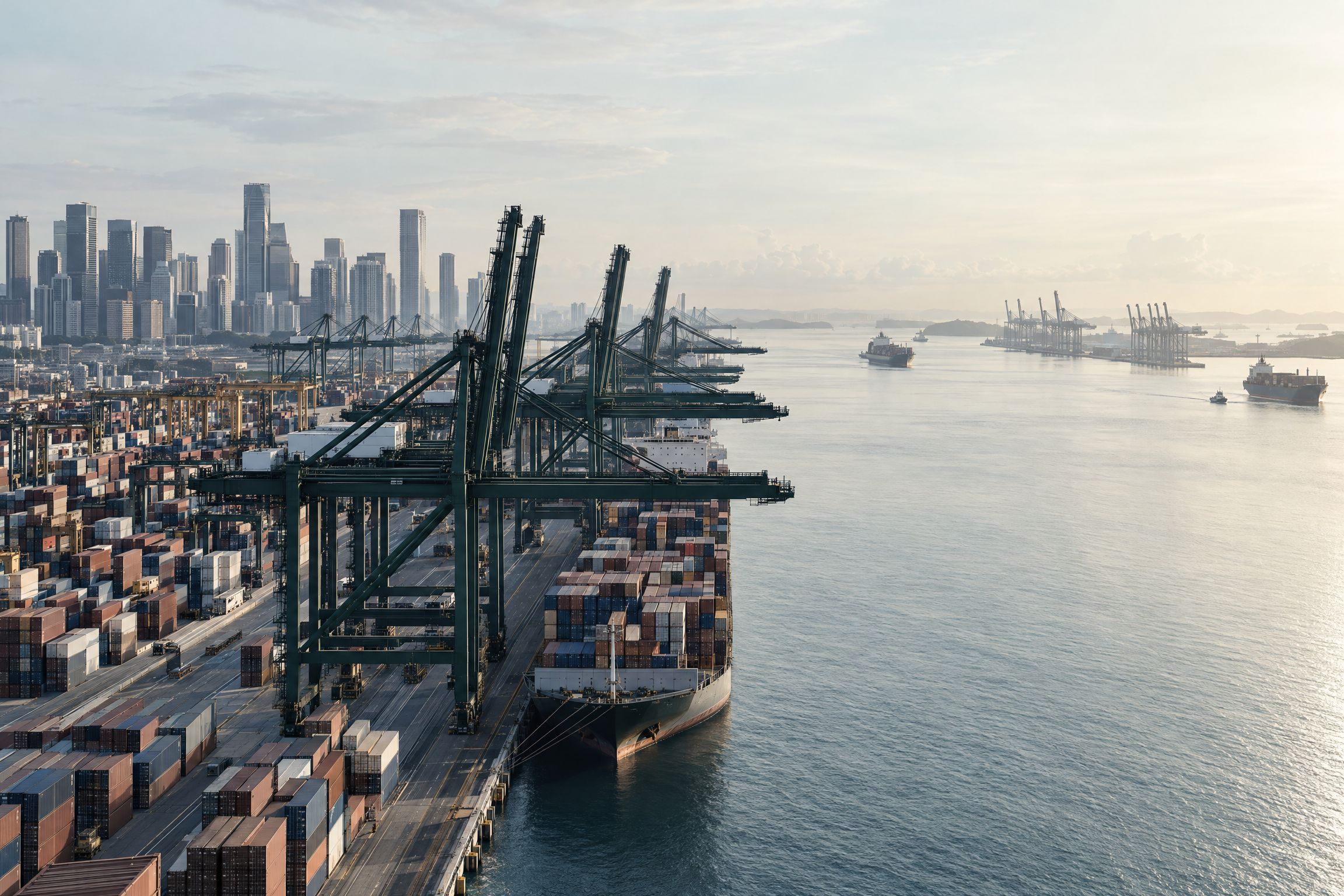
The legal framework for international arbitration in Singapore
The International Arbitration Act 1994 (IAA) governs arbitrations that are international, for example because the parties have places of business in different states or the place of performance is abroad. The IAA gives the UNCITRAL Model Law on International Commercial Arbitration the force of law in Singapore, with Singapore-specific additions. Purely domestic arbitrations fall under the Arbitration Act 2001 unless the parties opt into the IAA.
Part III of the IAA implements the New York Convention for awards made outside Singapore. Under section 31, a Singapore court may refuse enforcement of a foreign award only on the listed grounds, such as incapacity, an invalid arbitration agreement, lack of proper notice, excess of mandate, irregular composition of the tribunal, an award not yet binding or set aside at the seat, non-arbitrability, or public policy.
Institutions and rules
The SIAC released the seventh edition of its rules, the SIAC Rules 2025, which apply to arbitrations commenced on or after 1 January 2025. Other institutional rules, including ICC and LCIA rules, can be used with a Singapore seat, and ad hoc arbitration under the UNCITRAL Arbitration Rules remains available. Hearings are frequently held at Maxwell Chambers, Singapore's dedicated hearing centre.
Reform under consultation
In March 2025 the Ministry of Law launched a public consultation on the IAA, drawing on recommendations from the Singapore International Dispute Resolution Academy. Proposals include an opt-in appeal on questions of law, a statutory rule on the law governing the arbitration agreement, a requirement for leave to appeal set-aside decisions and an express power of summary disposal. Check the current position before relying on any of these changes.
What the SIAC Rules 2025 change
The 2025 Rules expanded the rulebook from 41 to 65 rules and introduced tools aimed at cost and speed. For anyone drafting a clause or planning a claim, five features matter most.
| Feature | Where | What it does | When it helps |
|---|---|---|---|
| Streamlined Procedure | Rule 13; Schedule 2 | Sole arbitrator, usually documents only, award within three months of constitution, fees capped | Claims of S$1 million or less, or where parties agree |
| Expedited Procedure | Rule 14 | Faster timetable with a sole arbitrator in most cases | Disputes up to S$10 million (raised from S$6 million), or urgent cases |
| Preliminary determination | Rule 46 | Tribunal decides a discrete issue early | Limitation, liability caps or jurisdiction points that could end the case |
| Coordinated proceedings | Rule 17 | Aligns procedure across related arbitrations; separate awards issue | Multi-contract projects and supply chains |
| Third-party funding disclosure | Rule 38 | Party must disclose a funding agreement and the funder's identity | Avoiding conflicts and later challenges |
An emergency arbitrator application may now be filed before the notice of arbitration, which must then follow within seven days, and protective preliminary orders can be sought without first notifying the other side. Our guide to SIAC arbitration walks through the procedure in more depth.
Key decisions: seat, institution, law and tribunal
Four choices shape every international arbitration in Singapore, and each one is easier to make well in a contract negotiation than after a dispute arises.
The seat
The seat fixes the arbitration law and the courts that can set aside an award. A Singapore seat gives access to a supervisory court that is experienced, fast and generally supportive of arbitration. Hearings can still take place elsewhere, or online, without changing the seat.
The institution
SIAC is the natural choice for Asian counterparties and Singapore-seated cases, but ICC arbitration is sometimes preferred where the counterparty is European or where scrutiny of draft awards is valued. Whatever the institution, name it accurately; a clause referring to a non-existent body invites a jurisdiction fight.
Governing law of the contract and the clause
The law of the main contract and the law of the arbitration agreement can differ. Singapore law, English law and New York law are common choices. Stating the law of the arbitration agreement expressly removes an argument that has generated costly satellite litigation in several jurisdictions. See our note on governing law clauses.
One arbitrator or three
A sole arbitrator is quicker and cheaper; three arbitrators give each side a nominee and are usual for high-value or technically complex disputes. A clause that says "three arbitrators" for every dispute can make a modest claim uneconomic, so consider a value threshold.
Drafting the clause well
Start from the institution's model clause and add only what the deal needs. Useful additions include a value threshold for a sole arbitrator, a consolidation provision covering related contracts in the same project, a confidentiality undertaking that extends to the existence of the arbitration, and an express waiver of any right to apply to court except for interim relief and enforcement.
Avoid open-ended language such as "the parties may refer disputes to arbitration", which can be read as optional. Use "shall be finally resolved by arbitration". Where several group companies sign, check that every signatory is bound by the same clause, because a missing party cannot normally be forced into the arbitration later.
Arbitration
Confidential, final and enforceable abroad under the New York Convention. Best where the counterparty's assets are offshore or confidentiality matters. Limited appeal rights.
SICC litigation
A public court with international judges and registered foreign counsel. Judgments can be appealed, but enforcement abroad depends on treaties and reciprocity rather than the New York Convention.
Mediation first
A tiered clause requiring mediation before arbitration can preserve relationships and cut costs. Draft the tier with a fixed time limit so it cannot be used to delay.
Arb-Med-Arb
Under the SIAC-SIMC protocol, arbitration is commenced, then stayed for mediation. A settlement can be recorded as a consent award, which is enforceable like any other award.
How an international arbitration in Singapore runs
Timelines depend on the rules, the tribunal and the parties, but the sequence is predictable. Knowing it helps a board budget and plan disclosure to auditors and lenders.
- Pre-dispute steps. Comply with any negotiation or mediation tier, preserve documents and confirm limitation. Limitation periods apply to arbitral proceedings much as they do to court claims, so time keeps running while the parties talk.
- Notice of arbitration. The claimant files with the institution, identifying the clause, the parties, the claims and the relief, and proposes or nominates an arbitrator.
- Response and constitution. The respondent answers and nominates; the institution confirms appointments and checks conflicts. Jurisdiction objections should be raised now, not later.
- Procedural timetable. The tribunal issues its first procedural order: written submissions, document production, witness statements, experts and the hearing window.
- Written phase. Statements of case and defence, document production requests, witness statements and expert reports. Most of the cost sits here.
- Hearing. Opening statements, cross-examination of witnesses and experts, then post-hearing submissions. Many hearings are held at Maxwell Chambers or virtually.
- Award. The tribunal issues a reasoned award covering merits, interest and costs. Under the Model Law, an application to set aside a Singapore award must generally be made within three months of receipt.
- Enforcement. If the losing party does not pay, the winner seeks recognition where the assets are, relying on the New York Convention.
Before signing any contract with a Singapore arbitration clause, ask a single question: where does this counterparty hold assets, and is that country a party to the New York Convention? If the answer is uncertain, the clause may give you an award you cannot collect.
Documents and evidence to assemble
Tribunals in international arbitration in Singapore commonly take guidance from the IBA Rules on the Taking of Evidence, which favour narrow, targeted document production over broad disclosure. That makes your own contemporaneous records decisive.
- The signed contract, every amendment, side letter and the arbitration clause itself, with evidence of who signed and with what authority.
- Correspondence, meeting minutes and instant messages showing performance, notices, variations and complaints, preserved in native format with metadata.
- Invoices, payment records and bank statements supporting the quantum of the claim.
- Technical records: specifications, test results, delivery documents and project schedules.
- Corporate documents for each party, including group structure charts showing where assets sit.
- Notices served under the contract and proof of delivery, since defective notice can defeat termination or claims.
Expert evidence on quantum, delay or industry practice is common. Retain experts early so their views inform the pleaded case, and see our guide to expert evidence.
Risks and common mistakes
A pathological arbitration clause
Clauses that name a wrong institution, mix court and arbitration, or leave the seat unclear invite a jurisdiction challenge that can take months to resolve. Typical faults include "arbitration in Singapore under the ICC Rules administered by SIAC", or a clause allowing either party to go to court "as an alternative". Use the model clause of the chosen institution, adapt it carefully, and state the seat, the number of arbitrators, the language and the law of the arbitration agreement. Review legacy contracts, particularly in group companies, because older templates often contain errors that only surface when a dispute begins.
Ignoring a pre-arbitration tier
Many clauses require negotiation or mediation for a fixed period before arbitration. If the tier is mandatory and sufficiently certain, starting arbitration too early risks an objection that the claim is premature, wasted costs and delay. Equally, a vague tier can be ignored by an obstructive counterparty. Diary the trigger date, send a clear written notice invoking the tier, keep a record of the steps taken, and be ready to file promptly when the period ends, especially where limitation is close.
Missing the window for interim relief
Asset dissipation often starts when a dispute becomes visible. Under the SIAC Rules 2025, an emergency arbitrator can be appointed quickly, and an application may be made before the notice of arbitration. Singapore courts can also grant interim measures in support of arbitration. Waiting until the tribunal is constituted can mean the assets have moved. Our page on injunctions and urgent relief explains the evidence a court or tribunal will expect.
Under-budgeting the case
International arbitration costs include counsel, experts, tribunal fees and institutional fees, and the losing party is often ordered to pay a substantial part of the winner's costs. Boards are sometimes surprised by the cost of document production and expert work. Prepare a phased budget, consider the Streamlined or Expedited Procedure where eligible, and assess third-party funding or after-the-event options. Remember that any funding agreement must now be disclosed under Rule 38 of the SIAC Rules 2025.
Winning an award you cannot enforce
An award is only as useful as the assets behind it. If the respondent is a shell with no assets, or holds assets in a jurisdiction where courts are slow or hostile to enforcement, collection may take years. Investigate the counterparty's assets at the outset, consider whether a parent guarantee or security is available, and plan the enforcement route before filing. Our guide to enforcing awards sets out the Singapore procedure.
Cross-border angle: Bangladesh, the UK, UAE, China and ASEAN
International arbitration in Singapore is often chosen precisely because a party's home courts are slow, unfamiliar or perceived as partial. The practical question is always where the award will be enforced.
Bangladesh. Bangladesh is a party to the New York Convention, and its Arbitration Act 2001 provides for the enforcement of foreign awards through the Bangladeshi courts. Enforcement proceedings can take time, so Bangladeshi counterparties' assets held in Singapore or elsewhere may offer a faster route. Our Dhaka team coordinates with local counsel on these steps.
United Kingdom. English courts enforce New York Convention awards under the Arbitration Act 1996 and are generally pro-enforcement. English law is still a common governing law in Singapore-seated contracts.
UAE. The UAE is a New York Convention state, and the Dubai International Financial Centre (DIFC) courts provide a common law route for some enforcement steps. Local procedure and translation requirements need early planning.
China. Mainland China is a New York Convention party with a commercial reservation and a reciprocity reservation. Chinese parties frequently accept SIAC arbitration as a neutral forum, and awards are enforced through the People's Courts, subject to internal reporting procedures.
ASEAN. The major ASEAN economies are New York Convention parties, but enforcement experience varies widely between them. Factor local court practice into the choice of forum. The New York Convention resource site lists contracting states and national case law.
States and state-owned counterparties
Contracts with governments and state-owned enterprises raise additional questions: whether the entity has authority to agree to arbitration, whether it can claim immunity from execution against its assets, and whether a bilateral investment treaty offers a parallel route to investor-state arbitration. A written waiver of immunity from suit and execution is worth negotiating at the outset. Commercial assets of a state entity are treated differently from diplomatic or central bank assets, so the asset search should distinguish between them from the start.
The best time to win an international arbitration in Singapore is when the clause is drafted; the second best is the week the dispute begins.
How TRW & Co helps with international arbitration in Singapore
TRW & Co advises on strategy and coordinates multi-jurisdictional teams. Where Singapore court or tribunal representation is required, we work alongside Singapore-qualified counsel, and we bring in local counsel in Bangladesh, the UK, the UAE and China as enforcement requires.
Clause and contract review
We audit arbitration agreements across group contracts, identify defective clauses and draft tiered dispute resolution provisions suited to the counterparty and the asset map.
Early case assessment
We test the merits, limitation, jurisdiction and enforceability, then give the board a written view on budget, timeline and settlement range.
Case management
We organise evidence, witnesses and experts, coordinate counsel and keep in-house teams informed with regular reporting suitable for auditors and lenders.
Enforcement planning
We map assets, sequence recognition proceedings in several countries and coordinate local counsel, including in Bangladesh and the Gulf.
Related work often spans commercial litigation, construction disputes and enforcement of foreign judgments. Explore all our practices.
Checklist for decision-makers
- Confirm the clause names the seat, institution, rules, number of arbitrators, language and the law of the arbitration agreement.
- Identify where the counterparty's assets are and whether those countries enforce New York Convention awards in practice.
- Check whether the claim value qualifies for the SIAC Streamlined (S$1 million or less) or Expedited (up to S$10 million) Procedure.
- Diary limitation and any pre-arbitration tier, and send compliant notices.
- Issue a document hold and preserve electronic data, including messaging apps.
- Decide whether urgent relief is needed before the tribunal is formed.
- Prepare a phased budget and consider funding, noting disclosure duties.
- Agree internal reporting lines, including what the board, auditors and insurers will be told.
If a dispute is emerging, contact TRW & Co at info@trw.co or +880 1779 127165, or visit us at 21A Duxton Hill, Singapore 089604. Our dispute resolution clauses guide is a useful starting point for contract teams.
Frequently asked questions
01Why choose international arbitration in Singapore over litigation?
Arbitration offers a neutral forum, confidentiality, the ability to choose arbitrators with industry expertise, and, above all, enforceability: awards are recognised in more than 170 New York Convention states. Court judgments travel less easily and depend on bilateral or treaty arrangements. Litigation can still be better where you need to join third parties who have not agreed to arbitrate, want a full right of appeal, or need a public precedent. Many contracts combine both with a carefully drafted tiered clause.
02How long does a SIAC arbitration usually take?
It depends on the procedure and complexity. Under the Streamlined Procedure for disputes of S$1 million or less, the award is due within three months of the tribunal being constituted. The Expedited Procedure also runs on a compressed timetable. A standard arbitration with document production, multiple witnesses and expert evidence commonly takes considerably longer, often more than a year. Early agreement on a realistic timetable, and tools such as preliminary determination of decisive issues, can shorten it.
03Can we have hearings outside Singapore if Singapore is the seat?
Yes. The seat is a legal concept that fixes the arbitration law and the supervisory courts; it does not dictate where hearings take place. A Singapore-seated tribunal can hold hearings in London, Dubai, Dhaka or online, and the award is still a Singapore award. Make sure the clause says Singapore is the seat, rather than merely the venue, to avoid argument about which courts supervise the arbitration.
04What does international arbitration in Singapore cost?
Costs comprise legal fees, expert fees, tribunal fees and institutional administration fees, which under SIAC's schedule scale with the amount in dispute. The SIAC Streamlined Procedure caps fees at a reduced level. Tribunals usually order the losing party to bear a significant share of the winner's costs, so exposure runs in both directions. We recommend a phased budget at the outset and periodic reviews at each procedural milestone.
05Can a foreign law firm or in-house counsel represent us?
Foreign lawyers can generally represent parties in international arbitration seated in Singapore, which is one reason for the city's popularity. Court proceedings connected with the arbitration, such as setting-aside or enforcement applications, require Singapore-qualified counsel, though registered foreign lawyers may appear in some SICC matters. TRW & Co coordinates the team and works alongside Singapore-qualified counsel where court representation is required.
06Is third-party funding allowed?
Singapore permits third-party funding of international arbitration and related court and mediation proceedings, subject to regulatory conditions on the funder. Under Rule 38 of the SIAC Rules 2025, a party must disclose the existence of any funding agreement and the funder's identity, so the tribunal can check for conflicts. Funding terms should be reviewed carefully for control rights, termination triggers and the funder's share of any recovery.
07What happens if the losing party refuses to pay the award?
The winning party applies to court for recognition and enforcement where the losing party has assets. In New York Convention states, enforcement can be refused only on limited grounds, such as lack of proper notice, excess of jurisdiction or public policy. Once recognised, the award is enforced like a local judgment through attachment, garnishment or winding up. Planning this step before filing the claim saves months.
Sources and official materials
- International Arbitration Act 1994 — Singapore statute on international arbitration and foreign awards
- Singapore International Arbitration Centre — SIAC Rules 2025, model clauses and fees
- MinLaw: IAA Consultation Paper — Proposed reforms to the IAA (2025)
- SIMC: Arb-Med-Arb — How the SIAC-SIMC protocol works
- New York Convention Guide — Contracting states and enforcement case law
- Maxwell Chambers — Singapore's dedicated hearing facility
General information only, current as at 20 October 2026. It is not legal advice and does not create a lawyer–client relationship. Singapore law and regulatory practice change; check current official sources and take advice on the facts of your matter.
Talk it through
before you decide.
Share the decision, the jurisdictions and the timetable. A partner will tell you what matters, what can wait and what it will take.