
TRW & Co · Disputes & Investigations
Enforcement of Arbitral Awards in Singapore
Enforcement of arbitral awards in Singapore converts a tribunal's decision into a court judgment that can be executed against assets here. Foreign awards benefit from the New York Convention, Singapore-seated awards can be challenged only on narrow grounds, and courts do not revisit the merits. This guide explains the statutes, deadlines and steps for creditors and debtors.
Key pointA Singapore-seated international award must be challenged within three months of receipt under Article 34(3) of the Model Law; Singapore courts treat that limit as absolute.
At a glance
Two statutes
The International Arbitration Act 1994 governs international and foreign awards; the Arbitration Act 2001 governs domestic Singapore-seated arbitrations, including limited appeals on law.
New York Convention
Singapore acceded on 21 August 1986 with a reciprocity reservation; Bangladesh, the UAE, China and the UK are among the 172 parties.
Narrow refusal grounds
Section 31 of the IAA allows refusal of a foreign award only on listed grounds such as invalid agreement, lack of notice, excess of mandate or public policy.
Three-month challenge window
Setting aside a Singapore-seated international award must be sought within three months of receipt under Article 34(3), a limit courts treat as absolute.
No merits review
In BLC v BLB [2014] SGCA 40 the Court of Appeal confirmed errors of law or fact are not grounds for setting aside an award.
Swipe or scroll →
What enforcement of arbitral awards in Singapore covers
Enforcement of arbitral awards in Singapore is the process of turning a tribunal's decision into money or compliance, using the Singapore courts' coercive powers against a losing party's assets here. It also covers the mirror image: applications by the losing party to set aside a Singapore-seated award, or to resist enforcement of an award made elsewhere. For award creditors and debtors alike, the questions are which statute applies, what the court can and cannot review, and how quickly each step must be taken.
An award is final and binding between the parties, but it is not self-executing. If the losing party does not pay voluntarily, the winner must obtain the court's permission to enforce it as a judgment, then use the ordinary enforcement tools. Singapore's courts are known for a pro-enforcement approach and minimal intervention in the merits, which is a large part of why Singapore is chosen as a seat and why assets here are a sensible target.
This page focuses on arbitral awards. Court judgments follow different rules, explained on our enforcement of foreign judgments page, and mediated settlements have their own route under the Singapore Convention on Mediation.
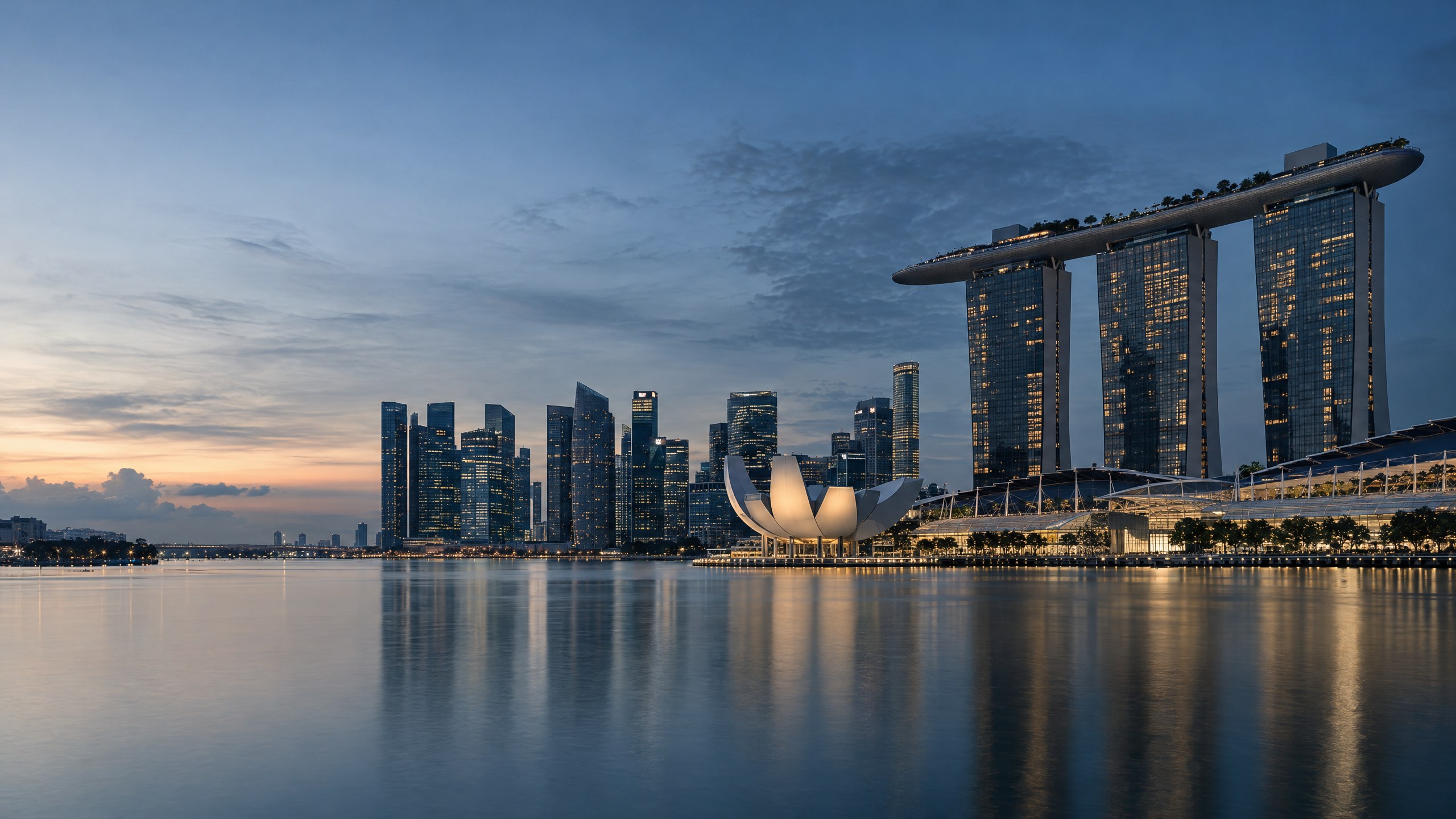
IAA or Arbitration Act: which regime applies
Singapore has two arbitration statutes, and the first task in any matter is to identify which governs the award.
- International Arbitration Act 1994 (IAA). The IAA gives the UNCITRAL Model Law, except Chapter VIII, the force of law for international arbitrations seated in Singapore and, in a separate Part, gives effect to the New York Convention for foreign awards. Parties to a domestic arbitration can also opt into the IAA.
- Arbitration Act 2001 (AA). The AA applies to arbitrations seated in Singapore where the international regime does not apply, typically disputes between Singapore parties with no relevant foreign element.
| Type of award | Statute | Enforcement route | Main challenges available |
|---|---|---|---|
| Singapore-seated international award | IAA (Model Law) | Permission to enforce as a judgment under section 19 | Setting aside under Model Law Article 34 and IAA section 24; resisting enforcement |
| Singapore-seated domestic award | Arbitration Act 2001 | Permission to enforce as a judgment | Setting aside on statutory grounds; appeal on a question of law with consent or permission, unless excluded |
| Foreign award from a New York Convention state | IAA Part 3 | Permission to enforce as a judgment | Refusal only on the limited grounds in IAA section 31 |
| Award from a non-Convention state | Common law and other statutory routes | Action on the award, or other available routes | Defences at common law |
The distinction matters. A Singapore court supervises a Singapore-seated award and can set it aside. It cannot set aside a foreign award; it can only refuse to enforce it in Singapore. And only the domestic regime allows an appeal on a point of law, which is excluded under the IAA.
The New York Convention and foreign awards
Singapore acceded to the New York Convention on 21 August 1986 with a reciprocity reservation, so Part 3 of the IAA applies to awards made in other Contracting States. The UNCITRAL status table lists 172 parties, including Bangladesh, the United Arab Emirates, China, the United Kingdom, Malaysia, Indonesia and India. In practice, almost every award our clients deal with qualifies.
Under section 31 of the IAA, enforcement of a foreign award may be refused only on the listed grounds. The party resisting enforcement must prove incapacity, an invalid arbitration agreement, lack of proper notice or inability to present its case, an award beyond the scope of the submission, improper composition of the tribunal or procedure, or an award not yet binding or set aside at the seat. The court may also refuse if the subject matter is not arbitrable under Singapore law or enforcement would be contrary to Singapore public policy.
These grounds are interpreted narrowly. The court does not re-examine whether the tribunal got the facts or the law right. That is the central feature of the enforcement of arbitral awards in Singapore: review focuses on the integrity of the process, not the correctness of the result.
A Singapore court will not reopen the merits. It asks whether the process was fair and within jurisdiction, not whether the tribunal was right.
Setting aside a Singapore-seated award
A party dissatisfied with a Singapore-seated international award has an active remedy: an application to set it aside. Article 34 of the Model Law lists the grounds, which broadly mirror the New York Convention refusal grounds. Section 24 of the IAA adds two more: where the making of the award was induced or affected by fraud or corruption, and where a breach of the rules of natural justice occurred in connection with the making of the award by which a party's rights were prejudiced.
The three-month time limit
Article 34(3) of the Model Law requires a setting-aside application to be made within three months of receiving the award or, where a request for correction or interpretation was made, from its disposal. The Ministry of Law's 2025 consultation paper records that the Singapore courts treat this limit as absolute and incapable of extension. Missing it forfeits the active remedy entirely.
How courts approach natural justice challenges
In BLC v BLB [2014] SGCA 40, the Court of Appeal reinstated an award that had been set aside on natural justice grounds. It emphasised minimal curial intervention and held that an arbitrator's error of law or fact, even if established, is outside the court's supervisory role. A natural justice challenge succeeds only where a party's case was not actually considered or it was denied a fair opportunity to be heard, and the breach caused real prejudice.
Active and passive remedies
In PT First Media TBK v Astro Nusantara International BV [2013] SGCA 57, the Court of Appeal held that the Model Law gives a party a choice of remedies. A party that does not apply to set aside a Singapore-seated international award may, absent waiver, still resist its enforcement in Singapore on the grounds reflected in Article 36. The court retains a power to refuse enforcement under section 19, guided by those grounds. This is important for award debtors who missed the three-month window, though the choice should never be left to chance.
Key decisions once the award is issued
The weeks after an award is published are when most value is won or lost. Both sides face a short list of decisions that shape everything that follows, and both should make them deliberately rather than by default.
For award creditors
The first decision is where to enforce first. Singapore is attractive where the debtor holds bank accounts, shares in Singapore companies or receivables from Singapore counterparties, because the courts act quickly and the grounds for resistance are narrow. Where the main assets are elsewhere, a Singapore filing may still be useful as leverage or to reach a regional holding company, but it should be sequenced with the filing in the asset jurisdiction.
The second decision is whether to approach the debtor before applying. A short demand for payment, with a clear deadline, sometimes produces settlement, particularly where the debtor values its reputation or banking relationships in Singapore. Where there is any risk of asset flight, however, a without-notice application and interim relief should come first and the demand after.
For award debtors
An award debtor must decide quickly whether there is a genuine process-based ground to challenge. If there is, the three-month clock for a Singapore-seated international award leaves little room for delay. If there is not, the better course is often to negotiate payment terms, because an unsuccessful challenge adds costs and delay without changing the outcome, and the creditor's enforcement options grow over time. Paying under protest while pursuing a credible challenge is sometimes the most commercial option for a business that needs to protect its banking relationships.
Either way, the enforcement of arbitral awards in Singapore rewards early, informed decisions. Parties who seek advice on the day the award arrives keep every option open; those who wait often find the choices already made for them. A clear internal owner for the award, with authority to approve a challenge, a settlement or an enforcement budget, avoids that drift.
Enforcing an award step by step
The procedure for enforcement of arbitral awards in Singapore is designed to be quick where the award is sound.
- Locate assets. Identify the award debtor's Singapore bank accounts, shares, receivables, property or vessels. Enforcement is pointless without them.
- Prepare the application. File an application to the General Division of the High Court for permission to enforce, supported by an affidavit exhibiting the award and the arbitration agreement, with certified translations if not in English.
- Without-notice order. The application is usually made without notice. If granted, the order gives the award debtor a limited period after service to apply to set the order aside.
- Serve the order. Serve the order on the award debtor, which may require service out of Singapore with the court's permission.
- Answer any challenge. If the debtor applies to set aside the enforcement order, it must establish a recognised ground. The award creditor responds on the evidence.
- Enter judgment. Once the challenge window passes or any challenge fails, judgment is entered in the terms of the award.
- Enforce the judgment. Use the court's enforcement orders, including attachment of debts and seizure and sale, and apply to examine the debtor about its assets if needed.
Where there is a real risk that assets will be moved before enforcement, consider a freezing injunction in aid of the arbitration or of enforcement, alongside or before the enforcement application. Our injunctions and urgent relief page and post on interim relief explain the requirements.
Documents and evidence to assemble
- The award: the duly authenticated original or a certified copy, with any corrections, interpretations or additional awards.
- The arbitration agreement: the original or certified copy of the clause or submission agreement, including the full contract it sits in.
- Translations: certified English translations of any document in another language.
- Procedural record: notices, procedural orders, hearing transcripts and correspondence showing proper notice and opportunity to be heard, ready to answer any challenge.
- Seat proceedings: evidence of any challenge at the seat and its status, because a pending set-aside abroad may lead to an adjournment.
- Asset intelligence: what is known about the debtor's Singapore assets and corporate structure.
Assemble this file before filing rather than in response to a challenge. Gaps in the record, such as a missing signed copy of the contract or an untranslated procedural order, are among the most common reasons enforcement applications are delayed. Where the award was rendered under institutional rules, the institution can usually provide certified copies, which saves time. Keep the asset intelligence current too: bank balances and receivables move, and an attachment that would have succeeded last month may find an empty account today.
Risks and common mistakes
Missing the three-month setting-aside window
For Singapore-seated international awards, the three-month limit in Article 34(3) is treated as absolute. Parties sometimes spend the period negotiating, seeking corrections that do not qualify, or waiting for advice from home counsel unfamiliar with Singapore. Diarise the deadline the day the award is received, take Singapore advice immediately and decide early whether an active challenge is justified. Relying on passive resistance at enforcement is possible but narrower and riskier, and does not stop enforcement elsewhere.
Dressing up a merits complaint
Challenges framed as natural justice, excess of jurisdiction or public policy but which really complain that the tribunal reached the wrong answer routinely fail and attract costs. The Court of Appeal in BLC v BLB was explicit that errors of law or fact are not grounds for intervention. Before launching a challenge, test whether the complaint is about process or outcome. If it is about outcome under an IAA award, there is generally no route, and the commercial effort may be better spent on settlement.
Enforcing where there are no assets
Permission to enforce in Singapore is valuable only if the debtor has assets here or the Singapore judgment can be used elsewhere. Award creditors should map the debtor's assets globally and enforce in parallel in each relevant New York Convention state. Asset tracing, interim relief and coordinated filings in several countries are often needed. Our fraud and asset recovery page discusses tracing tools where assets have been hidden.
Overlooking state immunity and corporate structure
Awards against states and state entities raise questions of immunity from jurisdiction and from execution, and assets used for sovereign purposes may be protected. Awards against private groups raise a different problem: the assets may belong to a subsidiary or affiliate that was not a party to the arbitration. Analyse who owns what before applying, and consider whether claims against non-parties are realistic, rather than discovering the gap after judgment.
Ignoring reform proposals
The Ministry of Law consulted from 20 March to 2 May 2025 on amendments to the IAA, including a possible opt-in appeal on questions of law, a requirement for permission to appeal set-aside and enforcement decisions, changes to the three-month limit for fraud-based challenges and costs consequences of unsuccessful challenges. Check the current position when drafting clauses and planning challenges, because reforms could change both the routes and the risks.
Cross-border enforcement and the TRW network
Most enforcement of arbitral awards in Singapore is part of a multi-country strategy. A Singapore-seated award against a Bangladeshi buyer may need to be enforced in Bangladesh as well as Singapore; an award from a Dubai-seated arbitration may be enforced here against a regional holding company; and a London award against a Chinese group may be pursued in Singapore, Hong Kong and the mainland in parallel. Bangladesh, the UAE, China and the UK are all New York Convention parties, but local procedure, timing and judicial attitudes differ significantly.
TRW & Co coordinates these strategies across its offices in Dhaka, Chattogram, Dubai, London, China and Singapore. We sequence filings so that a step in one country does not prejudice another, align evidence and translations, and advise on which jurisdiction to lead with based on where assets are and how quickly local courts act.
How TRW & Co helps with enforcement of arbitral awards in Singapore
We act for award creditors and award debtors on strategy and coordination. Where Singapore court or tribunal representation is required, we work alongside Singapore-qualified counsel.
Award review
We review the award and record, identify the governing statute and deadlines, and give a reasoned view on challenge or enforcement prospects.
Enforcement strategy
We map assets, plan interim relief and coordinate permission applications and enforcement orders with Singapore counsel.
Challenges and resistance
We assess setting-aside and refusal grounds candidly, prepare evidence on process issues and advise when a challenge is not worth bringing.
Multi-jurisdiction coordination
We run parallel enforcement in Bangladesh, the UAE, the UK, China and ASEAN, and structure settlements that end proceedings everywhere.
Enforcement planning starts at the clause stage; see our international arbitration and Singapore-seated arbitration pages, and our post on SIAC arbitration under the rules of the Singapore International Arbitration Centre. For drafting, read our post on dispute resolution clauses. Explore our practices or contact us to discuss an award.
Checklist for decision-makers
- Is the award Singapore-seated or foreign, and is it governed by the IAA or the Arbitration Act?
- When was the award received, and when does the three-month setting-aside period expire?
- Where are the debtor's assets, in Singapore and elsewhere, and who legally owns them?
- Is interim relief needed now to stop assets moving before enforcement?
- Do we have certified copies of the award and arbitration agreement, with translations?
- Is any challenge at the seat pending, and how could it affect enforcement here?
- Is the debtor a state or state entity, raising immunity issues?
- Have we checked the status of the 2025 IAA reform proposals?
Clients who answer these questions at the outset find the enforcement of arbitral awards in Singapore predictable and efficient, and are better placed to convert an award into recovery across borders.
Frequently asked questions
01How do I enforce a foreign arbitral award in Singapore?
If the award was made in another New York Convention state, apply to the General Division of the High Court for permission to enforce it as a judgment under Part 3 of the International Arbitration Act 1994. The application is supported by an affidavit exhibiting the award and the arbitration agreement, with certified translations if needed, and is usually made without notice. The award debtor then has a limited period after service to apply to set aside the order. If it does not, or fails, judgment is entered and ordinary enforcement tools follow.
02On what grounds can enforcement be refused?
For foreign awards, section 31 of the IAA sets out exhaustive grounds that mirror the New York Convention: incapacity of a party, an invalid arbitration agreement, lack of proper notice or inability to present one's case, an award beyond the scope of the submission, improper composition of the tribunal or procedure, an award not yet binding or set aside at the seat, non-arbitrability under Singapore law, and public policy. The resisting party carries the burden, and courts interpret the grounds narrowly and do not review the merits.
03How long do I have to challenge a Singapore-seated award?
For international awards under the IAA, Article 34(3) of the Model Law requires a setting-aside application within three months of receiving the award, or of the disposal of a request for correction or interpretation. Singapore courts treat this as absolute and will not extend it. The Ministry of Law's 2025 consultation asked whether the period should change, including for fraud-based challenges, so check the current position. Domestic awards under the Arbitration Act 2001 have their own statutory time limits.
04What is the difference between the IAA and the Arbitration Act?
The International Arbitration Act 1994 applies to international arbitrations seated in Singapore, to arbitrations where the parties opt in, and to the enforcement of foreign awards. It adopts the UNCITRAL Model Law and allows no appeal on points of law. The Arbitration Act 2001 applies to domestic arbitrations seated in Singapore and permits, subject to conditions and unless excluded, an appeal on a question of law with the parties' agreement or the court's permission. The regime determines which challenges are available.
05Can I resist enforcement if I did not apply to set aside?
Possibly. In PT First Media TBK v Astro Nusantara International BV [2013] SGCA 57, the Court of Appeal held that the Model Law gives a choice between active remedies, such as setting aside, and passive remedies, such as resisting enforcement. A party that did not apply to set aside a Singapore-seated international award may still resist enforcement in Singapore, absent waiver. However, relying only on passive resistance is risky, and it does not affect enforcement in other countries.
06Can a Singapore court review whether the tribunal was right?
No. Singapore courts follow a policy of minimal curial intervention. In BLC v BLB [2014] SGCA 40, the Court of Appeal held that errors of law or fact by the arbitrator fall outside the court's supervisory role. Challenges must identify a recognised ground, such as a breach of natural justice that caused real prejudice, excess of jurisdiction or a public policy violation. Domestic awards under the Arbitration Act 2001 are the main exception, where an appeal on a question of law may be possible.
07Can I freeze assets before the award is enforced?
Yes, in appropriate cases. Singapore courts can grant freezing injunctions in support of arbitration and of enforcement where there is a good arguable case and a real risk that assets will be dissipated. Applications are often made without notice and require full and frank disclosure and an undertaking in damages. Emergency arbitrators and tribunals may also order interim measures. Where assets are at risk, interim relief should be considered before or alongside the enforcement application.
Sources and official materials
- International Arbitration Act 1994 — Model Law, enforcement and foreign awards
- Arbitration Act 2001 — Domestic arbitration regime
- UNCITRAL: New York Convention status — Contracting States and reservations
- PT First Media v Astro Nusantara [2013] SGCA 57 — Active and passive remedies
- BLC v BLB [2014] SGCA 40 — Natural justice and minimal intervention
- MinLaw: IAA Consultation Paper (2025) — Proposed reforms and current law
- Judiciary: Enforce an order or judgment — Enforcement orders after judgment
General information only, current as at 20 October 2026. It is not legal advice and does not create a lawyer–client relationship. Singapore law and regulatory practice change; check current official sources and take advice on the facts of your matter.
Talk it through
before you decide.
Share the decision, the jurisdictions and the timetable. A partner will tell you what matters, what can wait and what it will take.