
TRW & Co · Corporate, Capital & Tax
Goods and Services Tax (GST) in Singapore
GST in Singapore is a 9% consumption tax on most supplies of goods and services and on imports. The legal risk sits in registration triggers, supply classification, cross-border digital rules, contract terms and audits, with InvoiceNow now giving IRAS transaction-level data. This guide explains what decision-makers need to know in 2026.
Key pointA single signed contract, accepted quotation or won tender worth over S$1 million can make a business liable to register under the prospective view, with an application due within 30 days. Route large deals through finance before signature, not after the first invoice.
At a glance
Standard rate of 9%
GST is charged at 9% on standard-rated supplies; exports and qualifying international services are zero-rated, while financial services and residential property are generally exempt.
S$1 million registration tests
Registration is compulsory if taxable turnover exceeded S$1 million in the calendar year, or is expected to exceed it in the next 12 months.
Overseas vendor threshold
Overseas suppliers with global turnover above S$1 million and B2C sales of remote services or low-value goods to Singapore above S$100,000 must register.
InvoiceNow phased to 2031
Voluntary registrants are already covered; new compulsory registrants and smaller existing businesses join from 1 April 2028, with all businesses covered from 1 April 2031.
One-year disclosure grace
Qualifying voluntary disclosures within one year of the filing deadline attract no penalty; later qualifying disclosures attract a flat 5% of the GST undercharged.
Swipe or scroll →
What GST in Singapore covers
GST in Singapore is a broad-based consumption tax charged on most supplies of goods and services made in Singapore and on imports. It is collected by registered businesses at each stage of the supply chain, which then claim back the GST they paid on their own purchases. The current standard rate is 9%. For most businesses the tax is economically neutral; the legal risk lies in getting registration, classification and documentation right.
GST becomes a legal question at predictable points: when turnover approaches the registration threshold, when a business starts selling across borders or online, when a contract is silent on who bears the tax, when a business or property is transferred, and when IRAS opens an audit. Each involves a judgment about how the law applies to a particular transaction, not just a computation.
TRW & Co advises on the legal side of these questions: supply analysis, contract terms, transaction structuring, compliance governance and disputes. GST returns, computations and filings are prepared by the business's finance team or tax advisers, and we co-ordinate with them. We are not a tax agent.
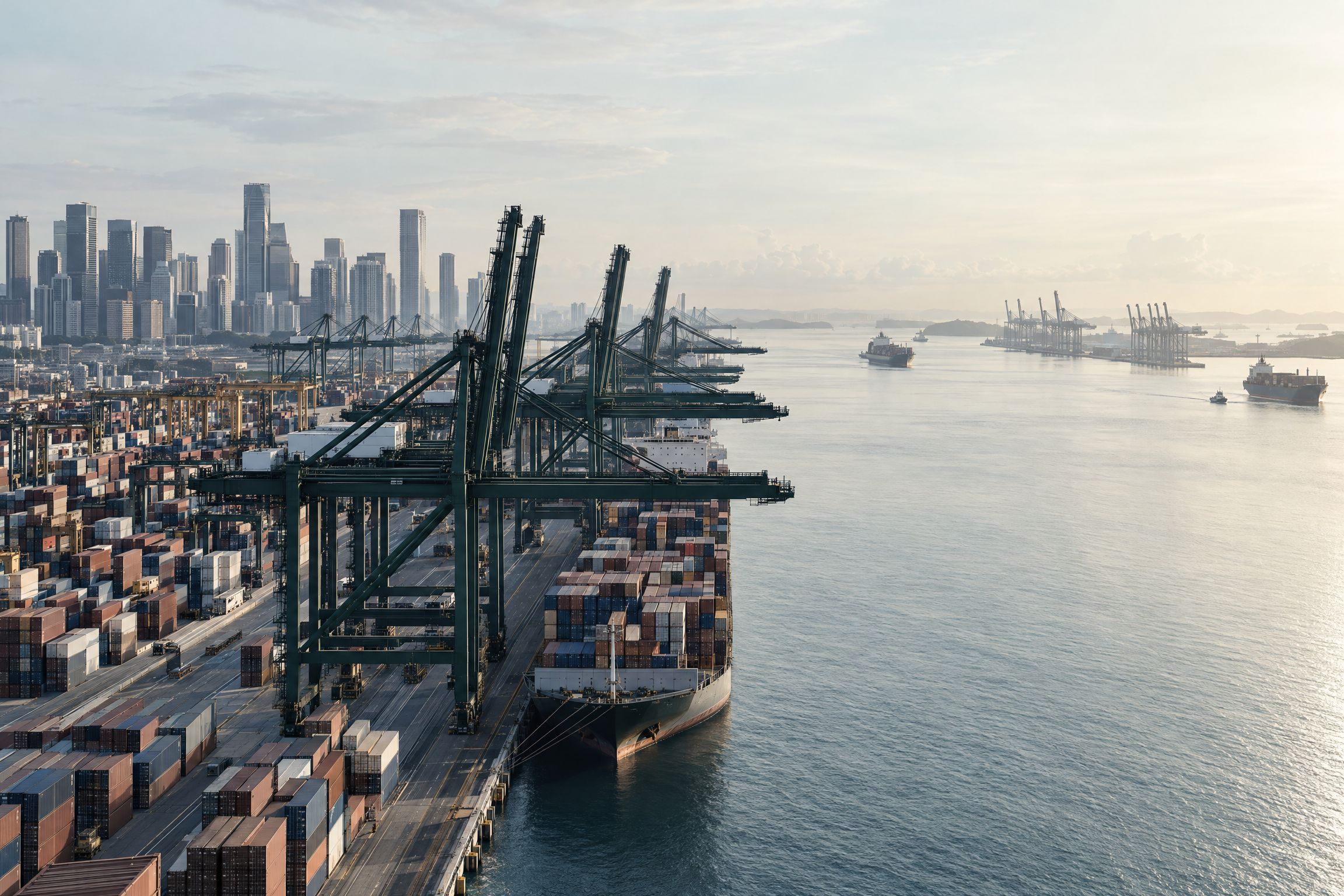
The legal framework
GST is imposed by the Goods and Services Tax Act 1993 and its subsidiary legislation, and administered by the Inland Revenue Authority of Singapore (IRAS). Import GST on goods is collected at the border with Singapore Customs. IRAS e-Tax Guides explain how IRAS applies the law in specific sectors and situations; they are not legislation, but in practice they set the compliance standard and are the starting point in any audit.
The law sorts every transaction into one of four categories. Standard-rated supplies carry 9% GST. Zero-rated supplies, mainly exports of goods and qualifying international services, carry 0% but still allow input tax claims. Exempt supplies, such as most financial services, the sale and lease of residential property, investment precious metals and, since 1 January 2020, digital payment tokens, carry no GST but restrict input tax recovery. Out-of-scope supplies, such as goods delivered from one overseas place to another, fall outside the Act altogether.
The distinction between zero-rated and exempt is commercially significant. A zero-rated business can recover GST on its costs; an exempt business generally cannot, which makes GST a real cost. That is why the classification of a supply is often the most valuable legal question in GST in Singapore.
When registration is required
According to IRAS registration guidance, a business must register when its taxable turnover exceeds S$1 million under either of two tests. Taxable turnover includes standard-rated and zero-rated supplies, but excludes exempt supplies, out-of-scope supplies and sales of capital assets.
| Route | Trigger | Deadline to apply | Effective date |
|---|---|---|---|
| Retrospective view | Taxable turnover for the calendar year exceeds S$1 million | 1 to 30 January of the following year | 1 March of the following year |
| Prospective view | Taxable turnover reasonably expected to exceed S$1 million in the next 12 months | Within 30 days of the forecast date | Two months from the forecast date, where liability arises on or after 1 July 2025 |
| Business acquisition | Acquired business's turnover makes the buyer liable | Within 30 days of the transfer | Date of transfer |
| Reverse charge | Business not entitled to full input tax credit imports services or low-value goods; combined value exceeds S$1 million over 12 months | As for compulsory registration | As notified by IRAS |
| Overseas vendor registration | Overseas supplier with global turnover above S$1 million and B2C supplies of remote services or low-value goods to Singapore above S$100,000 | On becoming liable | Simplified pay-only registration |
| Voluntary | Business chooses to register below the threshold | Any time, subject to conditions | As approved; must remain registered for two years |
The prospective test catches businesses earlier than many expect. A signed contract, an accepted quotation or a won tender worth more than S$1 million can create liability on the day it is signed. IRAS expects supporting documents for the forecast; a forecast based only on business plans or sales targets, without certainty, does not trigger registration. Our post on GST registration decisions works through borderline cases.
Voluntary registration
Businesses below the threshold may register voluntarily, often to recover input tax or because customers prefer registered suppliers. Voluntarily registered businesses must remain registered for two years, so the decision should be modelled over that period. From 1 April 2026, new voluntary registrants must also comply with the InvoiceNow requirement from the outset.
Cross-border and digital supplies
Singapore extended GST to the digital economy in stages. Overseas businesses with global turnover above S$1 million that make business-to-consumer supplies of remote services or low-value goods to Singapore exceeding S$100,000 a year must register under the overseas vendor registration regime. Registration is simplified: returns are filed electronically, but input tax cannot be claimed. Electronic marketplace operators can be treated as the supplier of goods and services sold through their platforms.
Low-value goods are goods valued at or below the S$400 import relief threshold and delivered to Singapore by air or post. Since 1 January 2023, GST on them is collected through the supplier or marketplace rather than at the border. On the business-to-business side, Singapore businesses that are not entitled to full input tax credit, such as banks and other partially exempt businesses, must account for GST on imported services and low-value goods under the reverse charge if they are, or become, registered.
For platforms, marketplaces and online sellers, these rules interact with consumer protection and platform regulation; see our page on e-commerce regulation. Our post on cross-border services taxation covers the income tax side of the same transactions.
Imports and supply-chain schemes
Goods imported into Singapore generally attract import GST at the point of entry, payable through the permit system administered with Singapore Customs. For businesses that import heavily, the timing of that payment matters for cash flow. IRAS offers several schemes that change the timing or incidence of import GST: the Import GST Deferment Scheme lets approved registrants account for import GST in their GST return instead of at the border; the Major Exporter Scheme suspends import GST for qualifying businesses with substantial exports; and the Zero GST Warehouse Scheme suspends GST on goods stored in approved warehouses until they are released for local consumption.
Each scheme has eligibility criteria, conditions and record-keeping obligations, and a breach can result in withdrawal of approval and recovery of suspended tax. For regional distribution hubs, the choice of scheme is a structuring decision that affects contracts with logistics providers, the location of stock and the drafting of Incoterms. Treat the scheme conditions as part of the legal design of GST in Singapore for the supply chain, not merely as a finance-team formality.
The InvoiceNow requirement
IRAS is phasing in a requirement for GST-registered businesses to transmit invoice data to IRAS through InvoiceNow-ready solutions. According to the IRAS InvoiceNow page, it applied from 1 November 2025 to companies registering voluntarily within six months of incorporation, and from 1 April 2026 to all new voluntary registrants. From 1 April 2028 it extends to new compulsory registrants and existing registrants with total annual supplies up to S$200,000, followed by those up to S$1 million in 2029, up to S$4 million in 2030 and all remaining businesses from 1 April 2031.
The legal consequence is greater transparency. IRAS will see transaction-level data, so classification errors, missing reverse charge entries and inconsistent treatment across customers will become visible faster. Businesses should clean up their supply classifications and contract terms before their phase begins, rather than discovering errors through IRAS's analytics.
Most GST exposure is not created in the GST return. It is created months earlier, in a contract that is silent on GST, a supply that was classified by habit, or a forecast nobody recognised as a registration trigger.
GST in contracts and transactions
Contracts should say clearly whether prices include or exclude GST, who bears GST if the classification changes, and what happens if a party registers or deregisters during the term. A price stated without a GST clause will often be treated as GST-inclusive, which shifts 9% of the price from the customer to the supplier. Long-term supply, service and lease agreements need particular care.
Commercial contracts
Include a GST clause covering price basis, tax invoices, reclassification and gross-up. For cross-border services, address whether zero-rating conditions depend on the customer's location or belonging status.
Transfers of a business
A transfer of a business as a going concern may be outside the scope of GST if conditions are met. The sale agreement should allocate the risk if IRAS later disagrees, and address registration of the buyer.
Property transactions
Commercial property is generally standard-rated; residential property is exempt. Mixed-use developments and leases need careful apportionment, and the sale contract should state the GST position for each component.
Group structures
Related companies may apply for group registration so that supplies between members are disregarded. The trade-off is joint and several liability for the group's GST, which must be reflected in intra-group arrangements.
Our commercial contracts team builds these clauses into standard terms. For goods moving through Singapore, import GST and schemes such as the Import GST Deferment Scheme, Major Exporter Scheme and Zero GST Warehouse Scheme sit alongside the customs work described on our customs and trade compliance page.
Building GST compliance step by step
For a growing business, the following sequence keeps GST in Singapore under control from first trigger to steady state.
- Monitor turnover monthly. Track taxable turnover against both the retrospective and prospective tests, and flag any contract, quotation or tender above S$1 million to finance immediately.
- Classify every revenue stream. Decide whether each type of supply is standard-rated, zero-rated, exempt or out of scope, and record the reasoning for borderline items.
- Review contracts. Update price clauses, invoicing terms and gross-up provisions in customer and supplier agreements before registration takes effect.
- Register on time. Apply within the deadline for the relevant route and plan systems, including InvoiceNow where it applies.
- Set up input tax controls. Ensure tax invoices meet requirements, apportion input tax where exempt supplies are made, and apply the reverse charge where required.
- Review periodically. Re-test classifications when the business launches new products, enters new markets or restructures.
- Correct errors promptly. Use the voluntary disclosure programme as soon as an error is found, within the grace period where possible.
Audits, errors and disputes
IRAS conducts GST audits based on risk indicators, and InvoiceNow data will sharpen them. Under IRAS's voluntary disclosure programme, an error disclosed within one year of the statutory filing deadline, meeting the qualifying conditions, attracts no penalty. After that grace period, a qualifying disclosure attracts a reduced penalty of a flat 5% of the GST undercharged. Errors discovered by IRAS first can attract much heavier consequences.
If IRAS raises an assessment the business disagrees with, it can object, and unresolved disputes can proceed to the GST Board of Review and then the courts. The strength of the objection depends on the record made at the time of the transaction. Our posts on tax audit governance and tax controversy strategy explain how to prepare.
If you discover that you should have registered earlier, or that a supply has been misclassified for several periods, act quickly. Quantify the exposure with your tax advisers, decide on voluntary disclosure, and consider whether contracts allow you to recover GST from customers. Delay usually narrows the options and increases the penalty.
Risks and common mistakes
Missing the prospective registration trigger
Many businesses watch only their year-end turnover. But a single large contract can create liability under the prospective view within 30 days of signing. If registration is late, the business may have to account for GST on sales it never charged GST on, effectively paying it out of margin, and may face penalties. Build a simple rule into the contract approval process: any deal that could take 12-month taxable turnover above S$1 million goes to finance before signature.
Zero-rating international services without evidence
Services to overseas customers are not automatically zero-rated. The conditions depend on the type of service, where the customer belongs and, sometimes, who directly benefits from the service. Services supplied to an overseas company but consumed by its Singapore staff may be standard-rated. Keep evidence of the customer's belonging status and the nature of the service, and draft contracts so the facts support the classification.
Silent or inconsistent GST clauses
A contract that does not state whether the price includes GST invites dispute, and the supplier usually bears the cost. Equally risky are contracts that promise zero-rating or exemption without a mechanism if IRAS disagrees. Use a standard GST clause across all templates: prices exclusive of GST, GST added at the prevailing rate, valid tax invoices, and adjustment if the classification or rate changes.
Splitting a business to stay under the threshold
Dividing one business among several entities so that each stays below S$1 million is a known risk area. IRAS can look at the substance of the arrangement and treat the entities as one business for registration purposes. If there are genuine commercial reasons for separate entities, document them and make sure each operates independently in fact. Otherwise, plan for registration rather than around it.
Exempt and digital token businesses recovering too much input tax
Financial services providers and digital payment token businesses make exempt supplies, which restricts input tax recovery. Claiming full input tax without apportionment is a frequent audit finding. Such businesses may also be caught by the reverse charge on imported services. Map revenue streams carefully and agree an apportionment method with your tax advisers. Our page on digital payment tokens covers the licensing side.
Cross-border angle and the TRW network
For foreign businesses, GST in Singapore is often the first Singapore tax they meet. A UK software company selling subscriptions to Singapore consumers may need overseas vendor registration long before it has any presence here. A Chinese marketplace may be treated as the supplier of goods sold by its merchants. A Dubai trading company routing goods through Singapore must decide whether its supplies are within or outside the scope of GST.
Bangladeshi exporters and service providers dealing with Singapore customers, and Singapore businesses buying services from Bangladesh, need to align GST treatment with Bangladesh VAT rules and foreign exchange documentation. TRW & Co's offices in Dhaka, London, Dubai and China co-ordinate these perspectives so contracts and invoicing work on both sides of the border.
How TRW & Co helps with GST in Singapore
We provide legal advice and co-ordinate with tax advisers for computations and filings. Where Singapore court or tribunal representation is required, we work alongside Singapore-qualified counsel.
Supply classification
We analyse business models, contracts and customer profiles to support classification of supplies, and help prepare advance ruling requests where certainty is worth the cost.
Contract and transaction drafting
We draft GST clauses, business transfer terms and group arrangements, and review property and cross-border agreements for GST risk.
Compliance governance
We design approval workflows, registration triggers and InvoiceNow readiness plans that keep legal and finance teams aligned.
Audits and disclosures
We help manage IRAS queries, prepare voluntary disclosures with the tax advisers and plan objections where an assessment is disputed.
GST planning often sits alongside tax structuring work. Explore our practices or contact us to discuss a GST question.
Checklist for decision-makers
- Do we test taxable turnover against both the retrospective and prospective views every month?
- Is every revenue stream classified, with written reasons for borderline supplies?
- Do all customer and supplier contracts contain a clear GST clause?
- If we sell to Singapore consumers from abroad, have we tested the overseas vendor registration thresholds?
- Are we partially exempt, and if so, are we applying the reverse charge and apportioning input tax?
- When does the InvoiceNow requirement apply to us, and are our systems ready?
- Do we have a process to find and voluntarily disclose errors within the one-year grace period?
- Have legal, finance and our tax advisers agreed who owns each part of GST in Singapore compliance?
Clear ownership and early legal input are what separate businesses that treat GST in Singapore as routine from those that meet it first in an audit.
Frequently asked questions
01When must a business register for GST in Singapore?
When taxable turnover exceeds S$1 million under either test. Under the retrospective view, if turnover for the calendar year exceeded S$1 million, the business applies between 1 and 30 January and is registered from 1 March. Under the prospective view, if turnover is reasonably expected to exceed S$1 million in the next 12 months, for example because a large contract has been signed, it must apply within 30 days of the forecast. For liability arising from 1 July 2025, registration takes effect two months from the forecast date.
02Do overseas companies need to register for GST?
Some do, even without any Singapore presence. Overseas suppliers and electronic marketplace operators with global turnover above S$1 million that make business-to-consumer supplies of remote services or low-value goods to Singapore exceeding S$100,000 a year must register under the overseas vendor registration regime. Registration is simplified and pay-only, so input tax cannot be claimed. Overseas businesses making other taxable supplies in Singapore may need ordinary registration, which can involve appointing a local agent.
03What is the difference between zero-rated and exempt supplies?
Both carry no GST on the sale, but the effect on costs is very different. Zero-rated supplies, such as exports of goods and qualifying international services, are taxable at 0%, so the supplier can still claim back GST on its business costs. Exempt supplies, such as most financial services, residential property sales and leases, investment precious metals and digital payment tokens, are outside the charge, and GST on related costs is generally not recoverable. Classification therefore affects margins directly.
04Should we register for GST voluntarily?
It can make sense if most customers are GST-registered businesses that can recover the GST you charge, or if you incur significant GST on costs that you want to recover. The downsides are compliance costs, the need to charge 9% to non-registered customers, and the obligation to remain registered for two years. From 1 April 2026, new voluntary registrants must also comply with the InvoiceNow requirement. Model costs and benefits over the two-year period before deciding.
05What should a GST clause in a contract say?
At minimum: whether prices exclude GST, that GST will be added at the prevailing rate, that the supplier will issue valid tax invoices, and what happens if the classification or rate changes or if IRAS later disagrees with the treatment. For cross-border services, address the facts needed for zero-rating. For property and business transfers, state the expected GST treatment and allocate the risk. Without a clause, prices may be treated as GST-inclusive and the supplier absorbs the tax.
06We discovered GST errors in past returns. What now?
Act promptly. Quantify the errors with your tax advisers and consider a voluntary disclosure to IRAS. If the disclosure is made within one year of the statutory filing deadline and meets the qualifying conditions, IRAS imposes no penalty; after that, a qualifying disclosure attracts a flat 5% penalty on the GST undercharged. Errors found by IRAS first are treated more severely. Also check your contracts to see whether GST can be recovered from customers.
07Does TRW & Co file GST returns?
No. We are legal advisers, not a tax agent. We advise on registration triggers, supply classification, contract terms, transaction structuring, voluntary disclosures and disputes, and we co-ordinate with your finance team or tax advisers, who prepare and file GST returns and computations. Where a GST dispute requires representation before the GST Board of Review or the Singapore courts, we work alongside Singapore-qualified counsel.
Sources and official materials
- IRAS: Do I need to register for GST — Retrospective and prospective tests, timing
- IRAS: Current GST rates — 9% standard rate
- IRAS: GST for overseas businesses — Overseas vendor registration and low-value goods
- IRAS: GST InvoiceNow requirement — Phased implementation from 2025 to 2031
- IRAS: Supplies exempt from GST — Financial services, residential property, DPTs, IPM
- IRAS: Voluntary disclosure for reduced penalties — Grace period and 5% penalty
General information only, current as at 20 October 2026. It is not legal advice and does not create a lawyer–client relationship. Singapore law and regulatory practice change; check current official sources and take advice on the facts of your matter.
Talk it through
before you decide.
Share the decision, the jurisdictions and the timetable. A partner will tell you what matters, what can wait and what it will take.